

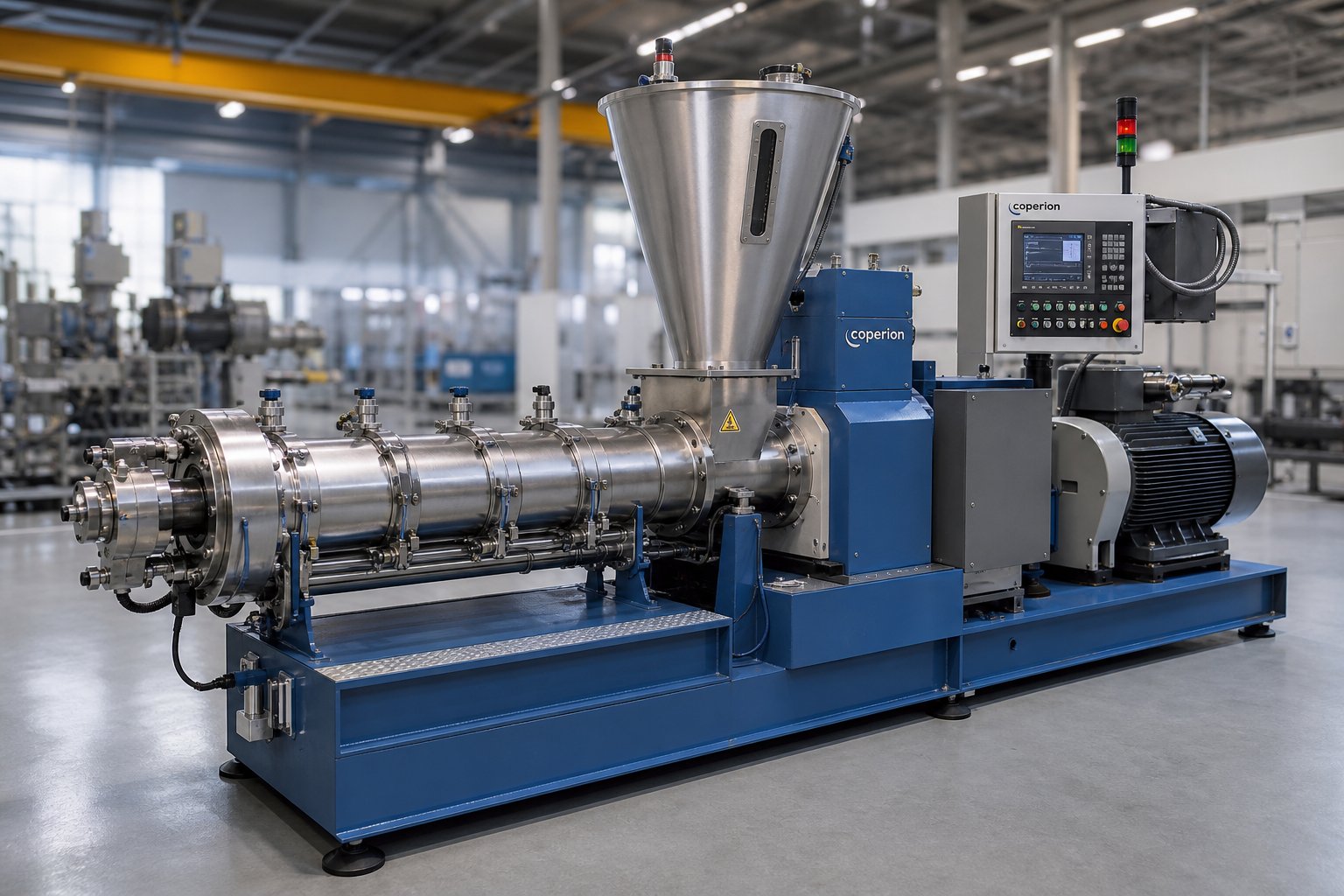
What Is a Conical Twin Screw Extruder and Why It Matters
Imagine you're sourcing extrusion equipment for a PVC production line. Dozens of machine listings flood your screen, specifications blur together, and every manufacturer claims to be the best. Before reaching out to a single supplier, you need a clear understanding of the technology itself. That starts with one foundational question: what exactly is a conical twin screw extruder?
What Defines a Conical Twin Screw Extruder
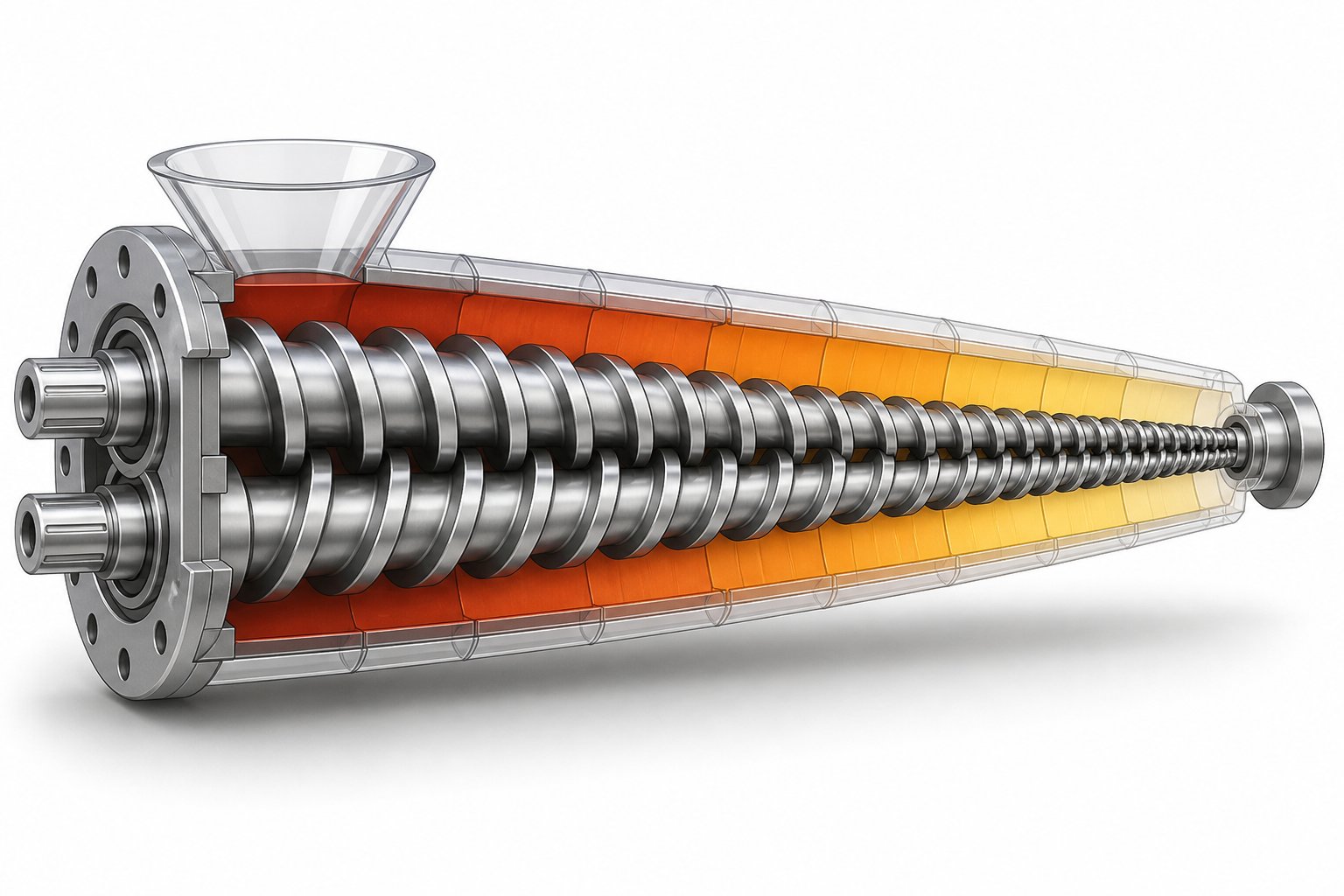
A conical twin screw extruder is a plastics processing machine that uses two tapered, counter-rotating screws mounted inside a conical barrel. The screws have a larger diameter at the feed end and gradually narrow toward the discharge end, creating natural compression that melts and homogenizes raw material before pushing it through a shaping die.
This tapered geometry is the defining feature that separates conical designs from parallel twin screw systems. In a parallel twin screw extruder, both screws maintain a constant diameter along their entire length. A conical twin screw extruder, by contrast, features screws that converge toward the output end — think of two gradually narrowing cones rotating inward toward each other. This arrangement delivers a built-in compression ratio without needing an extended barrel, which keeps the overall machine footprint compact.
The counter-rotating screw arrangement is equally important. Because the two screws turn inward in opposite directions, they create a positive displacement conveying action. Material gets trapped between the intermeshing screw flights and pushed forward with minimal backflow. The result is steady, predictable output — a critical advantage when processing thermally sensitive compounds that degrade under inconsistent pressure or excessive residence time.
Why This Technology Matters for Plastics Processors
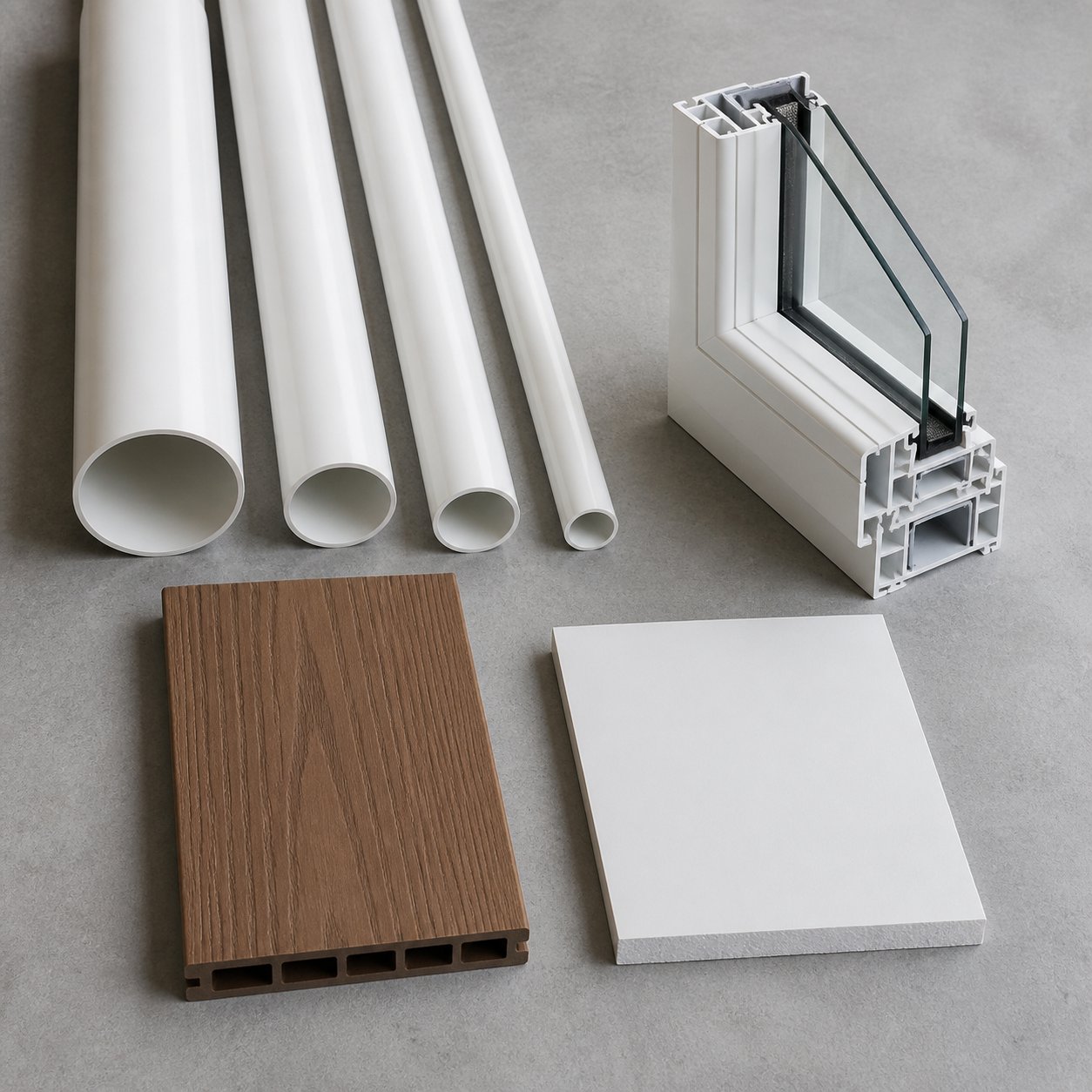
Conical twin screw extruders dominate one specific corner of the plastics industry: PVC processing. Rigid PVC, the material behind water pipes, window profiles, cable trunking, and sheet panels, is notoriously heat-sensitive. It degrades quickly if exposed to excessive shear or temperature spikes. The conical design's gentle processing characteristics — shorter residence time, lower shear heat, and precise temperature control — make it the go-to solution for these applications worldwide.
This is where China enters the picture. Over the past two decades, Chinese manufacturers have built massive production capacity for conical twin screw extruder technology. A conical twin screw extruder in China often costs significantly less than equivalent European or Japanese models, attracting buyers from Southeast Asia, the Middle East, Africa, and Latin America. The country now supplies a substantial share of the global market for this equipment category.
This guide is not a product catalog or a sales pitch for any single brand. It's a neutral, technical resource designed to help international buyers understand conical twin screw extruder technology from the ground up — how the machine works, what specifications matter, which materials it handles best, and how to navigate the sourcing process with confidence. Every section builds on the last, starting with the mechanical principles that make this machine tick.
How a China Conic Twin Screw Extruder Machine Works Step by Step
Knowing that tapered screws create compression is one thing. Understanding exactly how raw powder transforms into a finished PVC pipe or window profile inside the barrel — that's where real buying confidence begins. Let's walk through the entire extrusion process, zone by zone, so you'll recognize what each part of the machine actually does during production.
Tapered Screw Geometry and Compression Zones
Picture two cone-shaped screws sitting side by side inside a barrel that mirrors their taper. At the feed end, the screws have their largest diameter — typically ranging from 90 mm to 188 mm depending on the machine model. This wide opening accepts bulky PVC dry blend powder or granules from the hopper, pulling material into the screw channels through gravity and the screws' rotational motion.
As material travels forward, it enters the compression zone. Here's where the magic of the conical design becomes clear. Because the screw diameter gradually decreases, the channel volume between the flights shrinks progressively. This shrinking space compresses the material, squeezing out trapped air and generating frictional heat that begins the melting process. The beauty of this approach? The taper itself creates a natural compression ratio — no need for an excessively long barrel to achieve the same pressure buildup you'd need in a parallel system.
At the narrow discharge end, the material reaches the metering zone. By this point, the polymer is fully plasticized into a homogeneous melt. The metering zone's primary job is building consistent pressure to push the melt through the shaping die at a steady rate. Because the small-end diameter is compact — often between 45 mm and 92 mm — the screw delivers high output pressure even at low rotational speeds, typically 20 to 50 rpm. This low-speed, high-torque operation is a hallmark of conical twin screw extruder PVC processing in China and globally.
Counter-Rotating Mechanism and Material Conveying
Sounds straightforward so far? The conveying mechanism adds another layer of precision. In a conical twin screw extruder, the two screws rotate inward toward each other — one clockwise, one counterclockwise. This counter-rotating arrangement creates what engineers call positive displacement conveying. Material gets captured in the C-shaped chambers formed between intermeshing screw flights and the barrel wall, then pushed forward with virtually no backflow.
Why does this matter? Positive displacement means the output rate depends almost entirely on screw speed rather than on the material's own flow characteristics. Even poorly flowing PVC dry blends with inconsistent bulk density get conveyed reliably. You'll notice this advantage most clearly when processing rigid PVC powder formulations, which tend to bridge and stall in single screw systems.
There's also a calendering effect at the intermeshing region between the screws. As material passes through the narrow gap where the two screw flights nearly touch, it undergoes repeated compressive and elongational deformation — similar to what happens between calender rolls. This gentle yet effective mixing action disperses additives like stabilizers, pigments, and calcium carbonate fillers throughout the PVC matrix without the aggressive shear that could trigger thermal degradation.
Heating, Venting, and Temperature Control
Mechanical compression and frictional heat alone aren't enough to achieve perfect plasticization. Every conical twin screw extruder PVC line in China relies on a multi-zone barrel heating system to provide supplemental thermal energy and precise temperature management along the barrel's length.
The barrel is divided into several independently controlled heating zones — typically three to five, depending on machine size. Each zone uses electric heaters wrapped around the barrel exterior, and each has its own thermocouple and temperature controller. Operators set a target temperature profile that increases gradually from the feed section to the metering section, ensuring the material reaches full melt consistency right before it enters the die. For rigid PVC, barrel temperatures generally range from 150 degrees Celsius near the feed zone up to around 175 to 185 degrees Celsius at the discharge end. Exceeding 200 degrees Celsius risks irreversible degradation — the material discolors, releases hydrogen chloride gas, and loses structural integrity.
Venting plays an equally critical role. A vacuum exhaust port positioned along the barrel draws out trapped moisture, air, and volatile gases released during melting. Without effective degassing, these volatiles create bubbles, surface defects, and weak spots in the finished product. Most China conical twin screw extruder PVC machines feature at least one vacuum venting zone connected to a dedicated vacuum pump.
Finally, screw core oil circulation cooling prevents the screws themselves from overheating. Oil flows through channels drilled into the screw cores, absorbing excess frictional heat from the inside out. This internal cooling works in tandem with the barrel's external heating zones to maintain a balanced temperature profile. The combination of external heating, vacuum venting, and internal screw cooling gives operators three independent thermal control levers — a level of process flexibility that keeps heat-sensitive PVC compounds safely within their narrow processing window.
Each of these systems — tapered compression, counter-rotating conveyance, and multi-zone thermal management — works together as a unified process. But how does this conical design actually compare against the more common single screw extruder that many processors already own?
Conical Twin Screw vs Single Screw Extruders Compared
Many processors already run single screw extruders on their factory floors. If you're evaluating a conical twin screw extruder from China for a new PVC line, the obvious question is: what exactly does the conical twin screw design give you that your existing single screw machine doesn't? The differences go far deeper than simply having two screws instead of one.
Design and Mechanical Differences
A single screw extruder uses one cylindrical screw rotating inside a straight barrel. Material conveyance relies on drag flow — friction between the polymer, the screw surface, and the barrel wall pushes material forward. This works well with pre-compounded pellets that flow predictably and melt consistently.
A conical twin screw extruder takes a fundamentally different approach. Two tapered screws rotate inward toward each other inside a conical barrel, creating positive displacement conveying — material gets trapped between intermeshing flights and pushed forward mechanically, much like a gear pump. Conveying efficiency depends on screw engagement geometry rather than friction coefficients, which means even poorly flowing PVC powder blends move through the barrel reliably.
The drive system reflects this difference. Single screw machines typically need higher screw speeds and larger motors to achieve competitive output rates. A conical twin screw extruder operates at much lower rpm — often below 50 — yet generates equivalent or higher throughput because positive displacement wastes less energy on backflow. One practical benchmark: a 65/132 conical twin screw extruder with a 37 kW motor can match the output of a 75-80 mm single screw extruder requiring a 90+ kW motor, cutting energy consumption by over 50%.
The tapered barrel also delivers a smaller machine footprint. Because the conical geometry builds compression ratio through decreasing screw diameter rather than extended barrel length, the overall machine is more compact than a single screw extruder with similar output capacity.
Here's how the two designs stack up across the most important evaluation dimensions:
| Evaluation Dimension | Conical Twin Screw Extruder | Single Screw Extruder |
|---|---|---|
| Screw Configuration | Two tapered, counter-rotating, intermeshing screws | One cylindrical screw |
| Conveying Mechanism | Positive displacement (gear-pump-like action) | Drag flow (friction-dependent) |
| Mixing Quality | High — intermeshing zone creates calendering effect for thorough additive dispersion | Low to moderate — limited distributive mixing without specialized screw elements |
| Self-Cleaning Ability | Strong — intermeshing flights scrape barrel and opposing screw surfaces | Weak — material can stagnate in dead zones |
| Best Feed Form | Powders, dry blends, and variable-density feedstock | Pre-compounded pellets and granules |
| Heat-Sensitive Material Suitability | Excellent — low shear, short residence time, precise thermal control | Moderate — higher shear and longer residence time increase degradation risk |
| Output Consistency | Very stable — positive displacement minimizes pressure fluctuations | Depends on material flow properties and screw design |
| Energy Efficiency | Higher — low-speed, high-torque operation reduces power consumption | Lower — higher speeds and larger motors needed for comparable output |
| Machine Footprint | Compact — tapered geometry shortens barrel length | Longer — requires extended barrel for equivalent compression ratio |
| Typical Applications | Rigid PVC pipe, PVC profiles, WPC decking, PVC foam board, CPVC fittings | PE/PP pipe, simple profile extrusion, film, sheet from pelletized compounds |
Performance Advantages for Heat-Sensitive Materials
Why does the conical design excel specifically with PVC and similar thermally sensitive compounds? Three mechanical characteristics work together to keep degradation risk low.
First, shorter residence time. The tapered barrel is physically shorter than a comparable parallel or single screw barrel, meaning material spends less time exposed to heat. For PVC — which begins releasing corrosive hydrogen chloride gas above roughly 200 degrees Celsius — every second of reduced thermal exposure matters.
Second, lower shear heat generation. Because the screws operate at low speeds with positive displacement, they generate significantly less frictional heat than a high-speed single screw system. The material plasticizes gently through a combination of moderate mechanical compression and controlled external barrel heating, rather than aggressive shear-driven melting.
Third, precise temperature control. The combination of multi-zone barrel heaters, screw core oil circulation cooling, and vacuum degassing gives operators fine-grained thermal management. This three-lever system keeps PVC compounds safely within their narrow processing window — typically between 150 and 185 degrees Celsius — without the temperature spikes that single screw extruders can produce during startup or output changes.
The result is a stable, consistent melt delivered to the die at predictable pressure. For rigid PVC pipe and profile manufacturers, this translates directly to fewer rejects, tighter dimensional tolerances, and less raw material waste.
When Each Type Makes Sense
This isn't an argument that conical twin screw machines are universally superior. Each design has a sweet spot defined by the material and the production goal.
Choose a conical twin screw extruder when your process involves:
- Rigid PVC (UPVC) pipe or profile extrusion from powder dry blends
- CPVC processing where thermal sensitivity is even more extreme
- WPC (wood-plastic composite) decking or cladding with high filler loading
- PVC foam board or sheet production requiring precise melt homogeneity
- Any PVC formulation where you want to skip pelletizing and extrude directly from powder — eliminating an entire production step and its associated energy cost
Choose a single screw extruder when your process involves:
- PE or PP pipe extrusion from stable, pre-compounded pellets
- Simple profile or sheet lines where the material is already uniformly blended
- Applications where intensive mixing inside the extruder isn't required
- Budget-constrained lines processing straightforward, single-resin formulations
For buyers exploring a conical twin screw extruder PVC solution in China, the technology choice usually comes down to one question: are you processing PVC powder or a similarly heat-sensitive, filler-heavy compound? If the answer is yes, the conical twin screw design offers measurable advantages in energy efficiency, product quality, and process stability that a single screw system simply cannot replicate.
Validating the right machine type is only half the equation. The next critical step is understanding which specific materials and end products this technology handles best — and how screw size connects to your production targets.
Materials and Applications for Conical Twin Screw Extrusion
Choosing the right machine type is a critical first step — but a conical twin screw extruder only delivers its full value when paired with the materials and products it was engineered to handle. Not every polymer belongs in a conical barrel. Understanding which compounds thrive under this machine's low-shear, high-compression processing characteristics helps you avoid costly mismatches before you ever request a quote from a China conical twin screw extruder PVC manufacturer.
Material Compatibility and Processing Strengths
The conical twin screw design excels with heat-sensitive polymers and heavily filled compounds. Its gentle shear profile, effective vacuum degassing, and consistent plasticizing action make it the natural fit for materials that would degrade or process unevenly in higher-speed, higher-shear systems. Here's how specific materials perform:
- Rigid PVC (UPVC): The signature material for conical extrusion. PVC dry blend powder feeds smoothly into the large-diameter intake, plasticizes under controlled low-speed compression, and exits as a homogeneous melt with minimal thermal degradation. Most conical twin screw extruder PVC lines in China are built primarily for this compound.
- Flexible PVC: Plasticized PVC formulations containing DOP or DINP process well thanks to the positive displacement conveying that handles the softer, stickier melt without backflow or surging issues.
- CPVC (Chlorinated PVC): Even more thermally sensitive than standard PVC — CPVC begins degrading at lower temperatures. The conical design's short residence time and precise multi-zone temperature control are essential for keeping this material within its narrow processing window.
- WPC (Wood-Plastic Composites): Compounds containing 40 to 70 percent wood flour by weight are highly abrasive and have low bulk density. The large feed zone accommodates the fluffy material, while optional bimetallic or hard-faced screw treatments resist the abrasion that wood fiber creates.
- PVC Foam Board Compounds: Chemical foaming agents require controlled shear to activate uniformly without premature decomposition. The conical twin screw's gentle, predictable compression profile gives foam board producers the melt consistency needed for uniform cell structure.
- Calcium-Carbonate-Filled PVC: CaCO3 loadings up to roughly 60 phr blend efficiently under the intermeshing calender-gap mixing action. However, at very high filler loadings above 100 phr, parallel twin screw extruders may offer better coating and amalgamation of the carbonate particles due to their longer L/D ratios and greater residence time.
A practical rule of thumb: if your formulation is heat-sensitive, powder-based, or moderately filled, the conical twin screw is almost certainly the right platform. Highly filled masterbatch compounds or reactive extrusion processes, on the other hand, may warrant a parallel configuration.
End Products and Industry Applications
What actually comes off these production lines? The range of end products is broad, and each category demands slightly different screw specifications and die configurations from whatever China conical twin screw extruder PVC manufacturer you ultimately select.
PVC Pipes represent the highest-volume application segment. Water supply pipes, drainage systems, and electrical conduit are all produced on conical twin screw lines feeding pipe dies. In pipe extrusion, the extruder delivers highly consistent melt at pressures typically between 15 and 30 MPa, enabling tight wall thickness control across production runs spanning several kilometers. Pipe diameters range from 16 mm electrical conduit up to 630 mm or larger drainage pipe, with machine size scaling accordingly.
PVC Profiles — window frames, door frames, cable trunking, and decorative trim — require a different die setup and tighter dimensional tolerances, often within 0.1 mm. Profile extrusion demands extremely uniform melt temperature because even minor variations create warping or dimensional drift in the finished shape. The conical twin screw's low-shear plasticizing keeps melt temperature variation across the die cross-section within plus or minus 2 to 4 degrees Celsius on a well-maintained line.
PVC Sheet and Panel Production uses flat dies instead of pipe or profile tooling, but the same core extruder handles the process. Sheet lines typically run at moderate output rates where melt homogeneity matters more than raw throughput speed, making the conical design a natural match.
WPC Decking and Cladding is a growing market segment where conical extruders handle the challenging combination of wood flour's abrasiveness and PVC's thermal sensitivity. Dedicated WPC profiles require screw designs with optimized compression ratios to accommodate the low bulk density of wood-fiber blends.
PVC Foam Board for signage, furniture backing, and construction panels relies on precise shear control to produce uniform cell structure. Too much shear collapses the foam cells; too little leaves unactivated foaming agent in the melt. The conical twin screw's predictable compression behavior gives operators a stable process window for consistent foam density.
Matching Machine Size to Production Requirements
When browsing listings from any conical twin screw extruder PVC manufacturer in China, you'll encounter screw diameter pairs like 51/105, 55/110, 65/132, 80/156, and 92/188 mm. These numbers represent the small-end and large-end diameters of the tapered screws, and they directly determine your machine's output capacity and the product dimensions it can handle.
Smaller configurations — the 45/90 and 51/105 range — are typically used for narrow profiles, window seals, and specialty extrusion applications with output requirements below approximately 250 kg/h. Mid-range models like the 55/110 and 65/132 cover medium-volume pipe and profile production, serving as the workhorse sizes across many factories. The larger 80/156 and 92/188 configurations power high-volume pipe extrusion lines where throughputs above 500 kg/h are the production target.
Keep in mind that output figures vary significantly based on the specific PVC formulation, filler content, screw design, and product geometry. A 65/132 machine extruding thin-wall electrical conduit will deliver a different kg/h number than the same machine running thick-wall pressure pipe. Rather than relying on generic output claims, request material-specific test data or reference installations from the manufacturer. Any reputable supplier will provide production trial results for your target compound and product profile.
Matching machine size to your actual production plan avoids two expensive mistakes: buying an undersized extruder that runs at maximum capacity with no headroom, or overspending on a machine that idles at half its rated throughput. The specifications behind those diameter numbers — L/D ratio, motor power, torque rating, and heating zone configuration — tell a more complete performance story than screw size alone.
Key Technical Specifications Every Buyer Should Understand
Spec sheets from a China conical twin screw extruder factory can feel like alphabet soup — screw diameter pairs, L/D ratios, torque ratings, kilowatt figures, and zone counts stacked into dense tables. Every manufacturer presents these numbers differently, and few explain what any of them actually mean for your daily production reality. You end up comparing figures without knowing which ones truly determine whether a machine will hit your output targets, handle your formulation, and last through years of continuous operation.
Let's fix that. This section breaks down every major specification category so you can read a data sheet from any conical twin screw extruder PVC factory in China and immediately understand the production implications behind the numbers.
Screw Diameter and L/D Ratio Explained
You've already seen diameter pairs like 55/110, 65/132, and 80/156 in the previous section. The first number is the small-end diameter at the discharge side; the second is the large-end diameter at the feed side. Together, they define the screws' taper angle and, by extension, the machine's built-in compression ratio. A steeper taper — where the large end is significantly wider relative to the small end — creates more aggressive compression per unit length. A gentler taper delivers softer compression, which can benefit extremely thermally sensitive formulations like CPVC.
The L/D ratio adds another dimension. It measures the effective screw length divided by a reference diameter — typically the large-end diameter in conical systems, though some manufacturers use the small end, so always confirm which reference they're using. A common L/D range for conical twin screw extruders is roughly 22:1 to 28:1.
What does this ratio actually control? Think of it as processing time. A longer L/D ratio means the material spends more time inside the barrel, receiving more heat transfer, more mixing passes through the intermeshing zone, and more gradual compression. The trade-offs are real, though. As industry research on screw parameters notes, higher L/D ratios improve plasticizing quality and enable faster screw speeds for greater throughput — but they also increase power consumption, raise manufacturing precision demands, and introduce greater risk of shaft deflection under load.
For thermally sensitive polymers like PVC, a shorter L/D ratio is generally preferred because it limits residence time and reduces the chance of heat-driven degradation. Pushing L/D too high on a PVC line can actually hurt product quality rather than help it. The sweet spot depends on your specific compound: standard rigid PVC dry blends process well within the typical 22:1 to 26:1 range, while WPC formulations with high wood-flour content sometimes benefit from slightly longer ratios for better homogenization of the filler.
Motor Power, Torque, and Output Capacity
When you compare motor ratings across machines from different manufacturers, you'll see kilowatt figures ranging from roughly 18 kW for smaller 51/105 models to 90 kW or more for 92/188 configurations. But raw motor power tells only part of the story. What matters at the screw is the delivered torque — the rotational force that actually pushes material through the barrel and out the die.
Here's a useful way to think about it. Power equals torque multiplied by rotational speed. A motor running at high speed with low torque and one running at low speed with high torque can have identical power ratings, yet they'll behave very differently in extrusion. Conical twin screw extruders operate at low screw speeds — typically 10 to 50 rpm — which means the gearbox must multiply the motor's speed into substantial torque at the screw shafts. The gearbox reduction ratio, often between 15:1 and 30:1, is the mechanism that converts high-speed motor output into the slow, powerful screw rotation that drives positive displacement conveying.
Why does torque matter so much in practice? High-filler-content formulations — calcium carbonate-loaded PVC, WPC blends, or heavily stabilized rigid PVC compounds — resist plasticization more aggressively than unfilled polymers. Processing them demands greater rotational force to push the dense, viscous material through progressively narrower screw channels. If the gearbox torque rating is marginal for your compound, you'll see the motor running near maximum current — a warning sign that limits future rate increases and constrains screw design optimization. A well-specified machine should operate at roughly 60 to 75 percent of maximum motor current under normal production conditions, leaving headroom for future throughput improvements or formulation changes.
Output capacity figures on spec sheets — usually expressed in kg/h — deserve careful scrutiny. These numbers are always material-dependent and product-dependent. A 65/132 conical twin screw extruder might list a rated output of 200 to 350 kg/h, but that range shifts dramatically depending on whether you're running thin-wall conduit pipe, thick-wall pressure pipe, a complex multi-cavity profile, or a foam board line. Always ask what compound and product geometry the listed output refers to. Generic "maximum output" claims without material context are essentially meaningless for production planning.
Heating Zones, Cooling Systems, and Control Features
The barrel's thermal management system is where product quality is won or lost — especially with PVC's narrow processing window. Every conical twin screw extruder from a reputable China factory divides its barrel into multiple independently controlled heating zones, typically three to five along the barrel length plus separate zones on the adapter and die.
Each zone wraps the barrel exterior with electric resistance heaters and monitors temperature through a dedicated thermocouple. Modern machines pair these with intelligent dual-display temperature controllers — one display showing the set-point temperature, the other showing actual measured temperature. This dual readout lets operators spot deviations instantly. Some advanced controllers incorporate PID (proportional-integral-derivative) algorithms that automatically adjust heater output to minimize temperature overshoot, which is particularly important during cold startups when large thermal swings can degrade PVC in the barrel before stable conditions are reached.
Cooling works from two directions simultaneously. External barrel cooling — often fan-forced air blowers or, in some designs, water channels cast into the barrel housing — prevents temperature overshoot when frictional heat from screw rotation exceeds the set point. Internal screw core oil circulation cooling pulls excess heat directly from the screw shafts. Oil flows through channels bored into the center of each screw, absorbs heat generated by material compression, and returns to a temperature-controlled oil unit. This internal cooling is critical because the screw surface is where the most intense polymer-metal contact occurs. Without it, the screw surface temperature can climb well above the barrel set point, creating localized degradation that barrel-mounted thermocouples never detect.
Vacuum degassing rounds out the thermal and quality control package. A vacuum exhaust port — typically positioned in the transition zone between compression and metering — connects to a dedicated vacuum pump that draws out moisture, entrapped air, and volatile gases released during PVC plasticization. Effective degassing prevents porosity, surface blisters, and internal voids that compromise mechanical strength and appearance in finished products. When evaluating machines, check the vacuum pump capacity and whether the port design allows easy cleaning — residue buildup in the vent zone is one of the most common causes of quality drift in long production runs.
The table below consolidates these specifications into a buyer-ready reference that connects each parameter to its practical production impact:
| Specification Parameter | What It Measures | Why It Matters to Your Production |
|---|---|---|
| Screw Diameter Pair (e.g., 65/132 mm) | Small-end and large-end diameters of the conical screws | Determines compression ratio, output capacity range, and compatible product dimensions |
| L/D Ratio | Effective screw length divided by reference diameter | Controls residence time, mixing intensity, and plasticizing quality — shorter ratios suit thermally sensitive PVC |
| Motor Power (kW) | Maximum electrical power available to drive the screws | Sets the ceiling for throughput and the ability to process high-viscosity or heavily filled compounds |
| Gearbox Torque Rating (Nm) | Maximum rotational force delivered to screw shafts | Determines whether the machine can handle demanding formulations without running at maximum motor current |
| Screw Speed Range (rpm) | Minimum to maximum rotational speed of the screws | Affects output rate and shear input — lower speeds reduce degradation risk for heat-sensitive materials |
| Number of Heating Zones | Independently controlled thermal sections along the barrel | More zones allow finer temperature profiling, improving melt uniformity across different product types |
| Temperature Control Type | Controller technology (PID, dual-display, programmable) | Advanced controllers minimize temperature overshoot during startups and material transitions |
| Screw Core Cooling | Oil circulation through internal screw channels | Prevents localized overheating at the screw surface that barrel thermocouples cannot detect |
| Vacuum Degassing Capacity | Pump flow rate and vent port design | Removes moisture and volatiles that cause porosity, blisters, and reduced mechanical strength |
| Output Capacity (kg/h) | Throughput rate under specified material and product conditions | Must be evaluated against your specific compound and product geometry — generic figures are unreliable |
| Overall Machine Dimensions (L x W x H) | Physical footprint of the extruder unit | Affects factory layout planning, especially in retrofit installations with limited floor space |
Reading spec sheets through this lens transforms raw numbers into production intelligence. A 55/110 machine with a 37 kW motor and four heating zones tells you something very specific: it's a mid-range workhorse suited for moderate-output PVC profile or small-diameter pipe production where filler loading is standard. An 80/156 machine with a 75 kW motor, five heating zones, and a high-torque gearbox signals a heavy-duty platform built for large-diameter pipe or high-output WPC lines where demanding compounds put real stress on the drive system.
Specifications define what a machine can do. But knowing whether the manufacturer behind those numbers can actually deliver a reliable, well-built extruder — and support it after installation — requires a completely different kind of evaluation.
How to Source a Conical Twin Screw Extruder from China
A perfectly specified machine on paper means nothing if the manufacturer behind it cuts corners, disappears after shipment, or can't deliver spare parts when your production line goes down at 2 a.m. For international buyers, sourcing heavy industrial equipment from a conical twin screw extruder manufacturer in China introduces a layer of risk that doesn't exist when buying domestically — different business norms, limited legal recourse, and thousands of miles separating your factory floor from the supplier's service department. The good news? These risks are entirely manageable with the right verification process.
Evaluating Manufacturer Credibility and Certifications
Your first filter should be documentation that can't be faked easily. Request ISO 9001:2015 certification — it confirms the manufacturer operates under a formal quality management system. For machines destined for European, Middle Eastern, or African markets, CE marking is typically required and signals that the equipment meets essential safety directives. Don't just accept certificate scans at face value, though. Always verify certificates directly on the issuing body's official database — fraudulent documents do circulate.
Beyond certifications, dig into the company's operational history. How long has the factory been producing conical twin screw extruders? A manufacturer with ten or more years in business has survived market cycles, accumulated engineering experience, and built component supply chains that newer entrants simply haven't. Ask for client references in your region or industry — reputable suppliers will connect you with existing customers willing to share their experience.
Four channels consistently produce the best shortlists of credible suppliers:
- B2B platforms (Alibaba, Made-in-China): Useful for initial discovery, but many listings are trading companies reselling other factories' machines — always confirm you're dealing with the actual manufacturer.
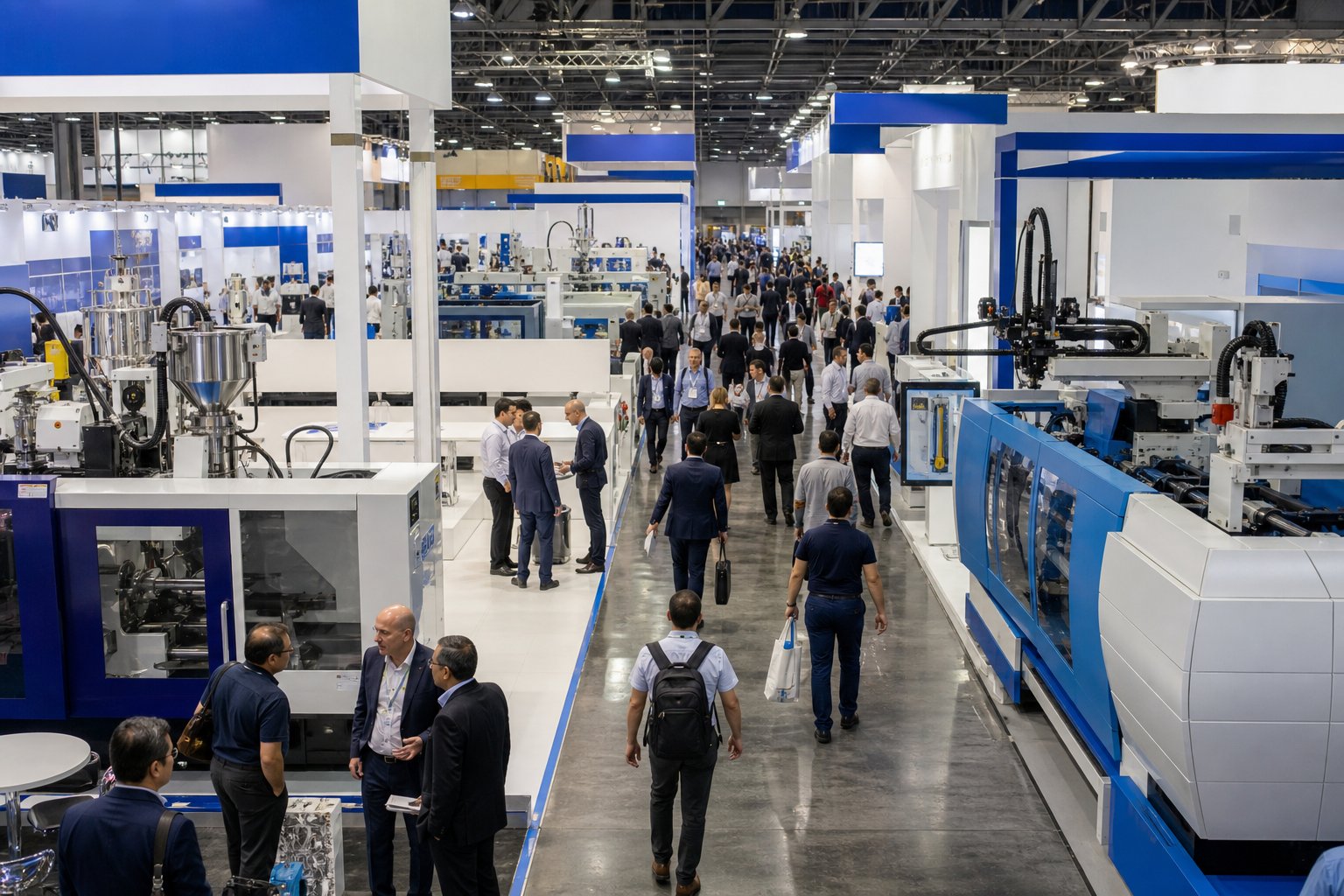
- Trade shows (Chinaplas, Canton Fair): The most effective way to see machines running, meet engineers face-to-face, and compare multiple suppliers in a single trip.
- Direct manufacturer websites: Established factories with detailed product pages, installation case studies, and transparent contact information are generally the safest starting point.
- Third-party inspection services: Companies like SGS, Bureau Veritas, and TUV Rheinland conduct independent factory audits — typically costing between $500 and $1,500 — that verify production capability, quality control procedures, and component sourcing claims.
One simple litmus test separates real manufacturers from resellers: ask to speak directly with a process engineer, not just a sales representative. A genuine conical twin screw extruder factory in China will have engineers who can discuss screw geometry, barrel metallurgy, and temperature control logic in technical detail. If every technical question gets deflected to "we'll check with the factory," you're probably talking to a trading company.
Pricing Factors, Lead Times, and MOQ Expectations
Price comparisons between suppliers are meaningless unless you understand what drives the variation. Two machines with identical screw diameters can differ in cost by 30 to 50 percent based on variables that aren't always visible on a spec sheet. Here are the major cost levers:
- Screw and barrel material grade: Bimetallic alloy linings (such as iron-based or nickel-based alloys centrifugally cast onto the barrel bore) cost significantly more than standard nitrided steel — but they last two to four times longer when processing abrasive compounds like WPC or CaCO3-filled PVC.
- Motor and electrical brand: A machine equipped with Siemens or ABB drive components will carry a premium over one using domestic Chinese motor brands. Both can perform well, but international brands often simplify local servicing in your country.
- Automation level: Basic analog controls, PLC-based systems with touchscreen HMI, and fully integrated Industry 4.0 monitoring platforms represent three distinct price tiers. Match the automation level to your operators' capabilities and your data requirements.
- Customization: Non-standard screw designs, special barrel alloys, oversized hoppers, or integrated downstream equipment all add to the quoted price.
Lead times for a complete conical twin screw extruder from a China manufacturer typically fall within 45 to 90 days for production, depending on machine complexity, current factory workload, and component availability. Ocean freight adds another 15 to 40 days depending on your destination port. Plan accordingly — rushing a manufacturer to compress production timelines rarely ends well for build quality.
MOQ norms are straightforward: for complete extrusion lines, the minimum order quantity is typically one unit. You're buying a capital asset, not a commodity. Standard payment terms across the industry follow a T/T structure — most commonly a 30 percent deposit upon contract signing with 70 percent paid before shipment. Some manufacturers accept Letters of Credit, which add bank fees but provide an extra layer of buyer protection by tying final payment release to verified shipment documentation. Be cautious of any supplier demanding more than 50 percent upfront before any production milestone has been reached.
Communication, After-Sales Support, and Spare Parts
Imagine your extruder's vacuum pump fails three months after commissioning. You send an email to your supplier. How quickly do they respond? Can they diagnose the problem remotely? How fast can they ship a replacement part to your country? These questions matter far more than the purchase price over a machine's ten-to-fifteen-year operating life. An unplanned production stoppage can cost $2,000 to $10,000 or more per day in lost output — dwarfing any initial savings from choosing the cheapest supplier.
Language barriers are real but manageable. Most established conical twin screw extruder suppliers in China employ English-speaking sales engineers, and communication platforms like WeChat and WhatsApp have largely eliminated the delays that once plagued cross-border technical support. What you're really evaluating is the quality of technical communication — can they explain root causes, provide wiring diagrams, walk you through a PLC fault code over video call? Test this during the sales process. If pre-sale communication is slow or vague, post-sale support will almost certainly be worse.
Before placing any order, use this checklist to cover the questions that separate a reliable conical twin screw extruder supplier in China from one that will leave you stranded after the wire transfer clears:
- What is your average response time for technical support requests — and is a dedicated engineer assigned to my account?
- What warranty period do you offer, and does it begin from shipment date or commissioning date?
- Do you provide on-site installation and operator training, and what costs are included versus billed separately?
- Can you supply critical spare parts within 72 hours via international express shipping?
- For how many years after purchase do you guarantee spare parts availability? (Look for a minimum of five to ten years.)
- Do your machines support remote diagnostics via IoT connectivity or video-guided troubleshooting?
- Can you provide references from customers in my country or region who have operated your machines for more than two years?
- What is the replacement lead time and pricing for conical twin screw barrels — the primary wear component?
- Do you offer a Factory Acceptance Test (FAT) where I can witness the machine running my material before shipment?
- What Incoterms do you offer, and can you arrange CIF shipping to my destination port?
That last question about screw barrels deserves special emphasis. The screw and barrel assembly is the most frequently replaced wear component on any conical twin screw extruder. Abrasive fillers, corrosive PVC stabilizer byproducts, and thousands of operating hours gradually erode screw flights and barrel bore surfaces, leading to reduced output, inconsistent plasticizing, and rising motor current. Establishing a reliable source for replacement barrels — whether from the original machine manufacturer or a specialized barrel producer — is not an afterthought. It's a core part of your long-term production strategy.
Securing the right machine from a credible supplier gets your line running. Keeping it running year after year, however, depends entirely on how well you maintain the equipment once it's installed on your factory floor.
Maintenance and Operational Best Practices for Long Equipment Life
A well-sourced conical twin screw extruder can run productively for fifteen years or more — but only if it receives consistent, structured maintenance from the day it starts producing. The difference between a machine that delivers stable output for a decade and one that starts losing throughput within three years almost never comes down to build quality alone. It comes down to what happens on your factory floor between production runs.
Maintenance isn't glamorous. But a structured maintenance rhythm — daily walks, weekly stop-time inspections, and monthly trend measurements — catches drift before it becomes downtime. Here's a practical framework tailored to conical twin screw extruder operations, whether your machine comes from a China conical twin screw extruder PVC supplier or any other origin.
Routine Inspection and Preventive Maintenance Schedule
Think of maintenance as three concentric rings: quick daily confirmations, weekly hands-on inspections during planned stops, and monthly data collection that reveals wear trends invisible to the naked eye. Each ring catches problems the others miss.
Use this prioritized checklist as your baseline — adapt the intervals to match your production intensity and compound abrasiveness:
- Daily — Confirm operating stability (10-15 minutes per shift): Listen for unusual motor or gearbox noise. Compare actual barrel zone temperatures against set points on every heating zone. Record melt pressure at a fixed screw speed — a gradual rise can signal die restriction or screen buildup, while sudden drops may indicate feeding loss. Inspect the die lip for polymer buildup or leakage. Verify vacuum pump gauge readings and cooling water flow.
- Weekly — Inspect wear points during planned downtime: Check gearbox oil level and color — foaming or darkened oil points to lubrication degradation or internal wear. Inspect heater band terminals and wiring for discoloration caused by loose connections or corrosion. Verify thermocouple readings against a calibrated reference sensor and recalibrate any that drift beyond plus or minus 2 degrees Celsius. Clean vacuum vent port residue. Examine cooling water strainers and filters for partial blockage that reduces heat transfer capacity.
- Monthly — Record trend data for planned replacement: Measure screw flight outer diameter and barrel bore inner diameter at feed, compression, and metering zones to track clearance growth. Log gearbox oil temperature under stable load — rising temperature at identical operating conditions suggests bearing wear or lubrication breakdown. Test motor insulation resistance to detect moisture ingress. Record vacuum pump ultimate pressure and compare against the original commissioning baseline. Back up all PLC and HMI parameters to prevent reprogramming delays after a controller replacement.
One reading tells you a current state. Repeated readings over months reveal the direction of wear — and that direction is what lets you schedule a repair during a planned weekend stop rather than scrambling through an emergency shutdown on a Tuesday morning.
Recognizing Screw and Barrel Wear Patterns
The screw and barrel assembly is where wear hits hardest and costs the most. As the gap between screw flights and the barrel bore widens, more melt slips backward instead of being pumped forward — a phenomenon that quietly drains throughput, raises energy consumption, and destabilizes product quality. Industry troubleshooting guidance consistently identifies reduced specific rate and higher discharge temperatures as classic early signals of screw and barrel wear.
Watch for these warning signs during production:
- Reduced output at unchanged settings: If your 65/132 machine used to produce 280 kg/h of rigid PVC pipe compound at 35 rpm and now delivers only 240 kg/h at the same speed, clearance has opened up and melt is leaking backward past the screw flights.
- Increased motor current draw: The drive works harder to push the same volume of material as pumping efficiency drops. Rising amperage at constant throughput is a reliable quantitative indicator.
- Inconsistent plasticizing and melt temperature instability: Uneven clearance across the barrel length creates zones where material is over-processed or under-processed, producing melt temperature variation that shows up as surface defects, dimensional drift, or internal voids in the finished product.
- Visible scoring, pitting, or corrosion on screw flights and barrel bore: When screws are pulled for inspection, check flight edges for rounding and barrel surfaces for longitudinal grooves. Roughened surfaces don't just indicate existing wear — they create new hang-up zones where degraded polymer accumulates and generates black specks or discoloration.
Abrasive fillers accelerate every one of these wear patterns. Calcium carbonate, titanium dioxide, and wood flour act like fine grinding media circulating inside the barrel at elevated temperature. A conical twin screw extruder PVC supplier in China processing CaCO3-filled compounds at 40-60 phr will see measurably faster wear progression than an identical machine running unfilled rigid PVC. Matching screw and barrel metallurgy to the compound is not optional — it's a direct determinant of component lifespan.
Extending Equipment Lifespan Through Best Practices
Good maintenance catches problems. Good operational habits prevent them from forming in the first place. Several practices consistently separate factories that get twelve to fifteen years from their equipment from those replacing major components at year five.
Never cold-start the extruder. PVC residue left in the barrel from the previous run solidifies into a hard mass that resists plasticization. Starting the screws against this solidified material overloads the gearbox and gouges barrel surfaces. Always bring barrel temperatures up to the full operating profile — and hold them for a minimum of 15 to 20 minutes — before engaging screw rotation. This soak period allows residual polymer to soften and ensures even thermal expansion across the barrel and screws.
Follow a controlled shutdown sequence. Purge the barrel with a compatible cleaning compound or virgin PVC at the end of each production run. Reduce screw speed gradually while maintaining barrel temperature, then stop the screws only after the barrel is reasonably clear of material. Shutting down with a full barrel means cold, hardened polymer at the next startup — and the damage cycle described above begins again.
Maintain correct temperature profiles religiously. PVC's processing window is narrow. Running barrel zones even 10 to 15 degrees Celsius above optimal to compensate for reduced output — a common reaction to wear — actually accelerates degradation and further damages screw and barrel surfaces through corrosive byproducts. Address the root cause of throughput loss rather than masking it with higher temperatures.
Keep raw materials clean and dry. Contamination — metal fragments, sand, improperly mixed additives — acts as abrasive media inside the barrel. Moisture in PVC dry blends causes steam pockets during plasticization, creating pressure spikes and surface defects. Proper material storage, sieving, and pre-drying discipline protects the entire barrel system.
Invest in quality replacement screw barrels. When wear measurements confirm that clearances have exceeded acceptable tolerances, the replacement barrel's material composition and surface treatment determine how long the next service interval will last. Bimetallic alloy linings resist abrasive wear far longer than standard nitrided steel, and properly hardened screw flight surfaces maintain their geometry under continuous filler contact. Cutting costs on replacement components to save a few hundred dollars creates a false economy that shows up as shortened service life, higher reject rates, and more frequent line stoppages.
Every operational shortcut — skipping the preheat soak, ignoring rising motor current, using bargain-grade replacement parts — compounds over time into exactly the kind of unplanned failure that costs far more than the maintenance it would have prevented. The screw barrel assembly sits at the center of this equation, and its condition ultimately determines whether your extruder delivers consistent output or slowly deteriorates into unreliable performance.
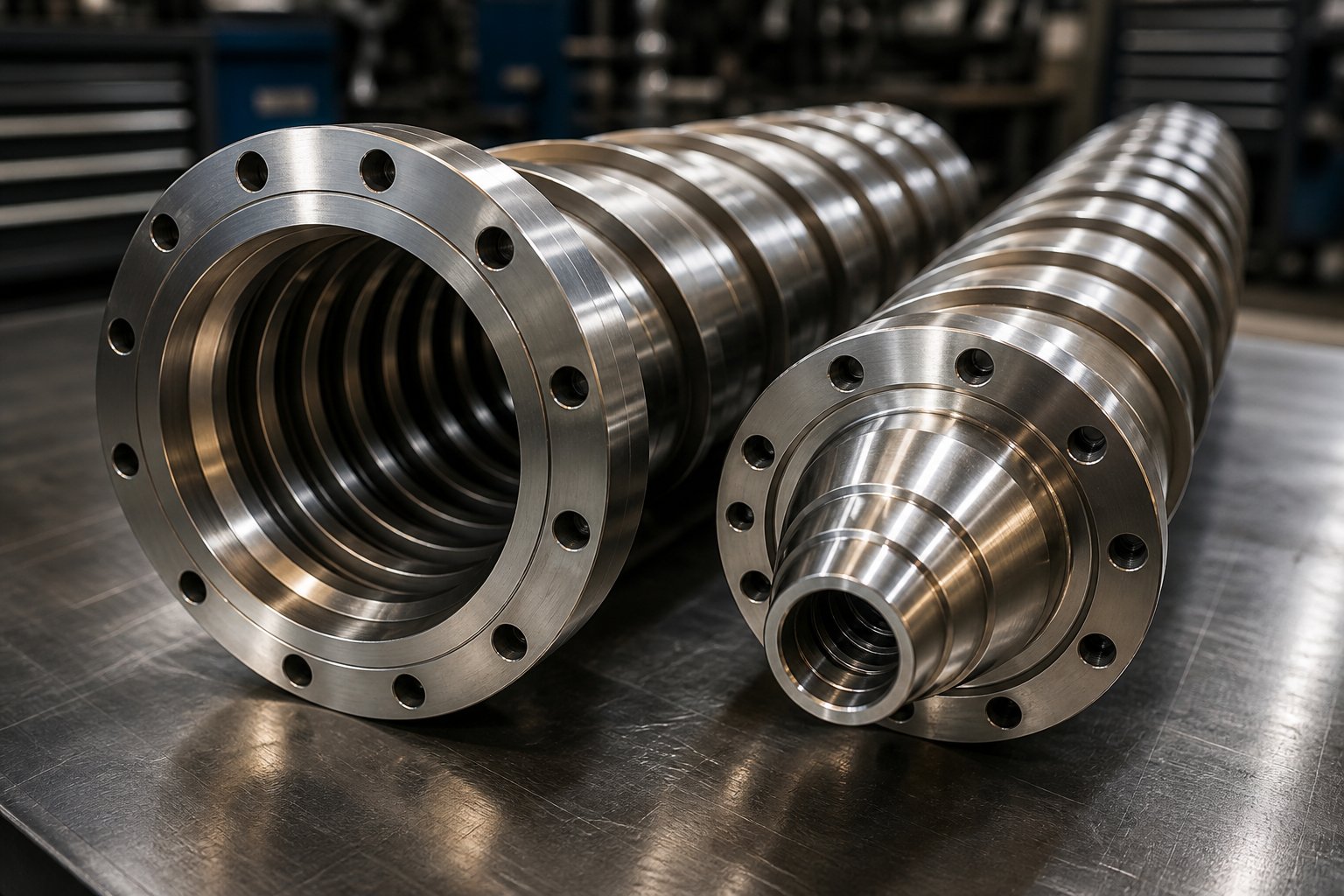
Selecting the Right Conical Twin Screw Barrel for Consistent Output
Screw and barrel clearances don't stay within tolerance forever. That's not a defect — it's physics. Abrasive fillers, corrosive PVC decomposition byproducts, and thousands of operating hours gradually erode even the best-engineered surfaces. When your trend data confirms that clearances have crossed the threshold, the replacement barrel you install determines whether you're restoring original performance or simply resetting the clock on another premature failure. This decision deserves the same rigor you applied to selecting the extruder itself.
Why the Screw Barrel Is the Heart of Extrusion Quality
Think of the screw barrel assembly as the engine block of your conical twin screw extruder. Every other system — the motor, the gearbox, the temperature controllers, the vacuum pump — exists to support what happens inside the barrel bore. Material composition, dimensional precision, and surface treatment of the barrel directly control three production outcomes that define your profitability: plasticizing consistency, output stability, and finished product quality.
When a barrel is manufactured to tight tolerances with appropriate metallurgy, the gap between screw flights and barrel bore stays uniform across all processing zones. This uniformity ensures that melt temperature, pressure, and viscosity remain consistent from the first kilogram of the production run to the last. The result is predictable wall thickness in pipes, tight dimensional tolerances in profiles, and uniform cell structure in foam boards.
A worn or poorly manufactured barrel disrupts this precision in ways that cascade through the entire process. Uneven clearance creates localized zones where material either over-shears or under-plasticizes, producing melt temperature variation across the barrel cross-section. You'll notice the effects downstream: surface roughness on extruded profiles, dimensional drift that triggers reject alarms on the haul-off, reduced mechanical strength in finished pipes, and rising scrap rates that eat into margins. Industry data suggests that screw wear reduction of up to 60 percent and throughput increases of up to 25 percent are achievable when barrel assemblies are properly specified and maintained — numbers that illustrate just how much production performance depends on this single component.
Reduced throughput forces operators into a tempting but destructive cycle: raising barrel temperatures or increasing screw speed to compensate for lost pumping efficiency. Both responses accelerate degradation. Higher temperatures push PVC closer to its decomposition threshold, generating corrosive hydrogen chloride that attacks barrel surfaces. Faster screw speeds increase frictional heat and abrasive wear simultaneously. The barrel that was losing performance slowly now deteriorates rapidly.
What to Look for in a Replacement Conical Twin Screw Barrel
Not all replacement barrels are created equal. A barrel that looks dimensionally correct on paper can still underperform if the metallurgy, surface treatment, or manufacturing precision falls short of what your process demands. When evaluating options — whether from a China conical twin screw extruder wholesaler, an OEM supplier, or a dedicated barrel manufacturer — measure every candidate against these criteria:
- Dimensional accuracy to OEM specifications: The replacement barrel must match the original bore taper angle, inner diameter profile, and mounting geometry precisely. Even small deviations — fractions of a millimeter — alter the clearance between screw flights and barrel bore, disrupting the compression ratio and melt consistency the machine was designed to deliver. Always request dimensional inspection reports with actual measured values, not just nominal specifications.
- Metallurgical options matched to your compound: Standard nitrided 38CrMoAlA steel provides good surface hardness and adequate wear resistance for unfilled or lightly filled PVC processing. For abrasive compounds — CaCO3-loaded PVC, WPC blends with wood flour, or TiO2-pigmented formulations — bimetallic alloy linings with tungsten carbide or nickel-based alloys offer significantly longer service life. The higher upfront cost of bimetallic barrels pays for itself through extended replacement intervals and reduced downtime.
- Surface hardness and corrosion resistance: Barrel bore surfaces must withstand both mechanical abrasion from filler particles and chemical attack from PVC thermal decomposition products. Nitrided barrels typically achieve surface hardness of HV 900 to 1,050, while bimetallic linings can reach HRC 58 to 65 depending on the alloy composition. For chlorine-rich processing environments, corrosion resistance matters as much as hardness.
- Compatibility with your specific extruder model: Conical twin screw barrel geometry varies across manufacturers and model generations. A barrel designed for a 65/132 extruder from one builder won't necessarily fit another builder's 65/132 machine — mounting bolt patterns, barrel flange dimensions, heating zone positions, and vent port locations all differ. Confirm compatibility through technical drawings, not just diameter specifications.
- Manufacturer technical support and documentation: A quality barrel supplier provides material certification, hardness test reports, dimensional inspection data, and clear installation guidance. They should also offer technical consultation on metallurgy selection based on your specific compound and operating conditions — not just sell you whatever is in stock.
One often-overlooked consideration: optimized replacement barrels can sometimes outperform the original OEM components. A specialized barrel manufacturer may offer improved alloy formulations, tighter bore tolerances, or surface treatments that weren't available when your extruder was originally built. Treating a barrel replacement as a like-for-like swap misses an opportunity to upgrade your process.
Sourcing Custom and Replacement Barrels from Specialized Manufacturers
When it's time to order replacement conical twin screw barrels, buyers typically face two paths. The first is going back to the original extruder manufacturer — convenient, but often more expensive and limited to the same metallurgy and design that shipped with the machine years ago. The second is working with a dedicated screw barrel specialist — a manufacturer whose entire business revolves around barrel and screw production rather than complete extrusion lines.
Dedicated barrel specialists tend to offer distinct advantages. Because screw and barrel manufacturing is their core competency, they invest heavily in precision grinding, centrifugal casting equipment for bimetallic linings, and CNC machining centers calibrated specifically for conical bore geometries. This focus often translates into tighter dimensional tolerances, a broader range of alloy options, and faster turnaround times than a full-line extruder manufacturer can provide for replacement parts.
For PVC pipe, PVC profile, PVC sheet, and WPC extrusion producers searching for a conical twin screw extruder PVC wholesaler in China, NANHAIYA represents this specialist approach. Their production focuses specifically on custom and replacement conical twin screw barrels, serving processors who need components engineered to match their exact extruder model and compound requirements. Buyers evaluating barrel specifications can review their conical twin screw barrel product page for details on available configurations, material options, and dimensional capabilities.
Regardless of which supplier you choose, the sourcing process should follow the same verification discipline you'd apply to a complete extruder purchase. Request material certifications. Ask for hardness test data. Confirm dimensional accuracy through inspection reports. And always send your existing barrel's technical drawing — or arrange for the supplier to reverse-engineer your worn barrel — before production begins. A barrel manufactured to incorrect dimensions is worse than a worn one, because it creates asymmetric clearance patterns that damage new screws and produce defects no amount of process adjustment can correct.
The screw barrel is the one component you will replace multiple times over your extruder's lifespan. Getting this choice right every time is not a maintenance task — it is a production strategy.
With the right barrel partner secured alongside your extruder supplier, you've addressed both the initial capital purchase and the ongoing component supply chain that sustains it. The final step is pulling every decision point from this guide into a clear, actionable evaluation framework you can use before contacting any supplier.
Your Action Plan for Sourcing Conical Twin Screw Extruders from China
You've covered a lot of ground — from tapered screw geometry and counter-rotating mechanics to barrel metallurgy and spare parts strategy. That's a dense stack of technical knowledge. But knowledge without a structured decision sequence leads to the same scattered sourcing process that costs buyers thousands of dollars in mismatched equipment, overlooked maintenance costs, and supplier headaches. Let's compress everything into a single evaluation framework you can carry into your first supplier conversation.
Building Your Evaluation Checklist Before Contacting Suppliers
Imagine walking into a negotiation with a China conical twin screw extruder wholesale supplier already knowing exactly what you need, what questions to ask, and what red flags to watch for. That's the advantage a structured checklist creates. Every step below maps directly to a decision point covered earlier in this guide:
- Define your target product and material precisely. Are you extruding rigid PVC pressure pipe, CPVC fittings, WPC decking, or PVC foam board? Your compound's filler content, thermal sensitivity, and bulk density determine whether a conical twin screw design is the right platform — and which screw geometry will process it most effectively.
- Determine required output capacity and screw diameter. Match your daily production targets to the appropriate screw diameter pair. A 55/110 handles mid-volume profile work; an 80/156 powers high-throughput pipe lines. Request material-specific output data rather than accepting generic maximum capacity claims.
- Verify manufacturer certifications and export experience. Confirm ISO 9001 and CE documentation through the issuing body's database — not just supplier-provided scans. Prioritize factories with a proven track record shipping to your region, and ask for verifiable customer references you can contact directly.
- Request a Factory Acceptance Test or sample production run. Any credible conical twin screw extruder wholesaler in China will demonstrate their machine running your material before shipment. If a supplier refuses performance testing, treat that as a disqualifying signal.
- Negotiate warranty terms, spare parts commitments, and after-sales response times. Pin down whether the warranty starts at shipment or commissioning. Secure written guarantees for spare parts availability spanning at least five to ten years. Confirm that a dedicated technical engineer — not just a sales contact — will handle your post-purchase support.
- Secure a reliable screw barrel replacement source for long-term operation. The barrel assembly is the component you'll replace multiple times over the extruder's lifespan. Locking in a qualified barrel supplier — whether the OEM or a specialist manufacturer like NANHAIYA — before you commission the machine ensures that your first barrel replacement doesn't become an emergency scramble.
This sequence matters. Skipping straight to price negotiations without completing steps one through three is how buyers end up with machines that technically meet a spec sheet but fail to match their actual production requirements. Industrial procurement best practices consistently emphasize that total cost of ownership — not unit price — should drive capital equipment decisions. A machine priced 20 percent below the competition means nothing if it ships with an undersized gearbox, arrives with no installation support, and leaves you hunting for compatible barrel replacements two years later.
Making a Confident Sourcing Decision
Successful procurement of a conical twin screw extruder from China balances three pillars: technical specifications matched to your process, manufacturer credibility verified through documentation and references, and long-term support infrastructure that keeps your line running years after the purchase order closes. Weakness in any single pillar undermines the other two.
The technical foundation is straightforward — you now understand screw geometry, L/D ratios, motor torque, heating zones, and how each parameter connects to real production outcomes. Manufacturer credibility follows a clear verification path through certifications, factory audits, trade show interactions, and customer references. The third pillar — long-term support — is where most buyers leave value on the table. Warranty terms, remote troubleshooting capability, spare parts lead times, and especially the quality of replacement screw barrels determine whether your investment delivers consistent returns over a ten-to-fifteen-year equipment lifecycle.
Partnering with specialists for critical wear components is a practical strategy that experienced processors adopt early. A dedicated barrel manufacturer like NANHAIYA — focused specifically on conical twin screw barrels for PVC pipe, profile, sheet, and WPC applications — provides the metallurgical expertise, dimensional precision, and turnaround speed that production continuity demands. Treating barrel sourcing as a separate, parallel supply chain decision alongside the machine purchase itself removes a single point of failure from your long-term operations.
The best time to plan your spare parts strategy is before your extruder ships — not after your first barrel wears out. Approach sourcing as a system: the right machine, from a verified manufacturer, backed by a dedicated barrel partner and a structured maintenance plan.
This guide was built to give you the technical clarity and procurement framework to make that system work. Take the checklist above into your next supplier conversation, ask the hard questions early, and let the answers — not the price tag — guide your decision. The cost savings from sourcing a conical twin screw extruder wholesale in China are real and significant. Making sure those savings don't come at the expense of quality, support, or long-term reliability is entirely within your control.
Frequently Asked Questions About Conical Twin Screw Extruders from China
1. What is the difference between a conical twin screw extruder and a parallel twin screw extruder?
A conical twin screw extruder uses two tapered screws that narrow toward the discharge end, building compression through decreasing diameter rather than extended barrel length. This results in a shorter residence time and a more compact footprint. A parallel twin screw extruder maintains a constant screw diameter along its full length, offering longer L/D ratios and greater residence time — which can benefit high-filler-content compounds or reactive extrusion. For heat-sensitive PVC powder processing, the conical design is generally preferred because its low-speed, high-torque operation and gentle shear profile minimize thermal degradation risk.
2. What materials can a conical twin screw extruder process?
Conical twin screw extruders are engineered primarily for heat-sensitive and moderately filled polymers. Their strongest applications include rigid PVC (UPVC), flexible PVC, CPVC, wood-plastic composites (WPC) with wood flour loadings up to 70%, PVC foam board compounds, and calcium-carbonate-filled PVC formulations. The machine's low shear, effective vacuum degassing, and positive displacement conveying make it ideal for powder-based feeds that would stall or degrade in single screw systems. For extremely high filler loadings above 100 phr, a parallel twin screw configuration may provide better mixing performance.
3. How much does a conical twin screw extruder from China cost?
Pricing varies significantly based on screw diameter, barrel metallurgy (bimetallic vs. nitrided steel), motor and electrical component brands (Siemens/ABB vs. domestic), automation level, and customization requirements. Two machines with identical screw diameters can differ by 30-50% in price due to these variables. Rather than focusing on unit price, experienced buyers evaluate total cost of ownership — factoring in energy efficiency, spare parts availability, barrel replacement frequency, and after-sales support quality. Standard payment terms typically follow a T/T structure with 30% deposit and 70% balance before shipment.
4. How do I verify a conical twin screw extruder manufacturer in China is legitimate?
Start by confirming ISO 9001 and CE certifications directly through the issuing body's database, as fraudulent documents do circulate. Check the factory's operational history — manufacturers with ten or more years in business offer greater reliability. Request verifiable customer references in your region. Attend trade shows like Chinaplas to inspect machines firsthand. Consider third-party factory audits through SGS, Bureau Veritas, or TUV Rheinland (typically $500-$1,500). A key litmus test: ask to speak with a process engineer who can discuss screw geometry and barrel metallurgy in technical detail. If only sales staff are available, you may be dealing with a trading company rather than an actual manufacturer.
5. How often should conical twin screw barrels be replaced, and where can I source quality replacements?
Replacement intervals depend on your compound's abrasiveness, filler content, and operating hours. Monthly measurements of screw flight diameter and barrel bore clearance reveal wear trends — when clearance exceeds manufacturer tolerances, output drops and product quality deteriorates. Buyers can source replacements from the original extruder manufacturer or from dedicated barrel specialists like NANHAIYA (nhyscrews.com), who focus exclusively on custom and replacement conical twin screw barrels for PVC pipe, profile, sheet, and WPC applications. Specialized barrel manufacturers often deliver tighter tolerances, broader metallurgical options including bimetallic alloy linings, and faster turnaround than OEM replacements.
Written by
Nanhaiya Technical Team
Zhoushan Nanhaiya Plastic Machinery Co., Ltd.
The Nanhaiya technical team supports screw and barrel manufacturing projects through application review, technical communication, custom manufacturing coordination, and production and quality control.
Discuss Your Application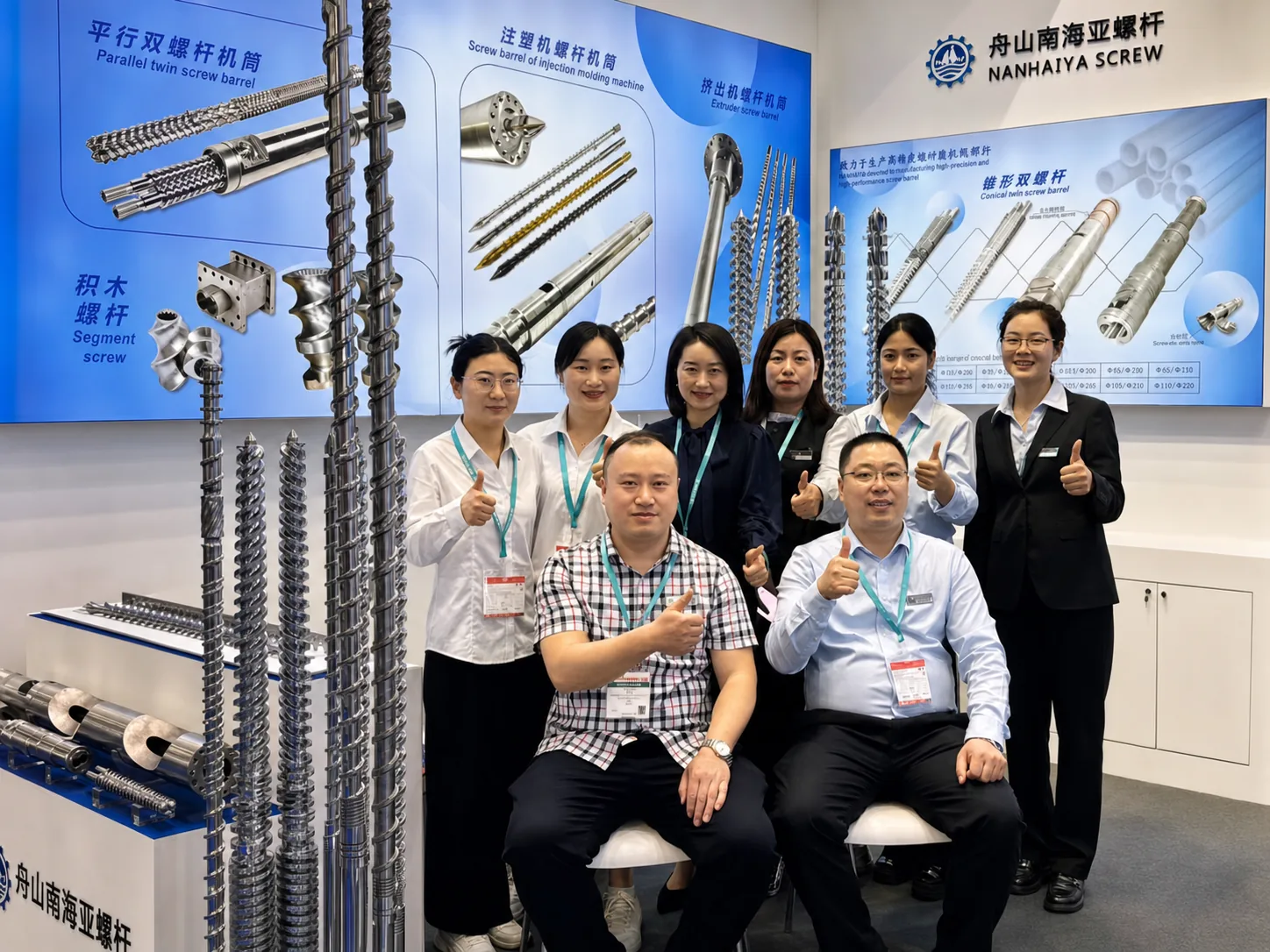
Related Articles
More insights on screw barrel technology and plastics processing.
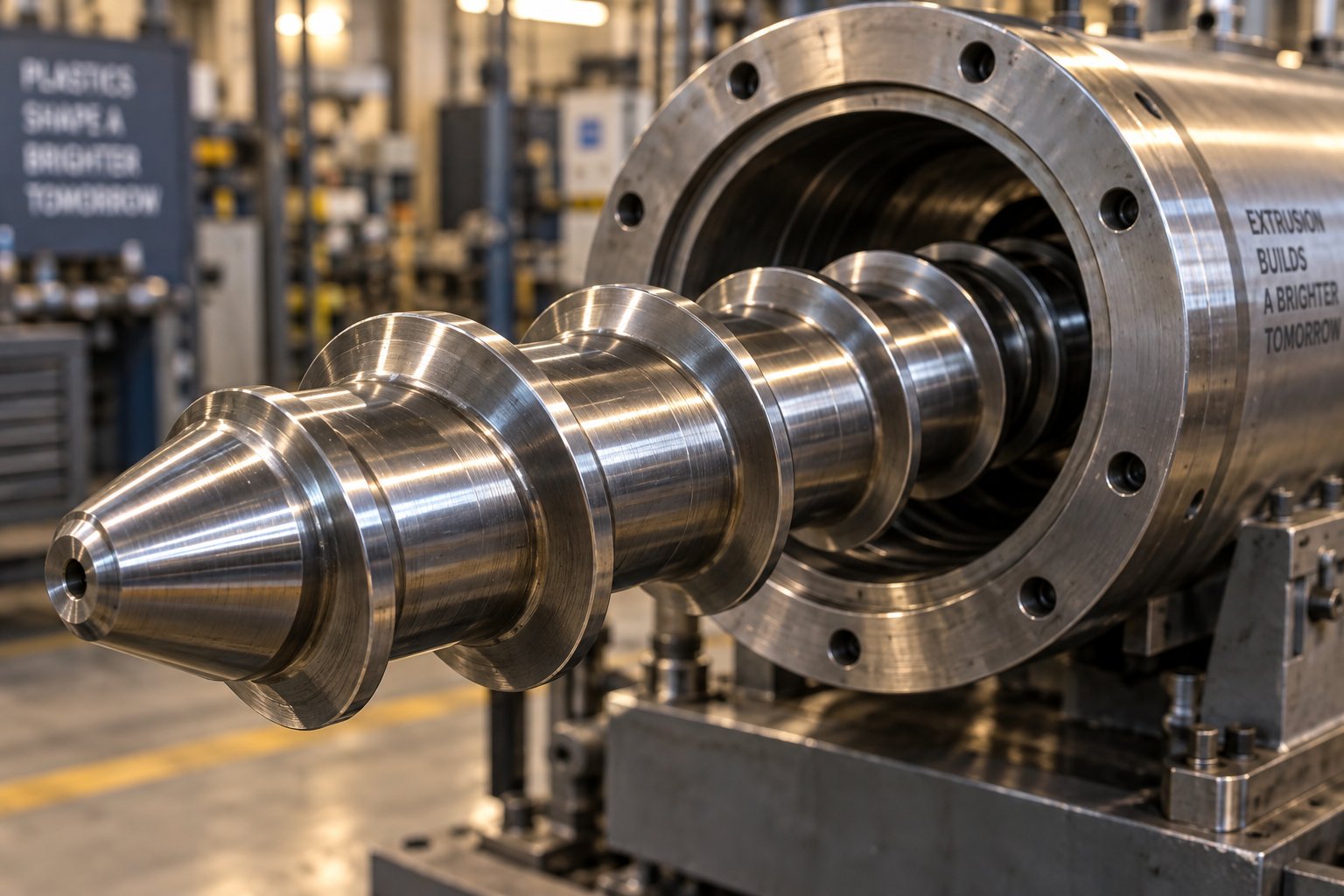
What Nobody Tells You About Screw Barrel For Plastic Machine Design
Oct 10, 2026
Learn how screw barrel for plastic machine design affects melt quality, throughput, and wear life. Covers geometry, resin matching, troubleshooting, and sourcing.
Read Article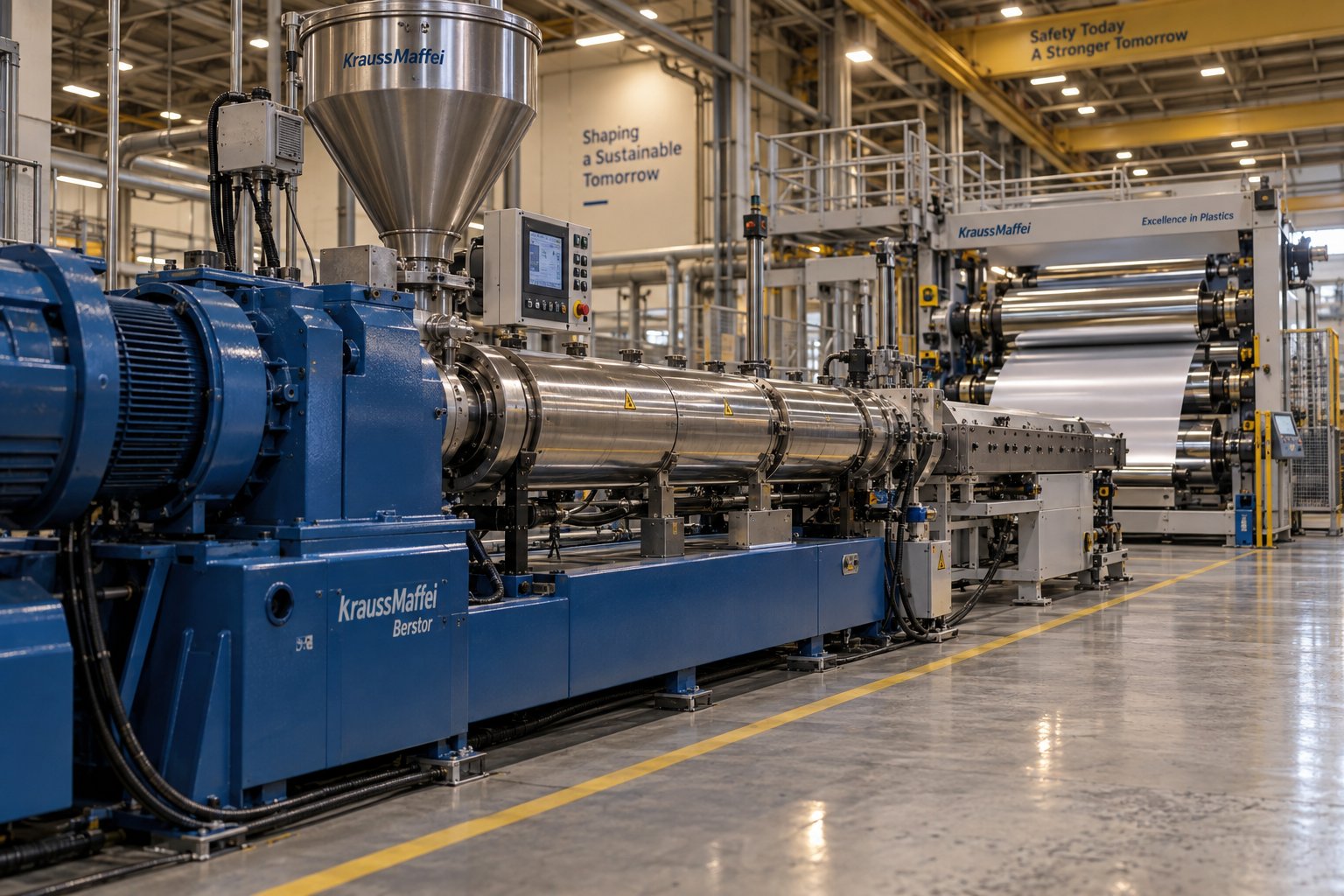
Single Screw Extruder for Sheet: Stop Guessing, Start Specifying
Oct 9, 2026
Learn how to specify a single screw extruder for sheet production. Covers screw geometry, resin-specific processing, troubleshooting, and maintenance best practices.
Read Article
PE Pipe Extruder Machine: What Datasheets Won't Tell You
Oct 9, 2026
Learn how a PE pipe extruder machine works, key specs explained, material grade selection, maintenance tips, and buyer guidance beyond the datasheet.
Read ArticleLooking for something else?
Search by material, symptom or product and jump straight to the relevant page.
These are navigation suggestions based on keyword matching — not a quotation, not a delivery commitment, and not a substitute for engineering review. Final specification is confirmed by our engineers against your drawings and processed material.
Need help with screw barrel selection?
Share your machine model, processed material and application. Our team can help with pricing and technical support.