

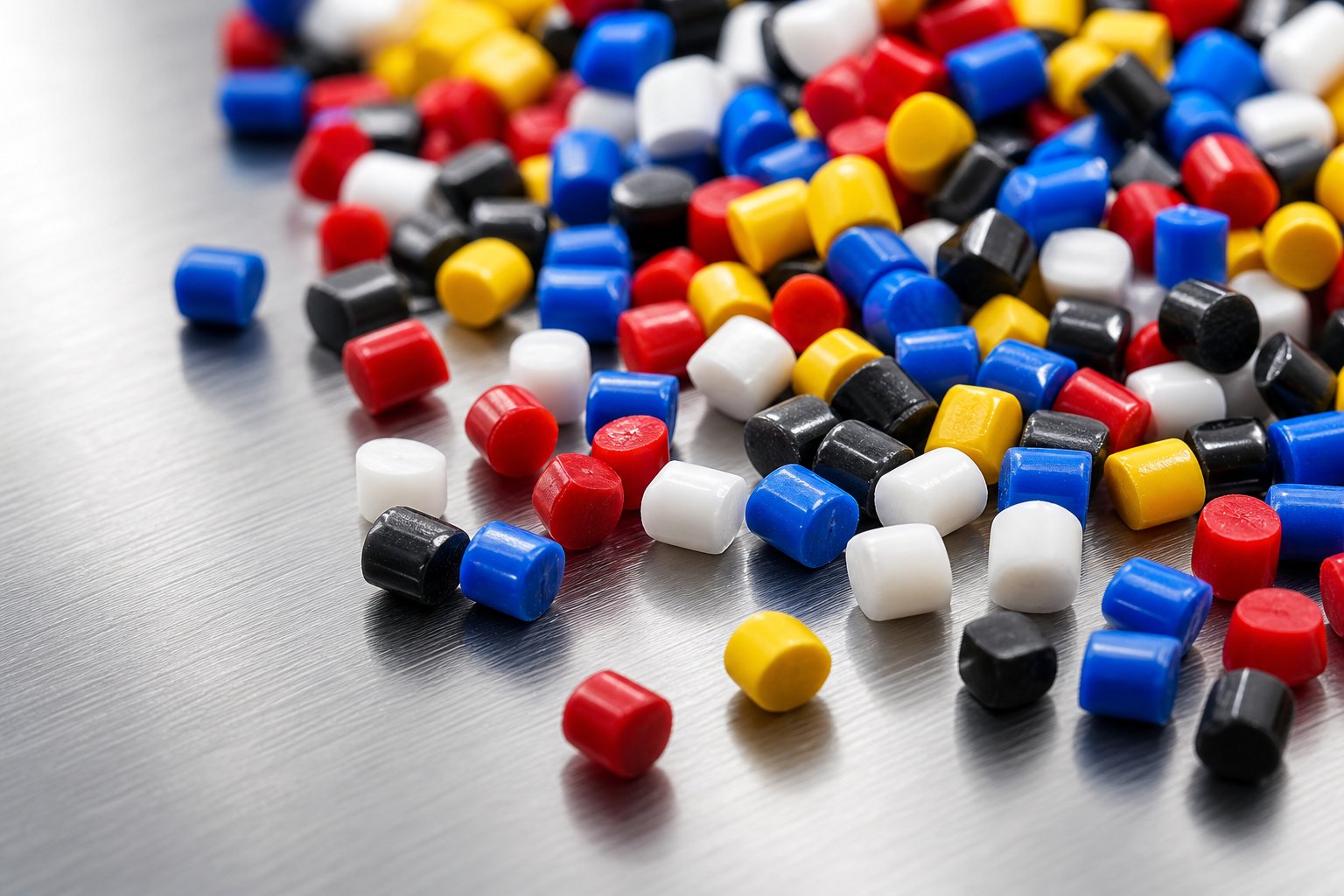
What Is Color Masterbatch and How It Works
Imagine you need a precise shade of blue across a million injection-molded parts. Would you rather measure loose pigment powder on every cycle, or drop a handful of pre-formulated color pellets into the hopper? That choice captures exactly why color masterbatch has become the default coloring method in plastics manufacturing.
What Does Color Masterbatch Mean in Plastics Processing
So, what is masterbatch in simple terms? It is a concentrated blend of pigments or dyes encapsulated within a carrier resin, combined with dispersing agents and optional performance additives, then formed into uniform granules. During processing, a small measured dose of these pellets is blended with natural (uncolored) polymer to deliver the target shade throughout the finished part.
Color masterbatch is a concentrated mixture of pigments or dyes dispersed in a compatible carrier resin, pelletized into granules, and metered into raw polymers during extrusion or molding to produce consistently colored plastic products.
The masterbatch meaning becomes clearer when you break down its composition. Every formulation contains four core elements: the pigment or dye that supplies the color, a carrier resin that acts as the delivery vehicle, a dispersant — typically a wax or stearate — that prevents pigment clumping, and any functional additives such as UV stabilizers or antioxidants required by the end application. This structure sets a color master batch apart from raw pigment powder, which offers none of the built-in dispersion or handling advantages.
Why Color Masterbatch Became the Industry Standard
Decades ago, processors dosed loose pigment directly into the barrel — a method that worked, but came with serious trade-offs. Fine powders drifted across the shop floor, color consistency varied from operator to operator, and every shade change meant an extended purge cycle. The term itself traces back to the practice of preparing one large, precisely formulated "master batch" of pigment in a carrier resin, then letting processors add a small, repeatable portion to each production run.
That simple concept solved multiple problems at once. Masterbatches eliminated airborne dust contamination, reduced EPA-reportable particulate exposure by more than 70%, and delivered repeatable color with spectrophotometer-verified accuracy. Inventory management became simpler because a single colour masterbatch concentrate replaced shelves of individual pigment drums. Automated gravimetric feeders could dose pellets with precision that powders never allowed, making master batches a natural fit for high-speed, lights-out production lines.
These operational advantages — cleanliness, consistency, dosing accuracy, and cost efficiency — explain why the vast majority of plastics processors worldwide have standardized on this approach. Yet choosing the right formulation involves far more than picking a color swatch. The carrier resin, the pigment chemistry, and the coloring method itself all influence final part quality in ways that deserve a closer look.
Color Masterbatch vs Dry Pigments vs Liquid Colorants
Picking a coloring method might seem straightforward — until you realize the decision ripples through changeover time, scrap rate, regulatory compliance, and cost per part. Four primary options dominate plastics processing today: color masterbatch, dry pigment dosing, liquid colorants, and pre-colored resin. Each carries distinct trade-offs, and understanding those differences is the fastest way to match the right method to your operation.
Color Masterbatch vs Dry Pigment Dosing
Dry pigment powder is the oldest and cheapest coloring route on a per-kilogram basis. You're working with raw color in its most concentrated form — no carrier resin, no pelletization step. For very large, single-color runs where cost per gram of pigment matters above all else, it can still make economic sense.
The practical downsides, however, are substantial. Fine pigment particles become airborne during handling and dosing, creating dust hazards that affect worker safety and risk cross-contaminating adjacent production lines. Achieving uniform dispersion requires specialized high-intensity mixing equipment, and even then, color consistency varies from operator to operator and shift to shift. Every shade change means extended purge cycles and thorough cleaning of hoppers, feeders, and barrel components — downtime that erodes whatever savings the cheaper raw material delivered.
Color masterbatch eliminates most of these headaches. Because the pigment is already fully dispersed within a carrier resin and formed into clean, dust-free pellets, handling is simpler, dosing is repeatable, and color changes are faster. For operations running engineering plastics like ABS, PC, or PA, dry powder is particularly problematic — it disperses poorly in these resins and can degrade mechanical properties.
Liquid Colorants and Pre-Colored Resin Compared
Liquid masterbatch — sometimes called liquid color or color paste — suspends pigments or dyes in a fluid carrier rather than a solid resin. A metering pump delivers precise micro-doses directly at the feed throat, which means you'll typically use far less colorant per part (often below 1% by weight). Color changes can be remarkably fast because there are no residual pellets to purge, just a quick line flush.
The trade-offs? Liquid colorants require dedicated metering pumps and sealed delivery systems. Moisture sensitivity and limited shelf life demand tighter storage controls than solid plastic color concentrate pellets. Certain processes, especially blown film lines with extremely tight tolerances, may not respond well to the subtle flow variations a liquid carrier introduces. Still, for injection molding and many extrusion operations with frequent changeovers, liquid color has matured into a genuinely competitive alternative — particularly when paired with modern closed-loop dosing equipment.
Pre-colored resin, also known as compound, sits at the opposite end of the flexibility spectrum. The pigment is fully compounded into the base polymer before it ever reaches your facility, so you're processing a ready-to-mold material with excellent dispersion and zero dosing variability. Sounds ideal — but convenience comes at a price. Pre-colored compounds carry higher material costs, require large minimum order quantities, and involve lead times that make last-minute color adjustments nearly impossible. For high-tech applications in automotive or medical devices where color concentrates for plastics must meet stringent specifications on every single pellet, compounds can justify the premium. For everyone else, the inflexibility is hard to overlook.
| Criteria | Color Masterbatch | Dry Pigment Powder | Liquid Colorant | Pre-Colored Resin |
|---|---|---|---|---|
| Dispersion Quality | Very good — pigment pre-dispersed in carrier resin | Variable — depends on mixing equipment and operator skill | Excellent — fluid carrier promotes uniform distribution | Excellent — pigment fully compounded into polymer |
| Color Consistency | High — repeatable with gravimetric feeders | Low to moderate — prone to shift-to-shift variation | High — precision metering pumps maintain tight tolerances | Very high — no on-site dosing variables |
| Processing Cleanliness | Clean — dust-free pellets | Poor — airborne dust, cross-contamination risk | Clean with sealed systems; messy with older equipment | Cleanest — no colorant handling at all |
| Color Change Flexibility | Good — moderate purge required | Poor — extensive cleaning between colors | Very good — minimal purge, fast changeovers | Very poor — new material order required |
| Cost per Part | Moderate — balanced cost and performance | Lowest raw cost, but hidden costs in waste and labor | Low dosing rates can reduce cost; pump investment needed | Highest material cost; lowest processing labor |
| Equipment Requirements | Standard hopper feeder (volumetric or gravimetric) | High-intensity mixer; dust collection system | Metering pump and sealed delivery system | None beyond standard processing equipment |
When to Choose Each Coloring Method
The right choice depends less on which method is "best" in the abstract and more on how your specific operation runs day to day. Consider these practical decision drivers:
- High-volume, long production runs with stable colors: Pre-colored resin or dry pigment dosing can work if color accuracy requirements are moderate. For tighter master batch colour specifications at scale, masterbatch remains the go-to.
- Frequent color changes and short runs: Liquid colorant shines here — minimal purge, fast transitions, and low waste. Color masterbatch is a strong second choice, especially if you already have gravimetric feeding equipment in place.
- Strict regulatory compliance (food contact, medical, toys): Both master batches and pre-colored compounds offer the documentation and traceability these applications demand. Dry pigments often fall short on compliance because uncoated particles are harder to certify for restricted-contact use.
- Engineering plastics (PC, PA, ABS): Solid color concentrate is strongly preferred. Dry powder disperses poorly in these high-performance polymers and can compromise mechanical integrity.
- Budget-constrained, low-precision applications: Dry pigment remains viable when color tolerance is loose and a single shade runs continuously.
Every coloring method places different demands on the compounding and processing steps that turn raw ingredients into consistent, defect-free pellets. The manufacturing process behind those pellets — from raw material selection through twin-screw extrusion to final quality testing — is where color quality is truly won or lost.
The Color Masterbatch Manufacturing Process Step by Step
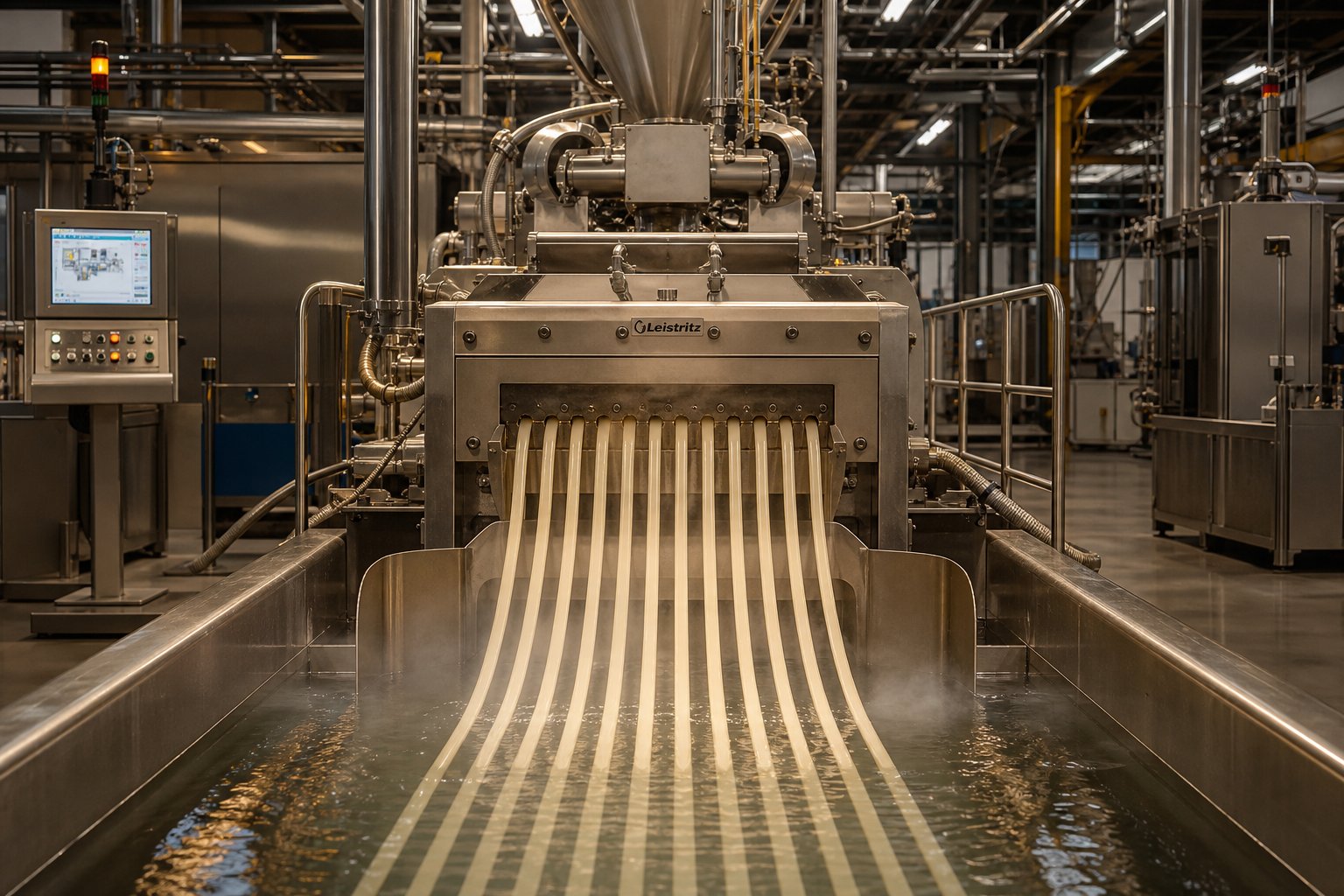
A perfectly colored pellet doesn't happen by accident. Behind every consistent, defect-free granule lies a tightly controlled masterbatch manufacturing process that transforms raw pigments, carrier resins, and additives into a product processors can trust batch after batch. Yet surprisingly few resources walk through these stages in any real detail. Here's what actually happens on the production floor — from weighing raw ingredients to shipping tested, approved pellets.
Raw Material Selection and Pre-Mixing
Every formulation starts with four decisions that shape everything downstream: carrier resin, pigment or dye, dispersing agent, and optional functional additives.
The carrier resin must be compatible with the base polymer the processor will eventually use. A masterbatch destined for polypropylene parts, for example, typically rides on an LDPE or EVA carrier because these resins melt easily into polyolefin matrices without causing haze or delamination. Picking the wrong carrier is one of the fastest routes to visible defects — a topic worth its own deep dive later in this article.
Pigment selection involves choosing between organic and inorganic chemistries. Inorganic pigments — titanium dioxide for whites, iron oxides for reds and yellows, carbon black for deep blacks — offer excellent heat stability and opacity but tend to be highly abrasive. Organic pigments deliver brilliant, vivid hues with lower opacity, though they're more sensitive to processing temperatures. This distinction matters enormously during compounding, as you'll see in a moment.
Dispersing agents, usually polyethylene waxes or metal stearates, reduce surface tension between the pigment particles and the carrier resin, helping break apart stubborn agglomerates. Functional additives such as UV stabilizers, antioxidants, or antistatic agents round out the recipe when end-use conditions demand them.
With ingredients weighed to tight tolerances — precision loss-in-weight systems can hold accuracy within ±0.1% — everything moves into a high-speed mixer. These mixers spin at 500 to 3,000 RPM, driving raw materials up the vessel walls and then redirecting them back toward the center. The result is a homogeneous dry premix ready for the most critical step in the entire masterbatch production line.
Twin-Screw Extrusion Compounding and Pelletizing
Imagine forcing a thick paste through an increasingly narrow gap while simultaneously heating it, shearing it, and venting off trapped moisture. That's essentially what a co-rotating twin-screw extruder does to the premix — and it's the stage where masterbatch dispersion quality is truly determined.
The premix enters the barrel's feed section, where large-lead screw elements convey material forward. As it advances into the kneading block zone, intermeshing screw elements apply intense shear — rates typically range from 500 to 1,500 s⁻¹ — to break down pigment agglomerates into individual particles uniformly distributed throughout the molten carrier resin. Sectional temperature control along the barrel, often spanning 100 to 300°C depending on the carrier system, keeps the polymer melt viscous enough to transmit shear force without degrading heat-sensitive colorants.
Downstream vacuum vents strip out moisture and low-molecular-weight volatiles that would otherwise create bubbles or voids in the finished pellets. This degassing step is especially important for pigment masterbatches loaded with hygroscopic mineral pigments.
Here's the challenge few people discuss openly: abrasive pigments like titanium dioxide, carbon black, and iron oxides gradually erode barrel and screw surfaces. As metal wears, the clearance between screw flight and barrel wall increases, reducing the shear and pressure that made dispersion possible in the first place. The result is a slow, insidious decline in product quality — more agglomerates, more specks, more customer complaints — unless wear components are engineered for the job. NANHAIYA's parallel twin screw barrel is purpose-built for exactly this scenario, using advanced wear-resistant metallurgy to maintain tight tolerances and consistent shear performance across extended production campaigns running highly abrasive pigment formulations.
Once fully compounded, the molten color concentrate exits through a die plate. Two pelletizing methods dominate: strand pelletizing, where extruded strands cool in a water bath before being chopped into cylinders, and underwater pelletizing, where a rotating blade cuts molten strands directly at the die face while submerged in circulating water. Both produce the uniform granules processors expect from a quality masterbatch production operation.
Quality Control and Testing
A finished pellet may look perfect to the naked eye, but looks alone can't confirm it meets specification. Rigorous post-production QC is what separates reliable pigment masterbatches from inconsistent ones. Understanding masterbatch types, applications, and the manufacturing process behind them makes clear why each of these tests exists.
The core battery of checks typically includes:
- Color measurement via spectrophotometer: Each batch is compared against an approved color standard using the CIE L*a*b* color space. The acceptable tolerance is usually expressed as a ΔE value — most processors demand ΔE ≤ 1.0, meaning the color difference is essentially invisible to the human eye.
- Filter pressure test (EN 13900-5 / ISO 23900-5): Molten masterbatch is forced through a fine wire mesh screen under controlled conditions. A rapid pressure rise signals undispersed pigment agglomerates — the kind that cause specks and streaks in finished parts. As industry QC specialists emphasize, this pressure-based check is the most reliable way to detect microscopic lumps before they reach a customer's production line.
- Moisture content analysis: Residual moisture above threshold levels can cause splay marks, voids, and surface defects during downstream processing. Halogen moisture analyzers or Karl Fischer titration provide fast, accurate readings.
- Melt flow index (MFI) verification: Confirms the masterbatch will flow and blend predictably with the target base resin. An MFI that drifts outside specification can produce poor distribution, short shots, or flow marks during molding.
Only after every parameter clears its acceptance window does a batch earn release for shipment — packaged in moisture-proof bags to preserve the quality built into every preceding step.
Of course, even a flawlessly manufactured pellet can fail in the field if the carrier resin clashes with the processor's base polymer or the pigment loading doesn't match the application's demands. Getting that match right depends on choices made long before the extruder ever starts turning.
Carrier Resin Compatibility and Pigment Loading Explained
Here's a scenario that plays out more often than anyone in the industry likes to admit: a processor orders a vibrant red polymer masterbatch, doses it correctly, and still ends up with hazy parts, surface peeling, or mechanical failures during drop testing. The color looks fine. The dosing is on target. So what went wrong? Almost always, the answer traces back to one of two overlooked variables — carrier resin compatibility or pigment loading mismatch.
Carrier Resin Compatibility Guide for Major Polymers
Think of the carrier resin as the delivery vehicle for your pigment. If that vehicle doesn't blend smoothly with the base polymer during melting and mixing, the pigment can't distribute evenly — no matter how well it was dispersed during compounding. Worse, an incompatible carrier introduces a second, immiscible polymer phase into your part. The result? Delamination at the surface, internal haze in transparent applications, and measurable losses in tensile strength and impact resistance.
The governing principle is straightforward: the carrier resin should be chemically compatible with — and ideally identical to — the base polymer. A polypropylene masterbatch destined for PP caps and closures performs best on a PP or polyolefin-compatible carrier such as LDPE or EVA. A polycarbonate application demands a PC carrier to preserve clarity, heat resistance, and dimensional stability. Dropping a PE-based masterbatch into a nylon (PA6) part, for example, introduces a polymer that won't bond with the polyamide matrix. You'll see visible streaks, poor weld-line strength, and a part that fails well below its expected performance envelope.
Universal carriers based on EVA or specialty copolymers exist precisely for processors who run multiple resin families on the same line and want to simplify inventory. These universal thermoplastic colorant systems can work well for commodity applications with moderate performance requirements — packaging films, household goods, and standard containers. But for engineering plastics, optical-grade parts, or anything with strict mechanical specifications, resin-specific carriers remain the safer route. As polymer masterbatch compatibility guides consistently emphasize, even a "universal" carrier should be validated through plant trials before committing to production volumes.
| Base Polymer Family | Recommended Carrier Resin | Key Properties Protected | Common Applications |
|---|---|---|---|
| PE (HDPE, LDPE, LLDPE) | LDPE or EVA | Flexibility, seal strength, film clarity | Packaging films, bags, bottles, caps |
| PP (homo- and copolymer) | PP or LDPE/EVA | Stiffness, heat resistance, hinge performance | Caps, automotive trim, containers, fibers |
| Styrenics (ABS, SAN, HIPS) | Polystyrene (PS) or SAN | Impact strength, surface gloss, dimensional accuracy | Electronics housings, appliances, toys |
| Polycarbonate (PC, PC/ABS) | Polycarbonate (PC) | Transparency, impact resistance, heat deflection | Lighting, lenses, medical devices, automotive |
| Polyamide (PA6, PA6.6) | PA6 or compatible polyamide | Tensile strength, chemical resistance, thermal stability | Under-hood automotive, connectors, gears |
| PET (bottle, sheet, fiber) | PET | Clarity, IV retention, acetaldehyde control | Preforms, bottles, thermoformed trays |
| Multi-resin environments | EVA or specialty copolymer (universal) | Broad compatibility; moderate performance trade-offs | Short runs, mixed-resin facilities, prototyping |
A quick reality check: if you're evaluating solid polymer colorants for a new project, always ask your supplier which carrier resin the masterbatch uses and whether it has been tested in your specific base polymer at your actual processing temperatures. Skipping that question is one of the most expensive shortcuts in plastics manufacturing.
Understanding Pigment Loading and Its Impact on Cost
Pigment loading — the percentage of pigment by weight in the finished masterbatch granule — is the single biggest lever controlling both color intensity and cost per part. Yet many processors treat it as a fixed specification rather than a variable they can optimize.
Standard color masterbatches typically carry 15-40% pigment loading, which covers the vast majority of commodity applications: packaging, household goods, basic industrial parts. High-concentration masterbatches push that range to 40-70%, packing significantly more coloring power into each pellet. The appeal is obvious — higher pigment loading means you need less masterbatch per kilogram of finished product. A masterbatch loaded at 50% pigment might require only a 2% let-down ratio to hit the target shade, while a 20%-loaded product needs 5% to deliver the same result. Multiply that dosing difference across a million-part production run and the cost savings become substantial.
The trade-off? Higher pigment concentrations demand more aggressive compounding to achieve adequate dispersion. You're asking the twin-screw extruder to break apart denser, thicker pigment agglomerates and distribute them uniformly through less carrier resin per particle. If the compounding equipment isn't up to the task — worn barrels, insufficient screw L/D ratio, or inadequate shear zone design — you'll get specks and streaks that defeat the purpose of the premium formulation.
Pigment chemistry itself sets practical loading ceilings. Inorganic pigments like titanium dioxide and iron oxides have relatively high density and good wetting characteristics, allowing concentrations up to 70% or even 80% in white masterbatches. Organic pigments behave differently — their lower density and higher surface energy make them harder to wet and disperse, so practical loading limits tend to cap around 20-40% depending on the specific chemistry. Carbon black occupies a middle ground: loadings of 40-50% are common for standard grades, though specialty conductive carbon blacks may require much lower concentrations due to structure and surface area differences.
For processors sourcing plastic specialty color concentrates, the real question isn't "what's the cheapest price per kilogram?" It's "what's the lowest cost to color per kilogram of finished product?" A premium masterbatch at $4.50/kg with a 1.5% let-down ratio often undercuts a budget option at $2.00/kg that needs 4% dosing — and it delivers better dispersion, fewer rejects, and tighter batch-to-batch color consistency in the bargain.
Balancing carrier compatibility with the right pigment concentration gets you most of the way to a successful formulation. The remaining piece of the puzzle — matching that formulation to your specific processing conditions, regulatory environment, and end-use performance requirements — is where selection decisions get genuinely nuanced.
How to Select the Right Color Masterbatch
You've nailed the carrier resin and dialed in the pigment loading — but those choices only matter if the masterbatch actually survives your process and meets the demands of the finished part. A beautiful formulation on paper can fall apart inside an extruder barrel or trigger a regulatory rejection at the finish line. The real skill in selection lies in bridging the gap between material science and the messy realities of production floors, compliance audits, and end-use environments.
Matching Masterbatch to Processing Conditions
Every plastics conversion method imposes a different thermal fingerprint. Blown PE film extrusion typically runs between 180-220°C. Injection molding ABS sits around 220-260°C. PET processing pushes 270-290°C. A color masterbatch formulated to perform beautifully in polyethylene film will degrade, shift color, or decompose entirely when exposed to PET processing temperatures. This isn't a minor detail — it's the difference between consistent parts and a scrapped production run.
When you request samples from a color masterbatch supplier, always specify the exact conversion method and temperature profile your line runs. A reputable plastic masterbatch colorant supplier will formulate pigment systems rated above your peak processing temperature, building in a safety margin that accounts for residence time variations and hot spots near barrel heaters or valve gates.
Temperature is only half the thermal story. Melt flow index matching deserves equal attention. The masterbatch's MFI should be equal to or slightly higher than your base resin's MFI. Why? A masterbatch that flows more easily than the carrier polymer distributes faster and more uniformly during the brief mixing window inside the screw and barrel. If the masterbatch is significantly more viscous than the base resin, you'll notice incomplete blending — uneven color intensity, flow lines, or visible swirl patterns on the part surface. Most experienced masterbatch suppliers publish MFI data on their technical data sheets, but you should always cross-check against the specific grade of base resin you're running, not just the generic polymer family.
Regulatory Compliance and End-Use Requirements
Imagine molding a children's toy in a vivid custom plastic colorant, only to discover post-production that one pigment component exceeds heavy metal migration limits. The financial and reputational fallout makes temperature mismatches look trivial by comparison.
Regulatory requirements vary dramatically by application, and they must be locked down before — not after — color matching begins:
- Food-contact packaging: Requires conformity to FDA 21 CFR (US), EU Regulation 10/2011 (Europe), or equivalent regional standards governing extractable substances and overall migration limits.
- Toy safety: EN 71-3 sets strict limits on the migration of 19 specified elements — including cadmium, lead, chromium, and mercury — from colored plastic surfaces that children may mouth or handle.
- Medical devices: Biocompatibility testing per ISO 10993 evaluates cytotoxicity, sensitization, and irritation potential of the colorant system. Only a narrow palette of pre-certified pigments qualifies, and a color masterbatch manufacturer serving this market must maintain full traceability from raw pigment lot through finished pellet.
Beyond regulatory compliance, performance durability often dictates pigment selection just as strictly. Outdoor applications — garden furniture, automotive exterior trim, agricultural films — demand high lightfastness to resist UV-driven fading. The industry-standard measurement uses the blue wool scale, ranging from 1 (very low resistance) to 8 (outstanding resistance). A rating of 6 or above is typically required for products exposed to direct sunlight over multiple seasons. Weather fastness adds further variables — resistance to moisture cycling, temperature extremes, and atmospheric pollutants — and is assessed separately using accelerated weathering chambers that simulate thousands of hours of real-world exposure. Any custom color concentrates company worth partnering with will proactively recommend pigment systems matched to these durability demands rather than waiting for you to ask.
Packaging applications introduce yet another consideration: migration resistance. Pigments must not bleed or transfer to adjacent surfaces, especially in food-contact or cosmetic packaging where color migration creates both a safety concern and an aesthetic defect.
With so many variables in play, a structured approach prevents critical oversights. Use this step-by-step checklist every time you specify custom plastic color concentrates for a new project:
- Identify the base polymer — confirm the exact grade, not just the polymer family, to ensure carrier compatibility and MFI alignment.
- Confirm the processing temperature range — include peak temperatures, not just setpoints, and account for shear-generated heat in high-speed processes.
- Determine regulatory requirements — food contact, toy safety, medical biocompatibility, or other end-use-specific standards that restrict pigment chemistry.
- Specify lightfastness and weatherability needs — define the blue wool scale rating and any accelerated weathering hours required for the application's expected service life.
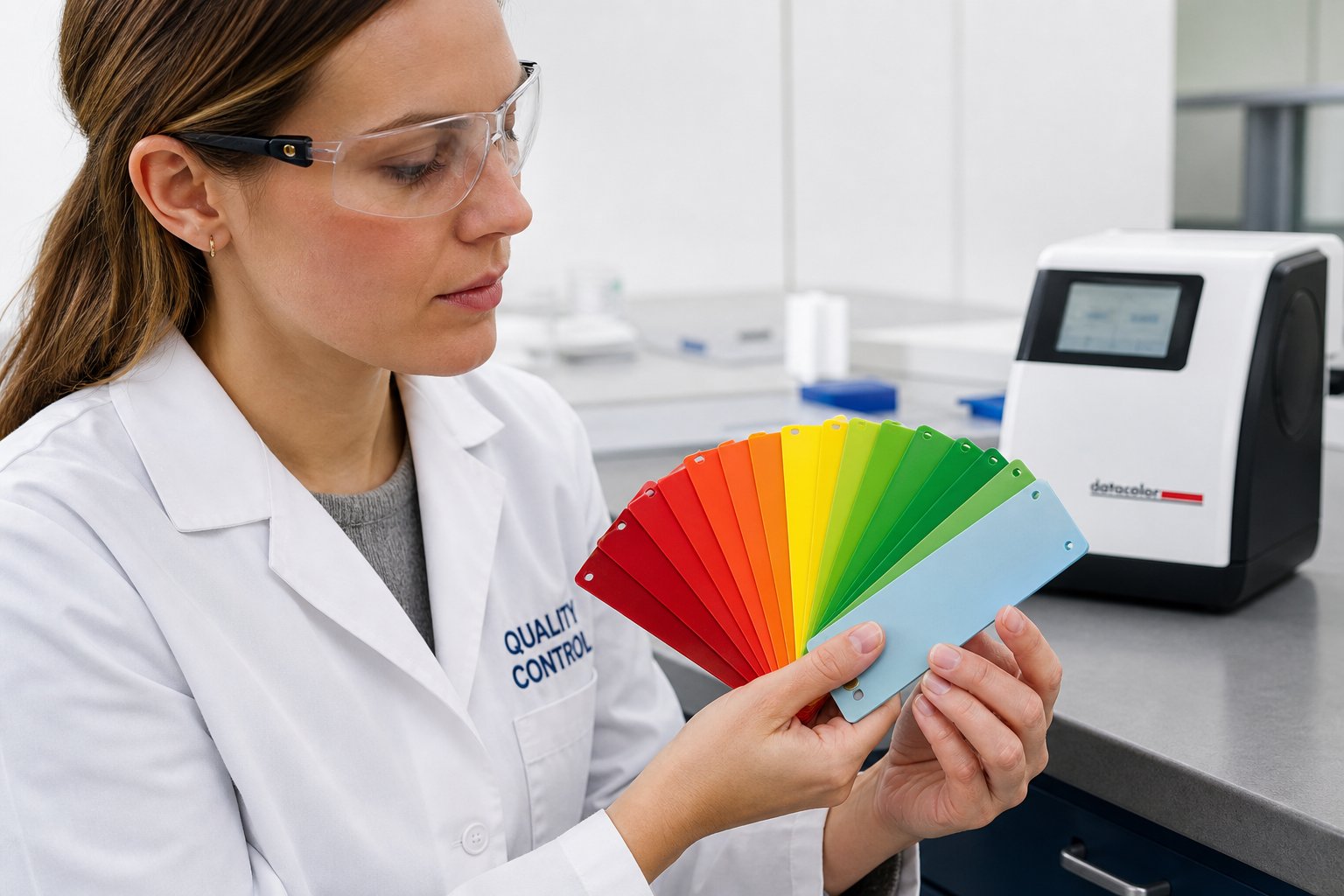
- Request color matching samples — evaluate physical plaques or parts molded from the actual base resin under production-representative conditions, not just color chips.
- Validate with pilot production runs — confirm color consistency, dispersion quality, and mechanical property retention at full production speed before committing to volume orders.
Skipping any single step in this sequence is a gamble. A masterbatch colorant supplier can deliver a perfect color match that fails a food-contact migration test, or a fully compliant formulation that drifts visibly under outdoor UV exposure. Systematic selection eliminates those surprises before they reach your production floor — or your customer's hands.
Still, even the most carefully selected formulation needs to be dosed at the right ratio to deliver its intended color. Too little, and you get weak, streaky parts. Too much, and you waste material or invite surface defects. Getting the let-down ratio right is where color selection meets production economics.
Let-Down Ratios and Dosing Rate Guidelines
You've selected the perfect color masterbatch — right carrier, right pigment chemistry, right regulatory profile. But here's the question that determines whether that formulation actually delivers consistent color on your production floor: how much do you add? The answer lives in a single number that many processors overlook until problems appear — the let-down ratio.
What Are Let-Down Ratios and Standard Dosing Rates
The let-down ratio is simply the proportion of masterbatch to natural (uncolored) base resin, expressed as a percentage by weight. A 3% let-down ratio means you're blending 3 kg of masterbatch into every 97 kg of natural polymer. It's the core variable in masterbatch dilution — get it right and your parts hit the color target every time; get it wrong and you're dealing with rejects, waste, or unnecessary material cost.
Typical addition rates fall into predictable ranges based on the type of color effect you're targeting:
- Standard solid colors: 1-4% addition rate — the workhorse range for most commodity and industrial applications.
- Deep, opaque, or heavily saturated colors: 3-5% — required when strong hiding power or intense color depth is essential.
- Pastel and translucent effects: 0.5-2% — lower dosing preserves the base resin's natural translucency while adding a subtle tint.
Here's the critical relationship most buyers miss: the required dosing rate depends directly on the pigment loading inside the masterbatch. A masterbatch formulated with 40% pigment loading at a 3% let-down delivers the same final color as a 20%-loaded product dosed at 6%. Both put the same absolute amount of pigment into your polymer matrix — but the higher-concentration option uses half the masterbatch volume. As industry colourists emphasize, buying "double concentrate" masterbatch at a higher price per kilogram often produces lower total coloring costs because far less material is consumed per production run. The same principle applies to additive masterbatches containing UV stabilizers or antioxidants — higher active-ingredient loading means lower dosing rates and better cost efficiency at the point of use.
Calculating the Correct Addition Rate for Production
Every reputable supplier publishes a recommended let-down ratio on the technical data sheet — but treat that number as a starting point, not a final answer. Real-world processing conditions introduce variables that can shift the effective color outcome: barrel temperature profiles, screw design, cycle time, and even the natural resin's base color or translucency all play a role. You should always verify the actual color against your approved standard using a spectrophotometer under controlled lighting conditions before committing to a production campaign.
What happens when the dosing drifts off target? Both directions create problems:
- Over-dosing inflates material cost on every part. Beyond economics, excess pigment concentration can cause blooming — where additives migrate to the part surface, leaving a hazy or tacky film — and may compromise mechanical properties by disrupting the polymer matrix. Some custom additive masterbatches with functional compounds are especially sensitive to over-dosing, where exceeding the recommended rate triggers visible surface defects or regulatory non-compliance.
- Under-dosing produces weak color intensity, streaking, uneven opacity, and visible transparency where none was intended. For color control, plastic masterbatchers running tight specifications find that even a half-percent shortfall can push parts outside ΔE tolerance.
The table below illustrates how pigment loading, let-down ratio, and finished-product cost interact across typical production scenarios. These examples assume a base resin cost of $1.20/kg and target the same final color intensity:
| Pigment Loading in Masterbatch | Recommended Let-Down Ratio | Masterbatch Cost (per kg) | Masterbatch Used per 100 kg Finished Product | Color Cost per kg of Finished Product |
|---|---|---|---|---|
| 20% | 5.0% | $2.50 | 5.0 kg | $0.125 |
| 30% | 3.3% | $3.20 | 3.3 kg | $0.106 |
| 40% | 2.5% | $4.00 | 2.5 kg | $0.100 |
| 50% | 2.0% | $4.80 | 2.0 kg | $0.096 |
| 60% | 1.7% | $5.50 | 1.7 kg | $0.094 |
Notice the pattern? The most expensive masterbatch per kilogram actually delivers the lowest coloring cost per kilogram of finished product. This is the core principle of masterbatch optimisation — evaluating total cost to color rather than sticker price. Procurement teams that focus exclusively on the cheapest per-kilogram price often end up spending more overall because they consume far more material to achieve the same result.
Dosing accuracy itself hinges on equipment choice. Gravimetric feeders measure material by weight in real time, dynamically adjusting throughput to maintain the target ratio regardless of variations in pellet size, bulk density, or feed rate fluctuations. Volumetric feeders, by contrast, dispense based on volume — a simpler and cheaper approach, but one that assumes consistent material density. When pellet shape or bulk density shifts even slightly between additive masterbatch lots, a volumetric system has no way to detect or compensate for the error.
For high-value pigments, tight color specifications, or applications where every fraction of a percent matters — think automotive interior trim or branded consumer packaging — gravimetric feeding isn't optional. It's the only reliable path to holding ΔE tolerances batch after batch. The upfront equipment investment pays for itself quickly through reduced scrap, fewer color rejections, and more efficient material consumption.
Dialing in the perfect let-down ratio sets you up for consistent color — but consistency can still unravel on the production floor. Streaking, specking, color drift, and surface defects all have identifiable root causes and, more importantly, systematic fixes.
Troubleshooting Common Color Masterbatch Defects
Every plastics processor has pulled a part off the line and thought, "That's not the color I ordered." Streaks running through a surface that should be uniform. Tiny dark specks embedded in an otherwise flawless white panel. A shade that matched perfectly last Tuesday but looks noticeably different today. These defects cost real money — in scrap, in rework, in delayed shipments — and they're almost always traceable to a specific, fixable root cause. The trick is knowing where to look.
Color Streaking and Poor Pigment Dispersion
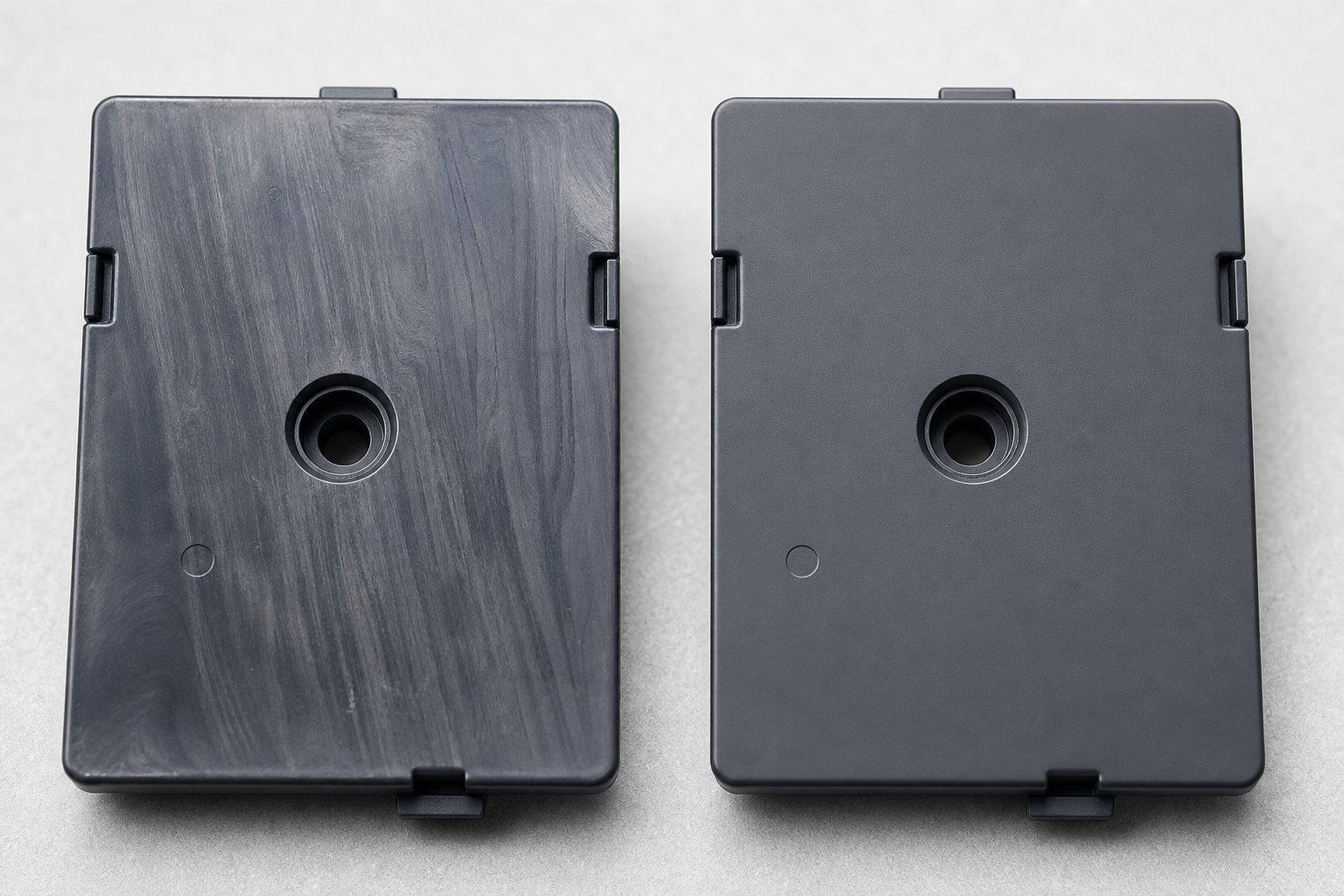
Streaking — visible lines or bands of uneven color running through a molded or extruded part — is the most frequently reported defect in color masterbatches processing. When you see it, your first instinct might be to blame the masterbatch itself, and sometimes that instinct is correct. But the causes are often more varied than a single bad batch of pellets.
The most common culprit is inadequate shear during processing. If the screw design doesn't generate enough mixing energy, or if back pressure is set too low, pigment particles don't fully distribute through the base resin during the brief residence time inside the barrel. This is especially problematic with high-viscosity polymers like polycarbonate or glass-filled nylon, where the melt resists blending. Increasing back pressure, raising screw speed slightly, or switching to a screw with a more aggressive mixing section can resolve the issue without changing materials at all.
Carrier resin incompatibility is the next suspect. As discussed earlier, a PE-based masterbatch dosed into a styrenic or engineering resin creates an immiscible polymer phase that simply won't blend — no amount of screw speed will fix a fundamental chemistry mismatch. If you're running masterbatch PP formulations in a polypropylene application and still seeing streaks, the carrier is likely fine and the problem lies elsewhere. But if you recently switched resin suppliers or grades, cross-check carrier compatibility before adjusting anything else.
Processing temperature plays a subtler role. Too low, and the masterbatch carrier doesn't melt early enough to release its pigment into the flow stream. Too high, and certain organic pigments can degrade, shifting hue or losing tinctorial strength. A red masterbatch based on an organic azo pigment, for example, may streak or shift toward brown if barrel temperatures push past its thermal stability ceiling.
Specking — small, undispersed pigment agglomerates visible as dark or colored dots — is a close relative of streaking. When specks appear in parts that previously ran clean, the cause often points upstream to the compounding step rather than to the processor's machine. Pigment agglomeration during masterbatch manufacturing — driven by worn extruder barrels, insufficient dispersant levels, or overly high pigment loading without adequate wetting agents — produces pellets that carry microscopic pigment clusters right into your hopper. Equipment wear in your own molding machine can compound the issue: a worn screw reduces shear force, weakening its ability to break apart even mild agglomerates that a new screw would handle effortlessly.
Color Drift, Batch Inconsistency, and Surface Defects
Color drift is more insidious than streaking because it develops gradually. Parts from Monday's first shift look perfect. By Wednesday afternoon, the shade has shifted just enough to trigger a spectrophotometer rejection — or worse, your customer notices before you do. What changed?
Start with dosing accuracy. Volumetric feeders, as covered in the previous section, dispense based on pellet volume, not weight. If the bulk density of your plastic masterbatch lot shifts even slightly — perhaps because of pellet size variation or moisture absorption during storage — the feeder delivers a different mass of colorant per cycle without any visible warning. Gravimetric systems catch this drift automatically, which is why they remain essential for tight-tolerance color work.
Moisture in masterbatch granules is another silent contributor. Hygroscopic pigments absorb ambient humidity during storage, and that moisture flashes to steam inside the barrel, creating micro-voids that scatter light differently across the part surface. The color hasn't technically changed, but the optical appearance shifts. Proper sealed storage and pre-drying protocols — especially in humid climates — prevent this entirely.
Lot-to-lot pigment variation from the masterbatch supplier introduces yet another variable. Even with spectrophotometer-verified QC at the production facility, minor differences in raw pigment sourcing can create perceptible batch-to-batch shifts. If color consistency is mission-critical, request a retained sample from each lot and run a comparison plaque before releasing material to the production floor. Industry troubleshooting guides consistently emphasize that maintaining stable processing conditions — temperature, screw speed, cycle time — is just as important as incoming material verification, because even identical material produces different results when process parameters wander.
Two surface defects deserve special attention because they're frequently misdiagnosed:
- Plate-out — a gradual buildup of pigment or wax on mold cavity surfaces, die lips, or calibration tooling. You'll notice it as a progressive dulling of surface gloss, transfer marks on parts, or a sticky residue on tooling that requires increasingly frequent cleaning. The root causes typically include excess dispersant or wax in the masterbatch formulation, over-dosing, or processing temperatures that volatilize low-molecular-weight components in the carrier system. Reducing let-down ratio, lowering melt temperature, or requesting a reformulated masterbatch with less volatile dispersant usually resolves it.
- Blooming — a hazy, whitish, or waxy film that migrates to the part surface hours or days after molding. Unlike plate-out, blooming happens after the part leaves the mold. It's caused by additives or dispersants with limited solubility in the cooled polymer matrix gradually migrating outward. Over-dosing is the most common trigger, though incompatible additive combinations — especially when black master batch formulations containing carbon black interact with certain slip agents — can also cause it.
The table below consolidates every major defect into a single troubleshooting matrix. Bookmark it — you'll want quick access the next time a color problem stalls your production line.
| Defect Type | Probable Causes | Corrective Actions |
|---|---|---|
| Streaking (uneven color lines) | Insufficient shear or back pressure; incompatible carrier resin; low processing temperature; poor screw mixing geometry | Increase back pressure 5-10%; verify carrier-to-base-resin compatibility; raise barrel temperature in rear zones; consider a mixing nozzle or barrier screw |
| Specking (pigment agglomerates) | Undispersed pigment clusters from compounding; worn screw or barrel; excessive pigment loading without adequate dispersant | Request filter pressure test results from supplier; inspect screw and barrel wear; switch to a higher-dispersion-grade masterbatch |
| Color drift (gradual shade shift) | Inconsistent dosing (volumetric feeder drift); moisture absorption in stored pellets; lot-to-lot pigment variation; processing temperature fluctuations | Switch to gravimetric feeding; store masterbatch in sealed moisture-proof bags; run comparison plaques per incoming lot; stabilize barrel temperature PID settings |
| Plate-out (residue on tooling) | Excess wax or dispersant in formulation; over-dosing; high melt temperature volatilizing carrier components | Reduce let-down ratio; lower melt temperature 5-10°C; request reformulation with lower-volatility dispersant system |
| Blooming (surface haze or film) | Additive migration from over-dosing; incompatible additive combinations; dispersant with low polymer solubility | Reduce addition rate to recommended minimum; verify additive compatibility with masterbatch supplier; switch to a formulation with higher-solubility dispersant |
| Poor opacity (insufficient hiding power) | Under-dosing; low pigment loading in masterbatch; inadequate TiO2 concentration for white or pastel shades; excessive wall thickness variation in part design | Increase let-down ratio; switch to a higher pigment-loaded masterbatch; for whites, verify TiO2 content meets minimum threshold; review part wall uniformity with tooling engineer |
Most of these defects share a common thread: they emerge from mismatches between material, process, and equipment. A plastic colorant processor who systematically checks carrier compatibility, validates dosing accuracy, and monitors equipment wear will catch the majority of problems before they ever reach a finished part. And that last variable — equipment condition — turns out to be one of the most underappreciated factors in the entire color masterbatch quality chain. The twin-screw extruder barrel that compounds those pellets, and the injection screw that processes them, directly determine whether pigment particles end up uniformly distributed or clustered into the very agglomerates that cause streaks and specks.
Specialty Applications and Sustainability in Color Masterbatch
Streaks, specks, and color drift are problems rooted in today's production realities. But the forces reshaping color masterbatch development extend well beyond the factory floor. Emerging applications are imposing entirely new constraints on pigment chemistry, carrier selection, and dispersion quality — while regulatory and environmental pressures are rewriting the rules for what goes into a masterbatch formulation in the first place.
Color Masterbatch for Emerging Applications
Three fast-growing sectors are pushing masterbatch technology into territory where conventional formulations simply can't follow: 3D printing filaments, bio-based polymers, and medical-grade plastics. Each introduces unique challenges that demand rethinking pigment selection, carrier design, and processing parameters from the ground up.
3D printing filaments — particularly PLA, PETG, and nylon — require color concentrates that perform under conditions very different from traditional injection molding. Filament diameters typically range from 1.75 to 2.85 mm, and any undispersed pigment agglomerate large enough to partially block the print nozzle (often just 0.4 mm) creates a clog, a failed print, or a visible defect in the finished object. Ultra-fine dispersion isn't a nice-to-have here — it's a hard functional requirement. PLA colorant systems face an additional constraint: PLA's melt temperature ceiling sits around 180-220°C, which is significantly lower than conventional polyolefin or styrenic processing. Pigments that perform flawlessly at 250°C in a PP application may decompose or shift color within PLA's narrower thermal window. As SpecialChem's PLA processing guide notes, additive masterbatches used with PLA should use PLA itself as a carrier resin since polylactic acid is not compatible with most incumbent carrier materials.
Bio-based polymers beyond PLA — including PHA (polyhydroxyalkanoates) and starch-based blends — tighten these constraints even further. PHA degrades at temperatures close to its melting point, creating a razor-thin processing window where PLA color concentrate formulations already operating near their thermal limit may still be too aggressive. Pigment choices narrow considerably: heat-sensitive organic pigments that deliver brilliant hues in polyethylene become unreliable, while certain inorganic pigments may interfere with the biodegradation pathways that give these materials their environmental value. Formulators developing masterbatches for bio-polymers must balance coloring performance against compostability certification requirements — a trade-off that doesn't exist in conventional plastics.
Medical grade color masterbatches operate under the strictest constraints of all. Biocompatibility testing per ISO 10993 evaluates every component of the formulation — carrier, pigment, dispersant, and any residual processing aids — for cytotoxicity, sensitization, and irritation potential. The result is a dramatically restricted pigment palette. Many commonly used organic colorants contain extractable or leachable compounds that fail biocompatibility screening, limiting polymer masterbatches for healthcare applications to a narrow set of pre-certified inorganic pigments. Cable masterbatch formulations designed for wire and cable insulation face a parallel challenge: they must meet flame retardancy standards (often UL 94 or IEC 60332) while maintaining color consistency across long continuous extrusion runs, requiring pigments that remain stable at sustained elevated temperatures without contributing to smoke density or toxic gas generation.
Sustainability and Circular Economy Considerations
Regulatory momentum and consumer demand are converging to reshape masterbatch chemistry at a fundamental level. The question is no longer whether sustainable formulations will become standard — it's how quickly the industry can get there without sacrificing the color consistency and processing reliability that processors depend on.
Heavy-metal-free pigment development is the most visible shift. Legacy cadmium- and lead-based pigments — once prized for their brilliance, opacity, and heat stability — are being phased out under tightening REACH and RoHS restrictions. Replacement chemistries based on complex inorganic color pigments (CICPs) and high-performance organic alternatives now cover most of the color space those legacy pigments occupied, though matching the extreme heat stability of cadmium yellows and reds in engineering plastics remains an active area of development. Premium fluorescent pigments for plastics — long reliant on heavy-metal-containing formulations for their intense daylight visibility — are transitioning to compliant organic fluorescent chemistries that maintain brightness while meeting evolving European compliance frameworks.
Recycled polymer streams present a different kind of formulation challenge. Post-consumer recyclate (PCR) arrives with variable melt flow properties, inconsistent base color (often gray or yellowish), and unpredictable contaminant loads. A color masterbatch designed for virgin resin may perform erratically in PCR because the carrier resin encounters a matrix that shifts from batch to batch. Masterbatch producers are responding with formulations specifically engineered for recycled feedstocks — higher pigment loadings to mask base-color variation, broader carrier compatibility to accommodate MFI swings, and UV masterbatch additives that compensate for the degraded stabilizer packages in recycled material.
One particularly impactful innovation targets a longstanding recycling bottleneck: carbon-black-pigmented plastics. Traditional carbon black absorbs near-infrared light, making black parts invisible to the NIR sorting systems that recycling facilities rely on. NIR-detectable black masterbatches replace conventional carbon black with alternative dark pigments that reflect enough NIR signal for automated sorting, keeping black plastics in the recycling loop rather than diverting them to landfill or incineration. Antistatic masterbatch formulations are evolving along similar lines, with developers seeking additive chemistries that maintain surface resistivity performance without compromising the recyclability of the host polymer.
Key sustainability-driven masterbatch innovations currently shaping the industry include:
- Heavy-metal-free pigment systems replacing cadmium, lead, and chromium-based colors across all polymer families
- NIR-detectable dark colorants enabling automated sorting of previously non-recyclable black plastics
- Bio-based carrier resins derived from renewable feedstocks as drop-in replacements for fossil-derived polyethylene carriers
- High-opacity formulations engineered to mask the inconsistent base color of post-consumer recyclate
- Masterbatch designed for chemical recycling compatibility, using pigments that do not contaminate depolymerization processes
- Extended producer responsibility (EPR)-compliant colorant systems that meet emerging design-for-recycling guidelines across the EU and North America
These innovations aren't theoretical — they're shipping today in production volumes, driven by brand-owner sustainability commitments, tightening legislation, and the growing economic reality that recyclable, compliant products command market access that non-compliant alternatives increasingly do not.
Sustainability goals and emerging application demands both circle back to the same operational truth: the quality of the finished masterbatch pellet is only as good as the equipment that compounds it. And in high-wear, high-abrasion production environments — whether you're grinding out NIR-detectable blacks or ultra-fine PLA colorants — the twin-screw extruder barrel is the component that determines whether your formulation ambitions translate into consistent, shippable product.
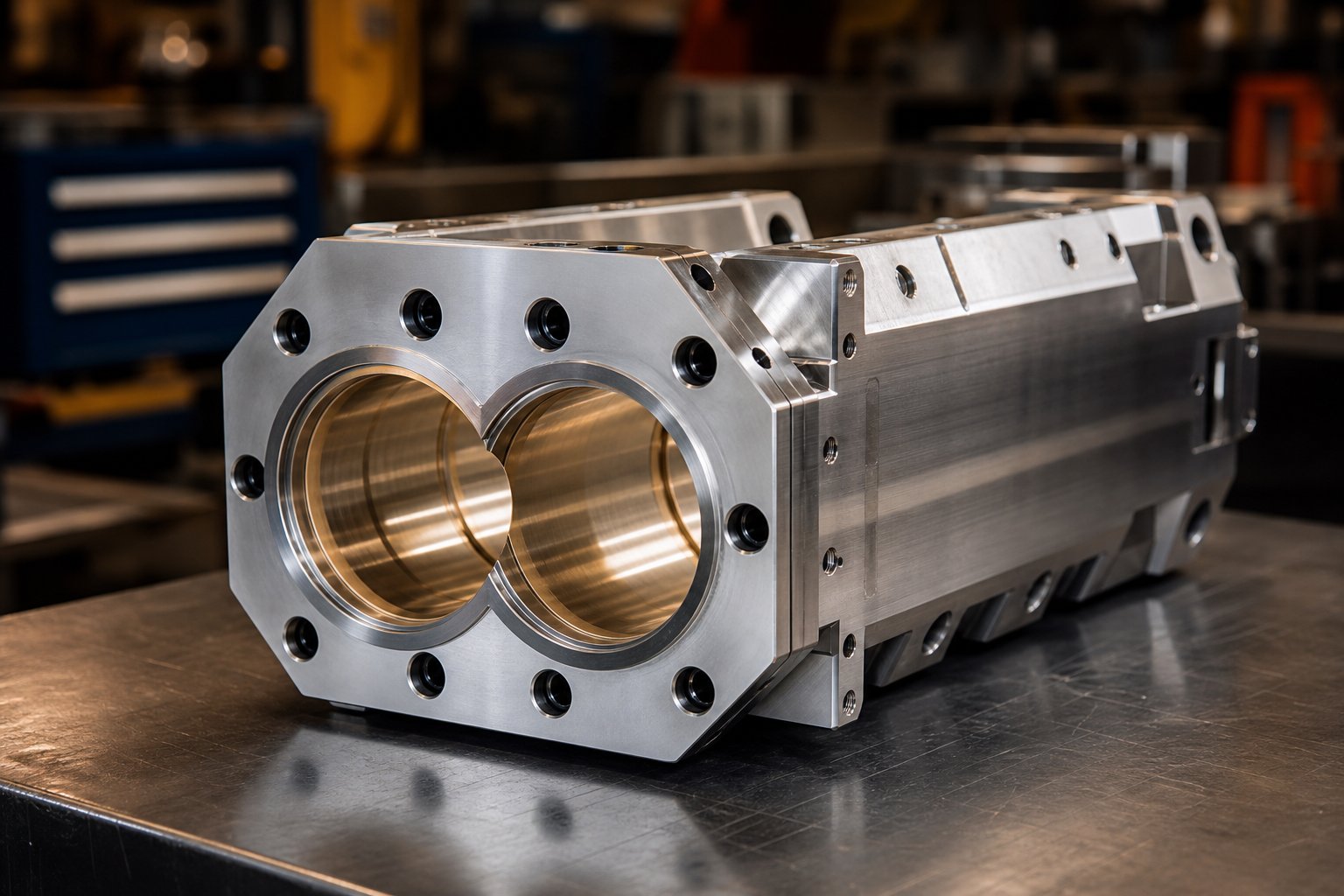
Processing Equipment That Drives Masterbatch Quality
Every defect discussed in this article — streaking, specking, color drift, poor opacity — can be traced, at least in part, to what happens inside the compounding extruder. The formulation might be flawless on paper. The pigment chemistry might be precisely matched to the application. But if the twin-screw barrel and screw elements that transform those raw ingredients into finished pellets aren't performing at specification, none of those upstream decisions matter. Equipment condition is the invisible variable that separates masterbatch manufacturers who ship consistent product from those who chase complaints.
Why Twin-Screw Extruder Performance Defines Masterbatch Quality
Picture what's happening inside a co-rotating twin-screw extruder during a typical color masterbatch compounding run. Intermeshing screw elements generate shear rates between 500 and 1,500 s⁻¹, forcibly breaking apart pigment agglomerates and distributing individual particles throughout the molten carrier resin. The clearance between the screw flight tip and barrel wall — typically controlled to just 0.1-0.3 mm — creates the tight gap that makes this intense shearing action possible. That precision gap is everything.
Here's the problem: abrasive pigments attack that gap relentlessly. Titanium dioxide, carbon black, iron oxides, and mineral fillers act like microscopic cutting tools, gradually eroding metal surfaces through a mechanism engineers call abrasive wear. Industry data shows that abrasive wear accounts for roughly 80% of all barrel and screw component degradation in compounding operations. As metal erodes, the clearance between screw and barrel widens — and wider clearance means less pressure, less shear, and weaker dispersion force applied to those stubborn pigment clusters.
The consequences cascade predictably. A barrel that started production life with a 0.2 mm clearance might wear to 0.5 mm over several months of processing abrasive formulations. That seemingly small dimensional change reduces the extruder's pressure-building capability and mixing intensity dramatically. Pigment agglomerates that a fresh barrel would have crushed into submicron particles now pass through partially intact — emerging as the specks and streaks covered in the troubleshooting section. Throughput drops as conveying efficiency declines. Energy consumption climbs because the motor works harder to compensate for lost mechanical efficiency. For masterbatch producers running high-volume lines, worn barrels don't just degrade product quality — they silently inflate operating costs on every kilogram produced.
The financial impact is significant. For a mid-sized twin-screw extruder processing pigmented masterbatch with 20-40% mineral filler content, annual barrel and screw replacement costs can range from $50,000 to $120,000, with additional losses from production downtime, increased scrap rates, and energy inefficiency pushing total wear-related costs even higher. Plastic master batch manufacturers processing highly abrasive formulations — white masterbatch loaded with 60-70% TiO2, for example — face replacement cycles as short as three to six months with conventional nitrided steel components.
Choosing Durable Twin-Screw Barrels for Masterbatch Production
Since processing conditions like temperature, pressure, and abrasive pigment contact are inherent to masterbatch compounding and can't be eliminated, the most effective strategy is selecting barrel materials engineered to resist wear under exactly these conditions. Barrel metallurgy has evolved considerably, and the differences between material options are measured in both service life and downstream product consistency.
Three primary material technologies dominate the market for wear-resistant barrels:
- Nitrided steel (e.g., 38CrMoAlA): The baseline option. Vacuum nitriding produces a hardened surface layer (900-1,100 HV) with a case depth of 0.5-0.8 mm. Adequate for unfilled polymers and lightly pigmented formulations, but wears relatively quickly under heavy mineral pigment loads — typical service life of 6-12 months in standard masterbatch production.
- Bimetallic linings: A wear-resistant alloy layer — typically 2-4 mm thick with hardness of 58-65 HRC — is metallurgically bonded to the inner barrel surface via centrifugal casting. This provides two to three times the wear life of nitrided steel and is the preferred choice for masterbatch producers running moderate to high filler concentrations.
- Tungsten carbide coatings: Applied via high-velocity oxy-fuel (HVOF) spraying, these coatings achieve hardness levels of 70-75 HRC — the highest available for barrel applications. They deliver three to five times the service life of nitrided steel and are ideal for the most demanding scenarios: high-concentration white masterbatch, carbon black compounds, and formulations containing glass fiber or other highly abrasive reinforcements.
Beyond raw material hardness, dimensional precision matters enormously. Barrel segments machined to tight tolerances — inner surface roughness of Ra ≤ 0.8 µm and radial clearances held to specification — ensure uniform contact pressure between the melt and barrel wall. Even a premium alloy loses its advantage if the barrel bore isn't perfectly round or if segment-to-segment alignment introduces step discontinuities that create dead zones where material stagnates and degrades.
NANHAIYA's parallel twin screw barrel is purpose-built for precisely these demanding conditions. Designed for compounding plants, pelletizing lines, and recycling operations running abrasive pigment formulations, these barrels deliver the combination of wear-resistant metallurgy, dimensional accuracy, and OEM-platform compatibility that masterbatch producers need to maintain stable mixing performance across extended production campaigns. For operations where barrel wear has been a recurring source of quality variation and unplanned downtime, a barrel solution engineered specifically for high-wear masterbatch applications translates directly into tighter dispersion, fewer defects, and more predictable replacement intervals.
When evaluating replacement barrels — whether from NANHAIYA or any other source — masterbatch producers should assess these key performance factors:
- Wear resistance rating: Confirm the alloy grade, hardness specification (HRC or HV), and lining thickness. A thicker wear layer extends the usable life before dimensional tolerances drift out of specification.
- Dimensional precision: Verify bore diameter tolerance, roundness, and inner surface finish (Ra value). Tight tolerances preserve shear efficiency and prevent premature quality degradation.
- Material certification: Request metallurgical test reports documenting alloy composition, hardness profile, and bonding integrity. Undocumented or generic materials introduce risk that no production schedule can absorb.
- Compatibility with major extruder OEM platforms: Barrels must match the mounting geometry, heating/cooling jacket configuration, and segment dimensions of your specific extruder — whether it's a Coperion, Leistritz, KraussMaffei, JSW, or other platform. An ill-fitting barrel creates alignment problems that accelerate wear rather than prevent it.
The bottom line is straightforward: investing in durable, precisely manufactured processing equipment is inseparable from producing high-quality color masterbatch consistently. A masterbatch manufacturer can perfect the formulation, optimize the screw configuration, and calibrate every process parameter — but if the barrel that contains all of that engineering is wearing beyond tolerance, the output will inevitably reflect it. The best masterbatch producers treat barrel selection and maintenance not as a procurement afterthought, but as a core quality control decision that protects every other investment they've made in their product and their reputation.
Frequently Asked Questions About Color Masterbatch
1. What is color masterbatch and how is it different from raw pigment?
Color masterbatch is a concentrated blend of pigments or dyes pre-dispersed in a compatible carrier resin, pelletized into uniform granules for easy dosing during plastics processing. Unlike raw pigment powder, which requires specialized high-intensity mixing equipment and creates airborne dust hazards, masterbatch pellets are clean, dust-free, and deliver repeatable color with minimal operator variability. The built-in dispersant system within each pellet ensures pigment particles are already broken down to their optimal size, eliminating the inconsistent dispersion common with loose powder dosing.
2. What is a typical let-down ratio for color masterbatch?
Let-down ratios vary based on the target color effect and the pigment loading within the masterbatch. Standard solid colors typically require a 1-4% addition rate, deep or opaque shades need 3-5%, and pastel or translucent effects use just 0.5-2%. Importantly, a masterbatch with higher pigment concentration (e.g., 40-50%) achieves the same final color at a lower dosing percentage than a lower-loaded product, often resulting in a lower total coloring cost per kilogram of finished product despite a higher per-kilogram price for the masterbatch itself.
3. How do I choose the right carrier resin for my masterbatch?
The carrier resin must be chemically compatible with your base polymer to avoid defects like delamination, haze, or mechanical property loss. For polyolefins (PE, PP), LDPE or EVA carriers work well. Styrenics such as ABS and HIPS pair with polystyrene or SAN carriers. Engineering plastics like polycarbonate and nylon require resin-specific carriers — PC for PC blends and PA6 for polyamide parts. Universal EVA-based carriers can serve multi-resin environments for commodity applications, but resin-specific carriers remain essential for engineering-grade or optical-clarity parts. Always validate compatibility through plant trials before full production.
4. What causes color streaking in masterbatch-colored plastic parts?
Color streaking most commonly results from insufficient shear during processing — low back pressure, inadequate screw mixing geometry, or processing temperatures too low for the carrier resin to fully melt and release its pigment. Carrier resin incompatibility is another frequent cause: a PE-based masterbatch dosed into a styrenic or engineering resin creates an immiscible phase that no amount of mixing can resolve. Worn screw and barrel components also contribute by reducing the shear force needed to distribute pigment evenly. Corrective steps include increasing back pressure, verifying carrier-to-base-resin compatibility, and inspecting wear components for dimensional degradation.
5. Why does twin-screw extruder barrel wear affect masterbatch quality?
Abrasive pigments like titanium dioxide, carbon black, and iron oxides gradually erode barrel and screw surfaces during compounding. As the clearance between screw flights and the barrel wall widens from wear, the extruder loses the shear intensity and pressure needed to break pigment agglomerates into uniformly dispersed particles. This degradation leads to specking, streaking, and inconsistent color in finished pellets. Investing in wear-resistant barrels — such as NANHAIYA's parallel twin screw barrels engineered with advanced bimetallic or tungsten carbide linings — extends service life and maintains tight tolerances, ensuring consistent dispersion quality across extended production runs.
Written by
Nanhaiya Technical Team
Zhoushan Nanhaiya Plastic Machinery Co., Ltd.
The Nanhaiya technical team supports screw and barrel manufacturing projects through application review, technical communication, custom manufacturing coordination, and production and quality control.
Discuss Your Application
Related Articles
More insights on screw barrel technology and plastics processing.
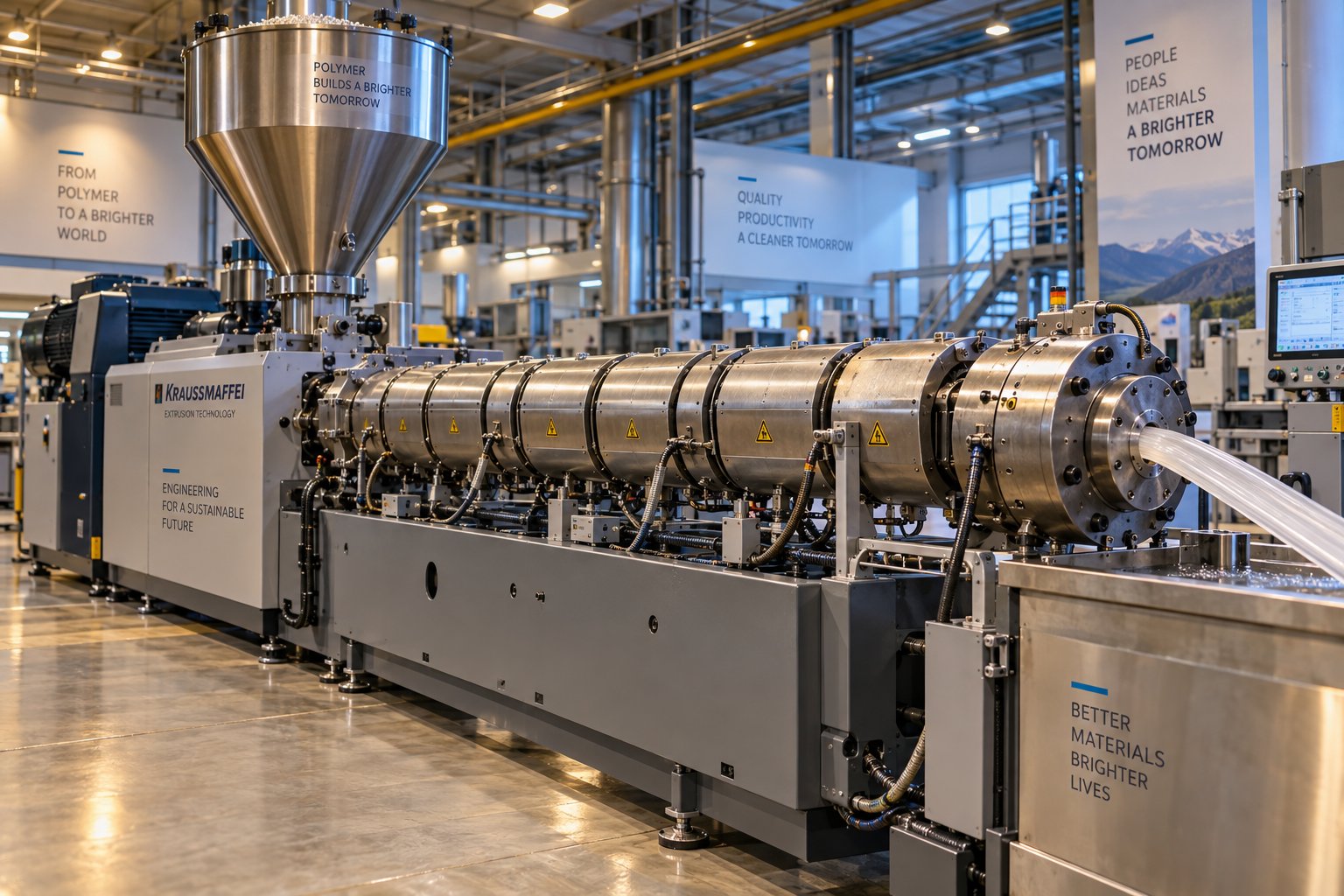
Extruder Machine Decoded: From Raw Pellet To Finished Product
Oct 6, 2026
Learn how an extruder machine works, compare single-screw vs. twin-screw types, and get expert guidance on specs, troubleshooting, and selection.
Read Article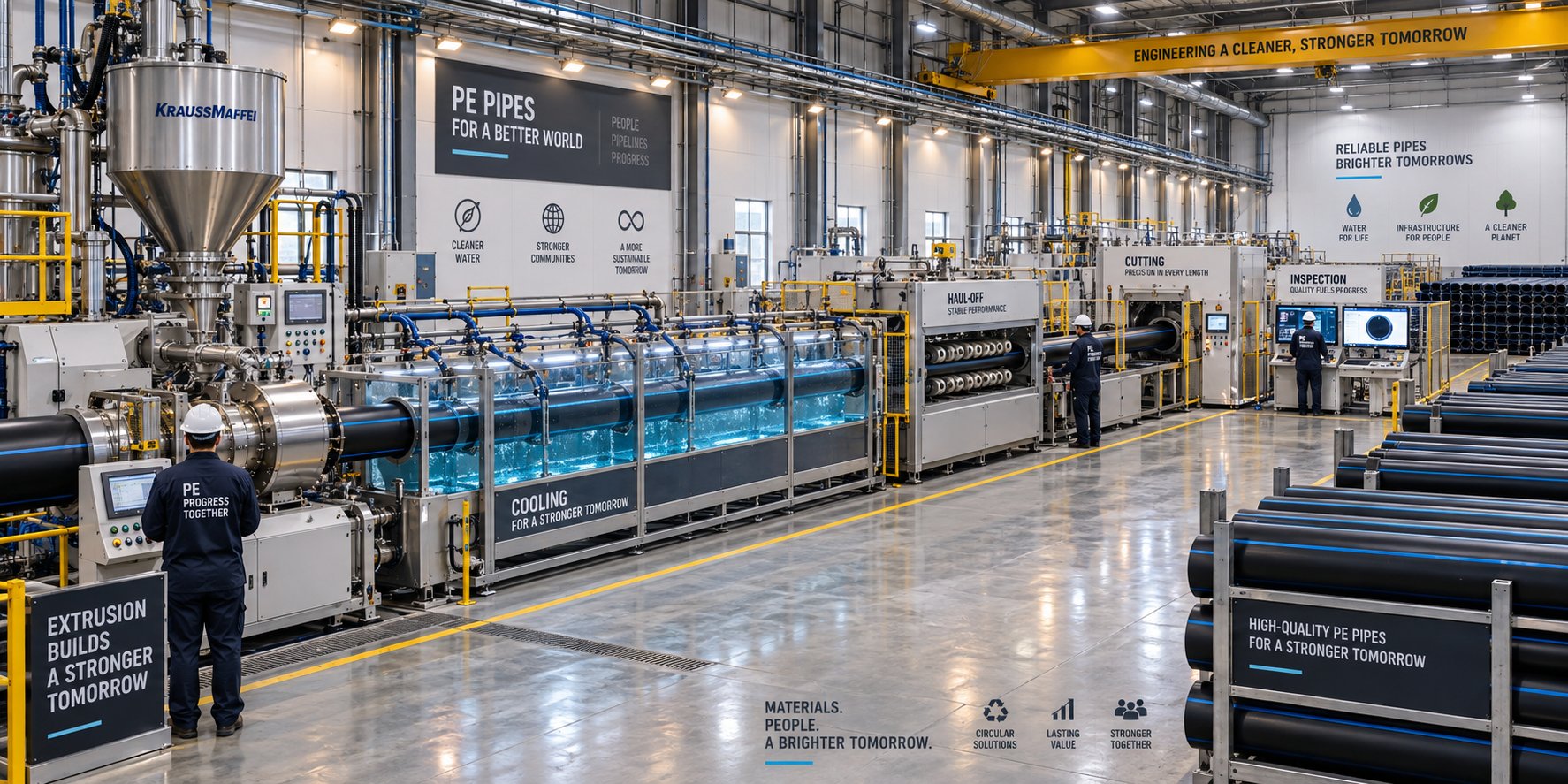
PE Pipe Making Machine Decoded: From Raw Resin to Flawless Pipe
Oct 4, 2026
Learn how a PE pipe making machine works, from resin to finished pipe. Covers components, material grades, automation, troubleshooting, and buyer selection tips.
Read Article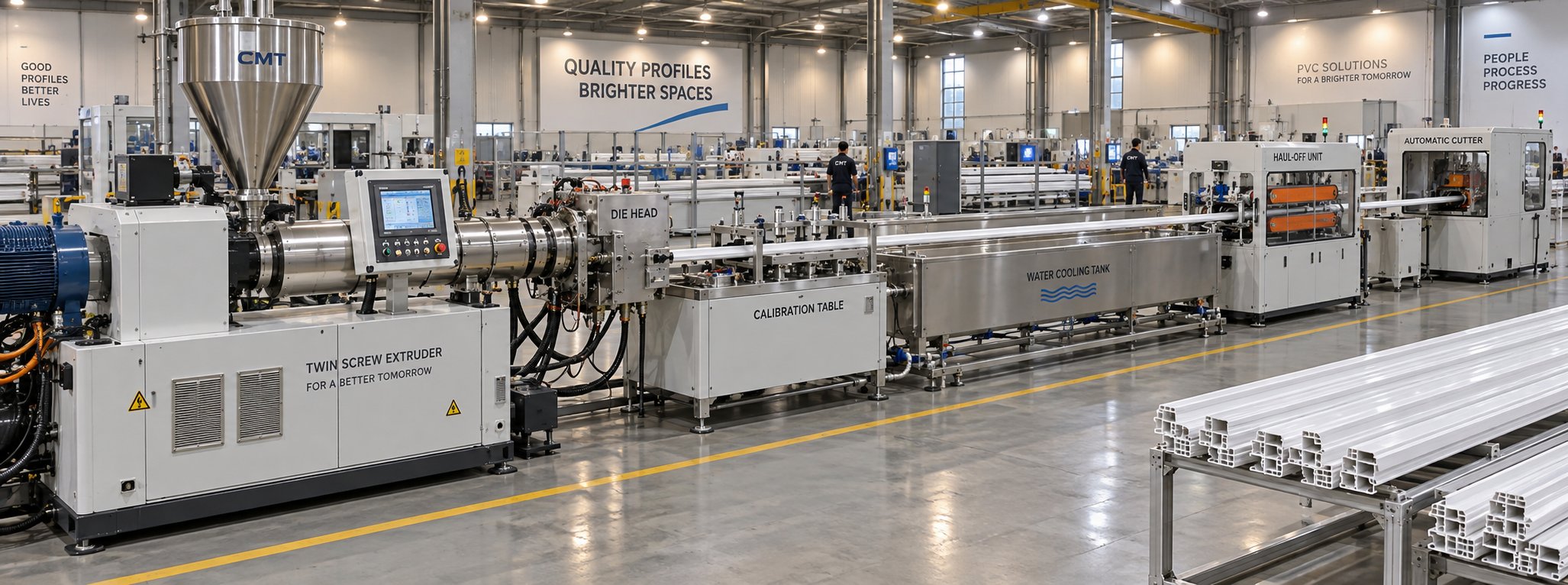
PVC Profile Making Machine Decoded: From Raw Resin To Profit
Oct 3, 2026
Learn how a PVC profile making machine works — extrusion process steps, key technical parameters, die design, calibration methods, maintenance, and total cost of ownership.
Read ArticleLooking for something else?
Search by material, symptom or product and jump straight to the relevant page.
These are navigation suggestions based on keyword matching — not a quotation, not a delivery commitment, and not a substitute for engineering review. Final specification is confirmed by our engineers against your drawings and processed material.
Need help with screw barrel selection?
Share your machine model, processed material and application. Our team can help with pricing and technical support.