

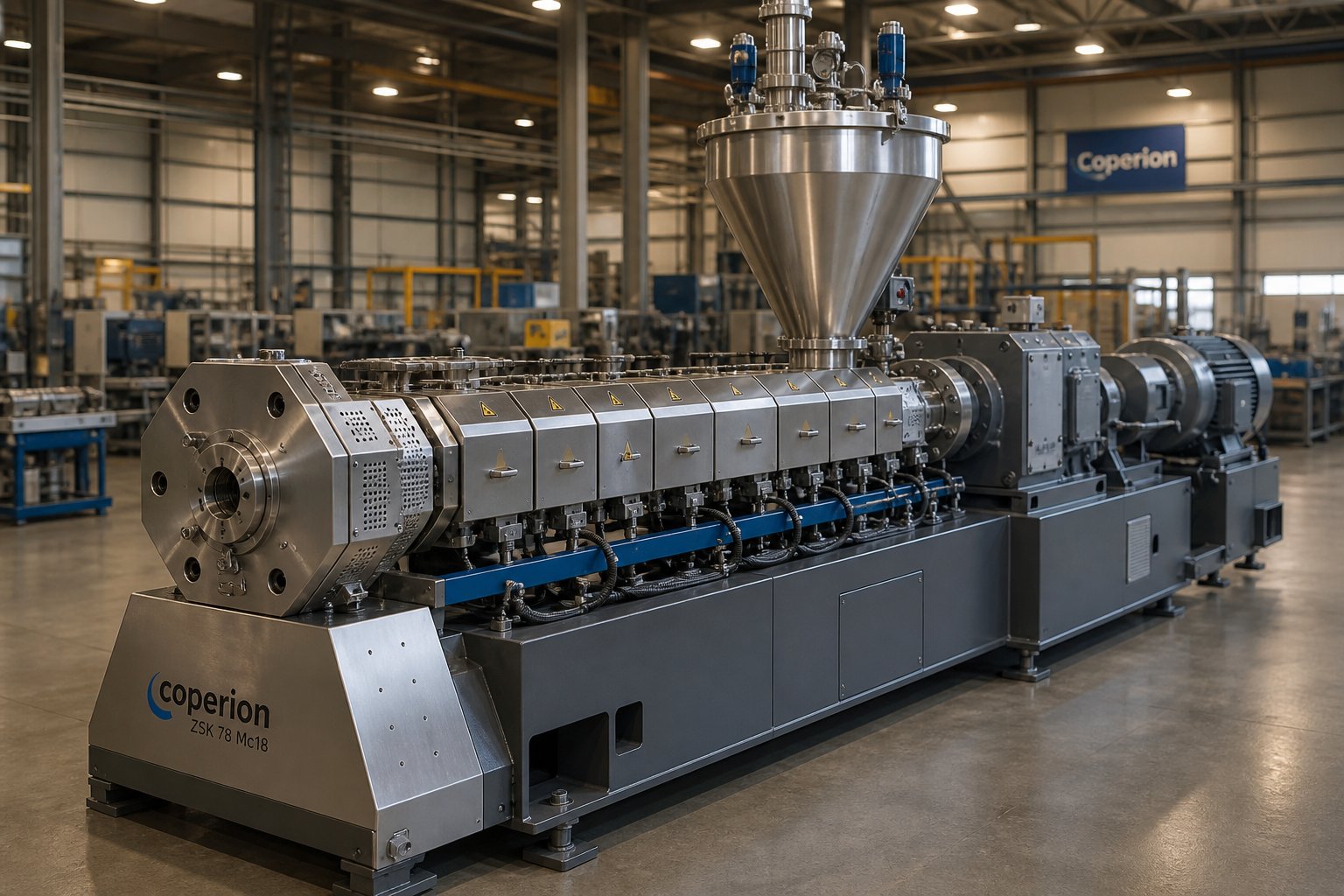
Understanding the Conical Twin Screw Extruder and Its SJSZ Naming System
When you start researching a china conical twin screw extruder, you'll immediately run into model numbers like SJSZ-65/132 or SJSZ-80/156. Every supplier uses them. Almost none of them explain what those numbers actually mean. That gap between terminology and understanding costs buyers time, creates confusion during procurement, and makes it harder to compare machines accurately. This article fixes that problem — and goes much further, covering the real costs of buying, owning, and operating these machines that most sourcing guides skip entirely.
What Is a Conical Twin Screw Extruder
A conical twin screw extruder is a thermoplastic processing machine built around two tapered, intermeshing screws that rotate inside a converging barrel. The screws are larger at the feed end and smaller at the discharge end, creating a natural compression effect as material moves forward. This geometry allows the machine to melt, mix, and shape polymer materials — most commonly PVC — with high efficiency in a surprisingly compact footprint.
A conical twin screw extruder uses two counter-rotating, tapered screws within a converging barrel to feed, compress, plasticize, and meter thermoplastic materials into a continuous melt stream, achieving high compression ratios while minimizing shear-induced heat — making it the industry-standard machine for rigid PVC processing.
The two screws typically rotate in opposite directions, known as counter-rotation. This design creates a calendering effect between the screws that gently but thoroughly mixes the material without generating excessive frictional heat. For heat-sensitive polymers like PVC, that characteristic is critical. Too much shear heat causes thermal degradation, leading to discoloration, reduced mechanical strength, and even toxic gas release during processing.
Why the tapered shape? Imagine pushing material through a funnel. The wide opening at the feed end accepts bulk powder or pellets easily, while the narrowing geometry toward the discharge end progressively compresses and pressurizes the melt. This achieves high compression ratios — the relationship between the volume at the feed zone and the volume at the metering zone — without needing an excessively long barrel. The result is a machine that delivers powerful plasticizing performance while occupying less factory floor space than a comparable parallel twin screw extruder.
These characteristics explain why the conical twin screw extruder in china has become the dominant machine type for producing PVC pipes, window profiles, sheets, foam boards, and wood-plastic composite (WPC) products across global markets.
Decoding the SJSZ Model Naming System
If you've browsed listings from any conical twin screw extruder china supplier, you've seen the prefix "SJSZ" attached to every model. Here's what it actually stands for: SJSZ is a Chinese abbreviation derived from the pinyin initials for "plastic conical twin screw" (塑料锥形双螺杆). It became the standardized naming convention across the Chinese plastics machinery industry, and virtually every manufacturer — from small workshops to large-scale exporters — follows it.
The numbers that follow tell you the most important physical dimension of the machine: screw diameter. A model labeled SJSZ-65/132 means the screws measure 65 mm at the small end (discharge tip) and 132 mm at the large end (feed opening). This single specification immediately tells an experienced buyer the machine's approximate output capacity, motor power range, and suitable product applications.
Here's a quick reference for the most common models you'll encounter when sourcing a china conic twin screw extruder machine:
| SJSZ Model | Small-End Diameter (mm) | Large-End Diameter (mm) | Typical Application Scale |
|---|---|---|---|
| SJSZ-45/100 | 45 | 100 | Lab or small-batch production |
| SJSZ-55/110 | 55 | 110 | Small to medium output lines |
| SJSZ-65/132 | 65 | 132 | Most popular mid-range production |
| SJSZ-80/156 | 80 | 156 | High-output pipe and sheet lines |
| SJSZ-92/188 | 92 | 188 | Large-scale, heavy-duty extrusion |
Understanding this naming system gives you an immediate advantage during supplier negotiations. When a factory quotes you on an SJSZ-65/132, you'll know exactly what screw geometry is being offered — and you'll be able to cross-compare specifications between manufacturers with confidence rather than relying solely on marketing language.
With the machine definition and naming conventions clarified, the natural next question becomes: what actually happens inside the barrel once raw material enters those tapered screws?
How a Conical Twin Screw Extruder Works Step by Step
Picture a hopper full of dry PVC powder. Within seconds of entering the machine, that loose, dusty material will be transformed into a dense, homogeneous melt stream — shaped, cooled, and cut into a finished product like a pipe or window profile. The entire journey happens inside a barrel less than two meters long. Understanding each stage of that transformation is essential for anyone sourcing a china conical twin screw extruder pvc system, because the quality of every finished product depends on how well each processing zone performs its job.
From Pellet to Product — The Extrusion Process
Inside every conical twin screw extruder, the material passes through four distinct functional zones. Each zone has a specific purpose, and the tapered screw geometry plays a direct role in how efficiently each one operates.
Feeding Zone: This is where it all begins. PVC dry-blend powder — or, less commonly, pre-compounded pellets — enters through a gravity-fed hopper mounted above the barrel's wide end. The large-diameter section of the tapered screws draws material into the flights with strong intake force. Because the screws are widest here, the channel volume is at its maximum, allowing bulk powder with a low apparent density to enter freely without bridging or starving. This generous feed opening is one of the key reasons conical designs handle PVC powder so effectively compared to other extruder types.
Compression Zone: As the material advances along the screws, the decreasing diameter naturally reduces the available channel volume. Imagine squeezing toothpaste through a tube — except here, the narrowing geometry does the squeezing automatically. This compression generates two things simultaneously: rising pressure and frictional shear heat. External barrel heaters supplement that shear energy, and together they begin melting the PVC. The beauty of the conical geometry is that pressure builds gradually rather than abruptly. For a heat-sensitive polymer like PVC, this gradual compression prevents localized overheating that could trigger thermal degradation — a reaction that releases hydrochloric acid gas and ruins the product's color and mechanical properties.
Metering Zone: By this stage, the PVC has transitioned from a partially melted, powder-like mass into a fully plasticized, homogeneous melt. The metering zone's job is consistency. The screw flights in this section push a uniform volume of melt forward at a controlled rate, ensuring the die receives material at steady pressure and temperature. Variations here would show up immediately in the finished product as uneven wall thickness, surface defects, or dimensional instability. A well-designed metering zone acts like a precision pump — delivering the exact same melt quality second after second, hour after hour.
Die Zone: The molten PVC exits the barrel and enters a die — a precision-machined steel tool that shapes the melt into its final cross-section. A circular annular die produces pipes. A flat slit die produces sheets. A complex multi-cavity die produces window profiles with internal chambers. The die itself doesn't belong to the extruder, but the extruder's ability to deliver consistent melt pressure and temperature to the die determines whether the final product meets specification or ends up as scrap.
What ties all four zones together is the conical screw geometry itself. The taper naturally creates progressively higher pressure toward the discharge end without requiring an extremely long barrel. Typical conical twin screw extruders achieve this with L/D ratios of roughly 22:1 to 28:1 — significantly shorter than many parallel designs. That compact processing length means shorter residence time inside the barrel, which directly benefits heat-sensitive materials like PVC by limiting their exposure to elevated temperatures.
Counter-Rotating Screws and Their Role in PVC Processing
The direction the screws turn matters enormously. In a conical twin screw extruder PVC system made in China or anywhere else, the two screws almost always rotate in opposite directions — one clockwise, the other counterclockwise. This counter-rotating motion creates a unique material-handling dynamic that you won't find in co-rotating or single-screw machines.
When the screws turn inward toward each other at the top (the most common configuration), they create a calendering effect in the gap between them. Material is squeezed between the intermeshing flights, kneaded gently, and then conveyed forward. This squeezing action delivers thorough distributive mixing without the aggressive shear intensity that co-rotating designs generate. Think of it as kneading bread dough by hand versus throwing it into a high-speed blender — both mix, but the results are dramatically different.
Equally important, counter-rotation prevents the material from simply spinning with the screws. In a single-screw extruder, material can rotate along with the screw rather than moving forward — a problem known as "material slippage" that reduces conveying efficiency. Counter-rotating screws eliminate this issue entirely. The opposing rotation creates a positive displacement pumping action: material trapped between flights has nowhere to go except forward toward the die. This positive conveying characteristic ensures predictable output rates and stable processing conditions.
Why does this combination of gentle mixing and positive pumping make conical twin screw extruders the industry standard for rigid PVC? The reasons come down to the specific demands of PVC processing:
- Low shear heat generation: PVC degrades at temperatures not far above its processing window. Counter-rotating conical screws minimize frictional heat buildup, keeping the melt safely within the 160-190°C range without hot spots that cause burning or discoloration.
- Positive pumping action: PVC dry-blend powder has low bulk density and poor flow characteristics. The counter-rotating design forcefully conveys this difficult-to-feed material without relying on gravity or friction alone, maintaining steady throughput.
- Excellent self-cleaning properties: The intermeshing screws wipe each other's surfaces as they turn, preventing material from stagnating in dead zones. Stagnant PVC would degrade over time and contaminate the melt with black specks or burnt particles — a serious quality defect.
- Consistent plasticization: The combination of gradual compression, gentle calendering, and controlled barrel heating produces a melt with uniform temperature and viscosity. This consistency translates directly into products with even wall thickness, smooth surfaces, and reliable mechanical strength.
These characteristics explain why virtually every PVC pipe plant, profile factory, and sheet production facility worldwide — whether equipped with European or Chinese machinery — relies on counter-rotating conical twin screw extruders as their primary processing equipment. The technology is proven, mature, and specifically optimized for what PVC demands.
Of course, conical designs aren't the only twin screw option available. Parallel twin screw extruders take a fundamentally different approach to screw geometry — and choosing between them is one of the most consequential decisions a buyer will face.
Conical vs Parallel Twin Screw Extruders and How to Choose
Two screws inside a barrel — that describes both conical and parallel twin screw extruders. Yet they behave like entirely different machines. Buyers searching for a china conical twin screw extruder for sale frequently ask whether a parallel design might serve them better. The answer depends on what you're making, what material you're processing, and how much floor space you can spare. Let's break both designs apart so the choice becomes obvious.
Mechanical Design Differences Between Conical and Parallel Extruders
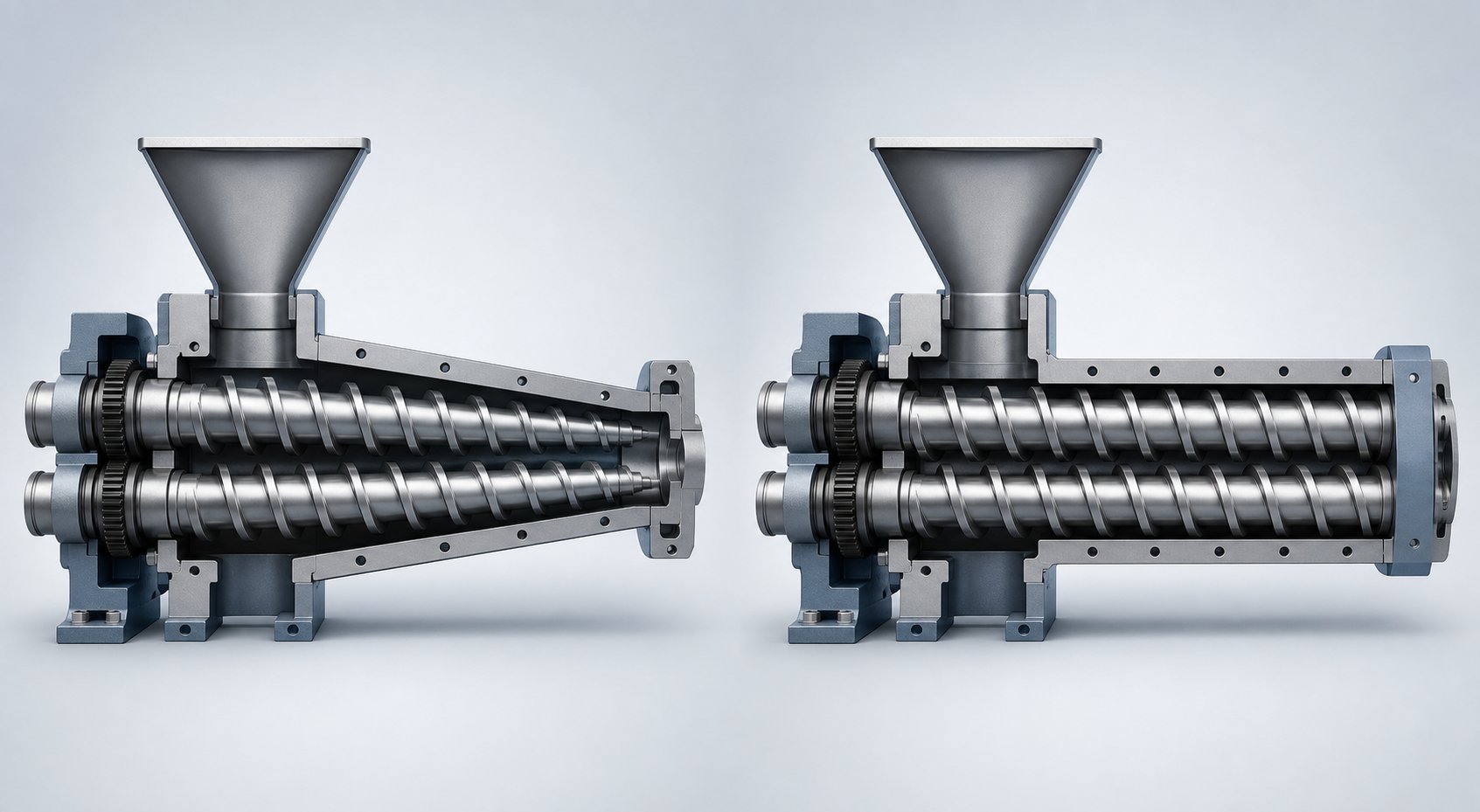
The fundamental distinction is in the screw geometry itself. A conical extruder uses two tapered screws that converge from a large feed-end diameter down to a smaller discharge-end diameter. A parallel extruder, by contrast, uses two screws of equal diameter along their entire length, mounted at a fixed center distance.
That single geometric difference cascades into nearly every performance characteristic. The conical design's wide feed opening accepts low-bulk-density PVC powder easily, while its narrowing profile builds compression naturally — no need for complex screw element configurations. Parallel designs compensate with longer barrel lengths, achieving higher L/D ratios that provide extended residence time for more intensive mixing and compounding tasks. Most parallel extruders use co-rotating intermeshing screws that create aggressive mixing through continuous material exchange, while conical machines almost exclusively use counter-rotating screws for gentler, positive-displacement conveying.
Here's a side-by-side comparison across the parameters that matter most during equipment selection:
| Parameter | Conical Twin Screw Extruder | Parallel Twin Screw Extruder |
|---|---|---|
| Screw Geometry | Tapered (converging from feed to discharge) | Constant diameter along full length |
| Typical L/D Ratio | 22:1 to 28:1 | 32:1 to 52:1 (or higher) |
| Screw Rotation | Counter-rotating (opposite directions) | Typically co-rotating (same direction) |
| Feeding Behavior | Excellent for low-density powder (PVC dry blend) | Better suited for pellets or pre-compounded feeds |
| Shear Level | Low to moderate — gentle plasticization | Moderate to high — intensive dispersive mixing |
| Material Suitability | PVC (rigid, flexible, CPVC), WPC, PVC foam | Engineering plastics, masterbatch, filled compounds |
| Typical Output Range | 50 - 1,000+ kg/h (model dependent) | 100 - 24,000+ kg/h (model dependent) |
| Machine Footprint | Compact — shorter barrel length | Larger — longer barrel required for high L/D |
| Primary Applications | PVC pipe, profile, sheet, foam board, WPC | Compounding, color masterbatch, reactive extrusion |
One cost-related nuance worth noting: conical twin screw extruder price in china tends to be lower than equivalent-output parallel machines for PVC applications, partly because the simpler counter-rotating gearbox design requires fewer precision components. However, parallel designs can offer energy advantages in certain high-output scenarios. For example, a parallel machine producing SPC flooring at comparable daily tonnage may consume significantly less motor power than its conical counterpart — a factor that compounds over years of operation.
Screw wear patterns also differ. Because the conical screw's head and tail diameters are unequal, wear tends to be less uniform compared to parallel screws, which can affect replacement intervals and long-term maintenance budgets.
When to Choose a Conical Twin Screw Extruder Over Parallel
Theory is useful. Practical decision-making is better. If you're evaluating china conical twin screw extruder wholesale options alongside parallel alternatives, run your application through these decision factors:
- Your primary material is PVC dry blend. Conical extruders are purpose-built for PVC powder feeding. The wide feed opening and counter-rotating screw action handle low-bulk-density formulations that would starve a parallel machine without specialized feeding equipment.
- Your end products are rigid PVC pipes, profiles, sheets, or foam boards. These applications demand low-shear, high-compression processing to avoid thermal degradation. The conical design delivers exactly that — high pressure buildup with minimal frictional heat.
- You're producing WPC (wood-plastic composite) decking or cladding. WPC formulations containing high percentages of wood flour benefit from the gentle mixing and positive conveying that conical counter-rotating screws provide. The natural compression handles the abrasive filler without excessive wear rates.
- Output requirements are moderate. For production lines running below approximately 800-1,000 kg/h, conical extruders offer an excellent balance of performance and capital cost. Ultra-high-throughput applications — think multi-ton-per-hour compounding lines — lean toward parallel designs.
- Factory floor space is limited. A conical extruder's shorter barrel translates to a smaller machine footprint. In facilities where every square meter counts, that compact design frees space for downstream equipment or additional production lines.
- Gentle plasticization is paramount. PVC, CPVC, and other chlorinated polymers have narrow processing windows. The conical twin screw's combination of gradual compression and low shear intensity keeps melt temperature tightly controlled, reducing scrap rates from thermal degradation.
Conversely, if your primary work involves compounding engineering plastics like PA, PC, or PBT — or producing color masterbatch with demanding pigment dispersion requirements — a parallel twin screw extruder is almost certainly the better tool. Its longer processing length, modular screw elements, and intensive co-rotating mixing action are designed for exactly those tasks.
The right extruder type is only half the equation. The other half — often overlooked — is matching the machine to the specific materials and end products you'll actually run through it.
Materials and Applications for Conical Twin Screw Extruders
Most sourcing guides treat material compatibility as an afterthought — a quick mention of "PVC processing" before jumping straight to pricing. That's a mistake. The material you're running directly determines the screw compression ratio, barrel temperature profile, surface treatment requirements, and ultimately, which SJSZ model belongs on your factory floor. If you're evaluating a china conical twin screw extruder pvc system for sale, the conversation should always start here: what exactly will this machine process, and what product will come out the other end?
Materials Compatible With Conical Twin Screw Extrusion
PVC in its various forms dominates conical twin screw extrusion, but the differences between PVC types are significant enough to change machine configuration. Each formulation behaves differently under heat and pressure, and ignoring those differences leads to degraded product quality — or worse, damaged equipment.
Rigid PVC (UPVC) is the bread-and-butter material. It contains no plasticizers, processes as a dry-blend powder, and demands tight thermal control because its degradation temperature sits uncomfortably close to its processing window. Standard nitrided screw barrels handle UPVC well, and compression ratios between 2.0:1 and 2.5:1 are typical.
Plasticized PVC (flexible PVC) contains 20-50% plasticizer by weight, which lowers the melt viscosity and processing temperature significantly. Screws designed for rigid PVC often generate too much compression for flexible formulations, so a lower compression ratio — around 1.6:1 to 2.0:1 — is usually specified. The plasticizer also makes the material more corrosive, so chrome-plated screw surfaces help extend service life.
Chlorinated PVC (CPVC) has a higher chlorine content than standard PVC, pushing its processing temperature up to 190-230 degrees Celsius. That elevated heat, combined with aggressive hydrochloric acid release during processing, demands corrosion-resistant barrel linings and bimetallic screw construction. Skimping on metallurgy with CPVC is an expensive mistake — screw wear accelerates dramatically without proper alloy protection.
Wood-Plastic Composite (WPC) formulations blend PVC resin with 40-70% wood flour or other natural fibers. The high filler content creates an extremely abrasive compound that chews through standard nitrided screws far faster than neat PVC. WPC-specific screw designs incorporate deeper flights in the feed zone to handle the low bulk density of wood flour blends, and hard-faced or bimetallic barrels are practically mandatory.
PVC foam formulations use chemical blowing agents that decompose within the barrel to create a cellular structure in the final product. The screw design must maintain precise pressure control — too much compression collapses the foam cells prematurely, while too little allows uncontrolled expansion before the die. Temperature uniformity across all barrel zones is critical because even small hot spots can trigger premature blowing agent decomposition.
Recycled PVC introduces variability that virgin material doesn't. Contaminants, mixed stabilizer systems, and partially degraded polymer chains all affect processing behavior. Machines handling recycled PVC often benefit from vacuum degassing capability to remove moisture and volatiles, along with melt filtration at the die head. Slightly lower compression ratios and reduced screw speeds help accommodate the inconsistent melt behavior of recycled feedstock.
The table below organizes these materials with the processing parameters that any conical twin screw extruder pvc manufacturer in china should be able to match when configuring your machine:
| Material Type | Processing Temp Range (°C) | Compression Ratio Range | Special Configuration Notes |
|---|---|---|---|
| Rigid PVC (UPVC) | 160 - 190 | 2.0:1 - 2.5:1 | Standard nitrided screws; tight barrel zone control |
| Flexible PVC | 140 - 175 | 1.6:1 - 2.0:1 | Chrome-plated screw surface; lower compression needed |
| CPVC | 190 - 230 | 2.0:1 - 2.8:1 | Bimetallic barrel required; corrosion-resistant alloy lining |
| WPC (Wood-Plastic Composite) | 150 - 180 | 2.0:1 - 2.5:1 | Deep-flight feed zone; bimetallic or hard-faced screws |
| PVC Foam | 155 - 185 | 1.8:1 - 2.3:1 | Precision pressure control; uniform zone heating |
| Recycled PVC | 150 - 190 | 1.8:1 - 2.3:1 | Vacuum degassing recommended; melt filtration at die |
You'll notice the temperature ranges overlap considerably. That's intentional — the exact setpoint within each range depends on your specific formulation, additive package, and desired output rate. A competent conical twin screw extruder pvc wholesale supplier in china should ask detailed questions about your compound recipe before recommending barrel zone temperatures or screw geometry. If a supplier quotes you a machine without asking what material you're running, that's a red flag.
Matching Extruder Models to End Products
Knowing which materials your machine can handle is essential. Knowing which SJSZ model to pair with your specific end product is where theory meets the production floor. Extruder size selection isn't arbitrary — it's driven by the output rate your downstream line demands, the cross-sectional area of the product, and the material's flow characteristics inside the die. Here's a practical breakdown by end product that goes beyond what most equipment guides provide:
- PVC Pressure Pipes (water supply, drainage, conduit): For pipe diameters ranging from 50 mm up to 400 mm, the SJSZ-65/132 and SJSZ-80/156 are the workhorses. The 65/132 handles pipes up to roughly 250 mm diameter at output rates of 200-400 kg/h, while the 80/156 pushes throughput to 400-800 kg/h for larger diameter pipes. Both pair with annular pipe dies and downstream vacuum calibration tanks, spray cooling baths, haul-off units, and planetary cutters. For very large bore pipes above 400 mm, the SJSZ-92/188 provides the melt volume and pressure needed.
- PVC Window and Door Profiles: Profile extrusion demands dimensional precision within plus or minus 0.1 mm across complex multi-chamber cross-sections. The SJSZ-65/132 is the most common choice, often paired with multi-cavity profile dies that produce two or more profiles simultaneously to maximize line efficiency. Screw speed typically runs between 20 and 35 rpm to keep shear heat low enough for consistent surface finish and tight tolerances. The SJSZ-80/156 steps in when wider profiles or higher cavity counts demand more melt volume.
- PVC Sheet and Panel: Sheet extrusion requires a flat die feeding into a three-roll calender (polishing) stack. Because sheets have large cross-sectional areas, melt demand is high — the SJSZ-80/156 or SJSZ-92/188 are typical starting points. Sheet thickness usually ranges from 0.5 mm to 8 mm, and achieving uniform thickness across widths of 600 mm to 1,500 mm requires consistent melt pressure and temperature that only the larger extruder models can sustain reliably.
- WPC Decking and Cladding: Wood-plastic composite profiles for outdoor decking, wall cladding, and fencing are commonly produced on the SJSZ-65/132 or SJSZ-80/156 equipped with WPC-specific screw designs. These screws feature modified flight depths and compression zones optimized for the high filler loading and low bulk density of wood flour blends. Downstream equipment includes profile calibrators, spray cooling, and embossing units that create wood-grain surface textures.
- PVC Cable Trunking and Small Profiles: Smaller products like cable trunking, corner beads, edge banding, and narrow decorative profiles don't require high melt volumes. Models like the SJSZ-45/100 or SJSZ-55/110 are well-suited here, offering output rates of 50-200 kg/h that match the die throughput without wasting energy on oversized equipment. These smaller models also carry lower capital costs, making them attractive for startups or specialized production lines running niche products.
The critical takeaway? Correct model selection depends on the intersection of three variables: your desired output rate in kilograms per hour, the cross-sectional dimensions of your product, and the material formulation you're processing. An SJSZ-65/132 is the single most versatile model in the lineup — it covers PVC pipes, profiles, and WPC products across a wide range of production volumes. But pushing a 65/132 to produce large-diameter pipes or wide sheets where an 80/156 or 92/188 belongs means running the machine at its limits, accelerating wear and compromising product quality.
Material compatibility and model selection are decisions you make before placing an order. The question that naturally follows is a bigger one: why are so many of these machines manufactured in China in the first place — and what does that mean for international buyers weighing quality against cost?
Why China Dominates the Conical Twin Screw Extruder Market
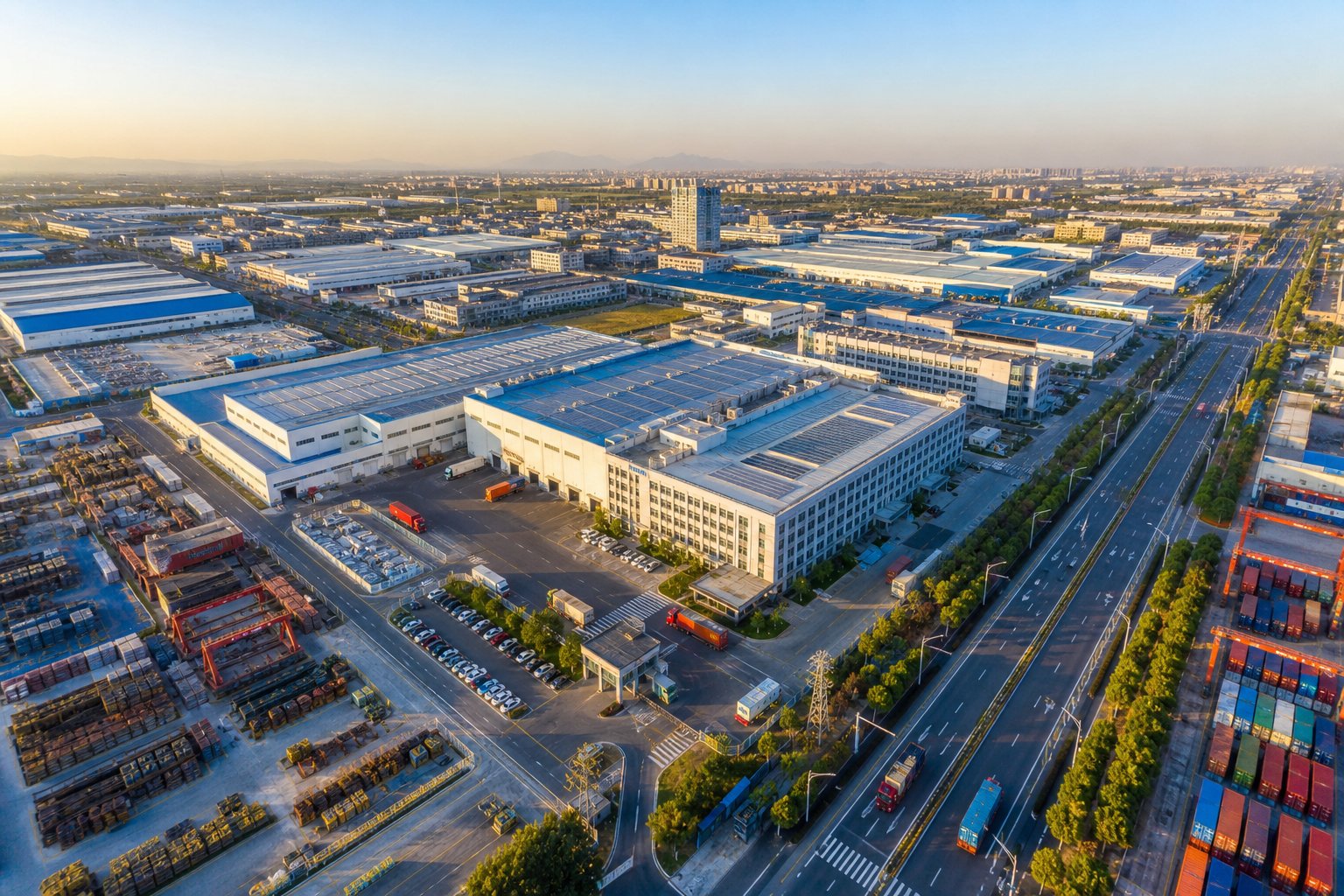
Here's a question worth sitting with: how did one country come to manufacture the vast majority of conical twin screw extruders sold globally? The answer isn't simply "cheap labor" — that explanation stopped being accurate years ago. China's dominance in this equipment category grew out of a convergence of domestic demand, regional industrial ecosystems, and a relentless scaling process that turned provincial workshops into internationally competitive factories. If you're evaluating a china conical twin screw extruder factory for a potential purchase, understanding this backdrop helps you separate genuinely capable manufacturers from those riding the wave without the substance behind them.
Why China Leads Global Conical Twin Screw Extruder Production
China's plastics machinery industry didn't develop in isolation — it grew in lockstep with one of the largest construction booms in human history. Decades of rapid urbanization created staggering domestic demand for PVC pipes, window profiles, cable trunking, and interior panels. Every apartment building, water treatment plant, and electrical grid expansion project needed PVC products. That demand, multiplied across hundreds of cities simultaneously, created a market large enough to support hundreds of extruder manufacturers — and push the best of them to refine their machines through sheer volume of production experience.
The manufacturing infrastructure didn't materialize randomly. It clustered in provinces where the supporting supply chain already existed. Key manufacturing hubs developed distinct specializations:
| Province / Region | Primary Specialization | Supply Chain Strengths |
|---|---|---|
| Zhejiang (Zhoushan, Ningbo) | Screw barrel manufacturing, packaging machinery | Specialty steel sourcing, precision CNC machining, heat treatment facilities |
| Jiangsu | Pipe, sheet, and film extrusion lines | Gearbox production, electronic control systems, assembly infrastructure |
| Anhui | Full-line extrusion and molding machinery | Integrated manufacturing from components to complete turnkey systems |
| Guangdong | Injection molding, smaller extruders | Proximity to export ports, electronics component suppliers |
| Shandong | Recycling extrusion equipment | Downstream equipment fabrication, heavy steel processing |
What makes these clusters powerful isn't any single factory — it's the density of supporting industries within a short drive. A conical twin screw extruder manufacturer in Jiangsu province can source specialty nitrided steel billets, have them precision-machined by a neighboring CNC shop, send them for bimetallic centrifugal casting at a facility twenty minutes away, and assemble the finished screw barrel alongside domestically produced gearboxes, cast aluminum heaters, and PLC control panels — all without a single component crossing an international border. That proximity compresses lead times and keeps costs structurally lower than competitors who must import key components or ship parts between countries for different processing stages.
Imagine trying to replicate that ecosystem from scratch. You'd need decades — which is exactly how long it took Chinese manufacturers to build it. The result is a production infrastructure where a conical twin screw extruder factory in china can move from confirmed order to completed machine in 45 to 90 days, a timeline that European manufacturers often struggle to match.
How Chinese Machines Compare to European Alternatives
Any honest comparison needs to acknowledge both what Chinese manufacturers have achieved and where gaps still exist. The narrative that Chinese equipment is "cheap but unreliable" belongs to a previous era. Modern conical twin screw extruder manufacturers in China now incorporate components and technologies that were once exclusively European territory: bimetallic screw barrels with centrifugally cast alloy linings, frequency-inverter motor drives for energy-efficient speed control, PLC systems with full-color HMI touchscreen interfaces, and individually controlled cast aluminum barrel heaters. The technology gap has narrowed considerably — and for standard PVC pipe and profile applications, many Chinese machines deliver performance that's functionally equivalent to their European counterparts at a fraction of the capital investment.
Chinese manufacturers have also achieved cost reductions of 40-60% compared to European alternatives — not by cutting corners, but through manufacturing optimization, domestic supply chain integration, and competitive pressure within a crowded market. That price advantage frees capital for downstream equipment, facility upgrades, or additional production lines — a practical benefit that international buyers consistently cite as their primary reason for sourcing from China.
Still, it would be irresponsible to pretend the decision is entirely one-sided. Here's a transparent look at both sides:
Advantages of Sourcing From China
- Significant cost savings: Capital equipment costs typically run 40-60% below European equivalents for comparable specifications, leaving budget for spare parts inventory or line expansion.
- Fast lead times: Established manufacturers deliver complete machines in 45-90 days. European lead times often stretch to four to six months or longer.
- Wide model range: From the compact SJSZ-45/100 to the heavy-duty SJSZ-92/188, Chinese factories cover the entire conical twin screw product range — often with multiple configuration options per model.
- Willingness to customize: Chinese manufacturers routinely modify screw geometry, barrel length, drive power, and control systems to match specific buyer requirements. European suppliers often charge premium fees for the same level of customization.
- Complete line capability: Many Chinese factories supply not just the extruder, but the entire production line — die heads, vacuum calibration tables, haul-offs, cutters, and stackers — as a single-source package.
Potential Risks to Manage
- Variable quality between manufacturers: China has both world-class factories and low-cost assemblers using substandard components. The range of quality is far wider than in Europe, making supplier verification essential rather than optional.
- Distance complicates after-sales service: When a gearbox fails or a control board needs replacement, geographical distance introduces delays that a local European supplier wouldn't face. An unplanned stoppage can cost $2,000 to $10,000 or more per day in lost output — a real cost that partially offsets the initial savings if after-sales support is slow.
- Communication barriers: Technical discussions about screw geometry, metallurgy, and process optimization require precise language. Miscommunication during specification and ordering can result in machines that don't match expectations. Working with manufacturers who employ English-speaking engineers — not just sales staff — reduces this risk significantly.
- Certification verification required: ISO 9001 and CE certificates should be validated directly through the issuing bodies. Fraudulent documentation, while not the norm, does exist in the market.
One of the most effective ways to bridge the trust gap is direct verification. Industry exhibitions like Chinaplas — Asia's largest plastics and rubber trade show — give international buyers the chance to see machines running, meet engineering teams face-to-face, and compare multiple manufacturers in a single trip. The Canton Fair and the K Show (held in Dusseldorf but attended by major Chinese manufacturers) serve similar functions. Attending even one of these events provides more actionable intelligence about a china conical twin screw extruder manufacturer than months of email exchanges and catalog reviews.
The bottom line? China's position in the conical twin screw extruder market isn't a fluke of low costs — it's built on genuine industrial infrastructure, decades of production refinement, and a domestic market that demanded millions of tons of PVC products per year. The opportunity for international buyers is real, but capturing it requires knowing how to evaluate suppliers with the same rigor you'd apply to any major capital equipment purchase. And that evaluation process has its own set of rules.
How to Evaluate Chinese Conical Twin Screw Extruder Manufacturers
Knowing that China offers legitimate, high-quality equipment at competitive prices is one thing. Picking the right factory out of dozens — sometimes hundreds — of options is an entirely different challenge. International buyers frequently tell the same story: they contacted five suppliers, received five similar-looking proposals with wildly different prices, and had no reliable way to determine which one deserved their money. The problem isn't a lack of choices. It's a lack of evaluation criteria tailored to this specific equipment category. Here's the framework that separates serious conical twin screw extruder manufacturers in China from those you should walk away from.
Credibility Indicators for Chinese Extruder Manufacturers
You wouldn't buy a house based on photos alone. The same logic applies when selecting a conical twin screw extruder supplier in China — especially when you're committing tens of thousands of dollars to a factory you may never visit in person. Each of the following indicators reveals something specific about a supplier's reliability, and skipping even one can leave a dangerous blind spot in your evaluation.
- Factory age and years in business: A manufacturer operating for 15 or 20 years has survived multiple market cycles, built institutional knowledge around screw design and barrel metallurgy, and refined their assembly processes through thousands of machines. Startups with three years of history aren't necessarily bad — but they carry more risk, especially for complex configurations like WPC-specific screw designs or CPVC-rated barrel linings.
- Export experience to your specific region: A factory that has shipped machines to Southeast Asia may have no understanding of CE electrical safety requirements for European markets, or UL compliance expectations for North American buyers. Ask which countries they've exported to and request shipping documentation as evidence. Region-specific experience signals the manufacturer understands the regulatory and logistical requirements you'll face at your end.
- Quality management certifications: ISO 9001 certification, CE marking, and SGS testing reports are baseline expectations — not differentiators. What matters is whether those certificates are genuine. Verify ISO 9001 directly through the certifying body's online database. Check that CE documentation includes actual test reports, not just a self-declared sticker on the machine. Fraudulent certificates exist, and treating them as verified without checking is a costly assumption.
- Client references or testimonials from international customers: Any reputable china conical twin screw extruder pvc manufacturer should be willing to connect you with existing overseas customers — or at minimum, provide project photos and reference contact details. Reluctance to share references is a significant warning sign. When you do get a reference, ask about after-sales responsiveness, not just initial machine quality.
- Presence at major trade exhibitions: Exhibiting at events like Chinaplas, the Canton Fair, or the K Show requires meaningful financial investment. A manufacturer who commits to international exhibition presence is signaling long-term market participation, not a one-time transaction mentality. Exhibition booths also give you the opportunity to see machine build quality firsthand and speak directly with engineers.
- Professional website with technical documentation: This sounds basic, but it reveals more than you'd expect. A conical twin screw extruder supplier in China that publishes detailed technical specifications, screw geometry options, barrel metallurgy choices, and downloadable PDF catalogs is demonstrating engineering depth. A website showing only glamorous factory photos with no technical substance suggests a trading company or an assembler repackaging someone else's components.
- Willingness to accommodate factory visits or video tours: Manufacturers confident in their production capability actively encourage buyer visits. If a supplier consistently deflects requests for a factory tour — or offers only carefully curated video clips rather than a live walkthrough — that hesitation deserves scrutiny. Live video tours via smartphone, while not a replacement for in-person visits, have become a practical verification method for buyers who cannot travel.
One factor deserves special emphasis: whether the manufacturer produces screw barrels and other critical components in-house versus outsourcing them. A factory that machines its own screws, casts its own bimetallic barrel linings, and assembles its own gearboxes controls quality at every stage. A factory that purchases these components from third parties and simply bolts them together is fundamentally an assembler — and your quality depends entirely on their sub-suppliers, whom you've never evaluated. During your assessment, ask to see the screw machining workshop and barrel boring equipment. If those don't exist on-site, you're dealing with a different type of operation than the one being marketed to you.
Navigating the Procurement Process From Abroad
Evaluating a manufacturer is the first hurdle. Actually buying the machine — across languages, time zones, and legal jurisdictions — is the second. The procurement process for industrial equipment from China follows a fairly predictable sequence, but each step has nuances that catch first-time buyers off guard.
Initial inquiry and specification sharing: Start by providing your target product dimensions, material formulation, desired output rate in kg/h, and any specific features you require (vacuum degassing, co-extrusion capability, specific control system preferences). The more detail you provide upfront, the more accurate the proposal you'll receive. Vague inquiries produce vague quotes — and vague quotes produce mismatched machines.
Technical proposal review: A serious manufacturer responds with a detailed technical proposal — not just a price. Expect a document specifying the SJSZ model, screw and barrel metallurgy, motor brand and power rating, gearbox specifications, control system details, barrel heating zone count, and a general arrangement drawing showing machine dimensions. Compare proposals from at least three to five manufacturers side by side, paying attention to component-level differences that explain price gaps.
Sample or reference machine inspection: For high-value orders, requesting to inspect a reference machine — either at the factory, at an existing customer's site, or via detailed video documentation — is standard practice. Some manufacturers maintain demonstration machines specifically for this purpose. If an in-person visit isn't feasible, third-party inspection services can conduct a factory audit on your behalf and report on production capability, quality control systems, and workforce competence.
Payment term negotiation: The most common structure across Chinese machinery factories is a 30% deposit via telegraphic transfer (T/T) before production begins, with the remaining 70% paid before shipment. This split gives the manufacturer enough commitment to start production while keeping the majority of your capital protected until the machine is ready. For first-time purchases from an unfamiliar supplier, consider using a letter of credit (LC) for added security — the bank only releases payment once compliant shipping documents are presented. Escrow services offer another layer of protection, holding funds with a neutral third party until delivery conditions are met.
Pre-shipment inspection: Before wiring the balance payment, arrange a pre-shipment inspection — either personally or through a third-party agency. This inspection should verify that the machine matches the agreed specifications, that all components are present, that electrical systems function correctly, and that the machine is properly prepared for shipping. Skipping this step to save a few hundred dollars on inspection fees is a false economy when the machine itself costs tens of thousands.
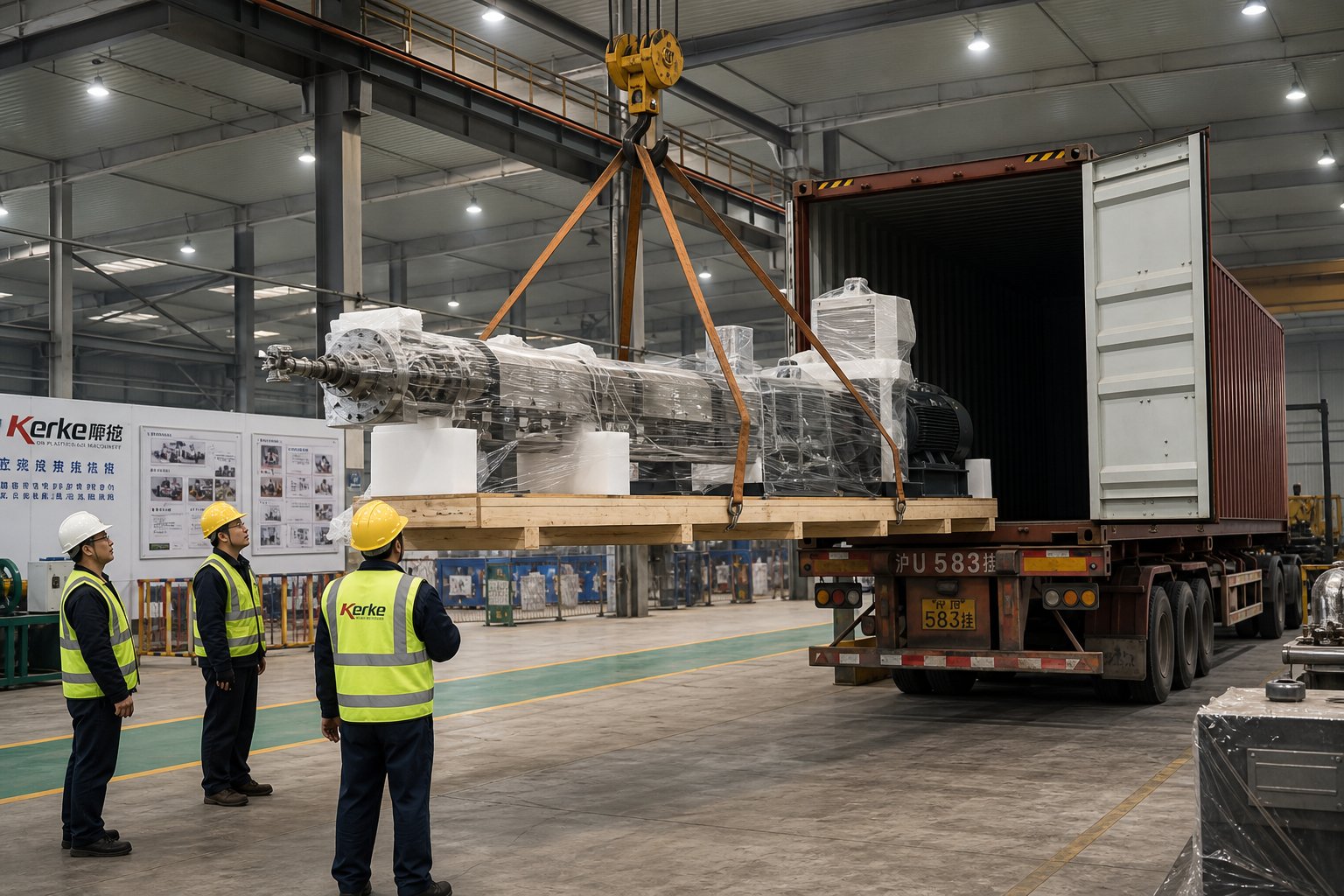
Shipping logistics: Conical twin screw extruders ship via full container load (FCL) ocean freight. A smaller model like the SJSZ-55/110 typically fits within a standard 20-foot container, while larger models like the SJSZ-80/156 or complete extrusion lines may require 40-foot containers or multiple containers. The manufacturer should provide packing dimensions and weight so your freight forwarder can arrange the correct container size and calculate landed costs accurately.
Import duty considerations: Import duties on plastics processing machinery vary significantly by destination country and trade agreement status. Check the applicable HS code classification for twin screw extruders in your country's tariff schedule before finalizing your budget. Duties, VAT, and customs clearance fees can add 5-20% to the FOB price depending on your jurisdiction — a cost that surprises buyers who only compared machine prices during the evaluation stage.
The lowest quoted price rarely represents the best total value. Buyers should weigh technical support capability, spare parts availability, and warranty terms alongside the purchase price before making a final decision.
That quote deserves to be pinned above every procurement manager's desk. A machine priced 15% below the competition sounds attractive — until you discover that the "savings" came from a thinner barrel lining, a lower-grade gearbox, or a manufacturer with no international spare parts distribution. The evaluation criteria above exist precisely to prevent that scenario. Apply them consistently, and you'll find that the conical twin screw extruder manufacturer in China who earns your order won't be the cheapest — but they'll be the one whose total value proposition makes the most sense over the machine's full operating life.
Speaking of total value, the purchase price itself is only the most visible number in a much larger cost equation — one that includes shipping, duties, energy, maintenance, and component replacement costs that accumulate year after year.
Pricing Factors and Total Cost of Ownership for China Conical Twin Screw Extruders
Search for conical twin screw extruder pricing from any china conical twin screw extruder wholesaler and you'll hit a wall of silence. Suppliers list specifications in exhaustive detail — screw diameters, motor power ratings, barrel zone counts — but almost none publish actual prices. International buyers are left guessing, comparing apples to oranges, and occasionally getting blindsided by costs they never budgeted for. This section breaks that pattern by explaining exactly what drives price variation and, more importantly, how to calculate the true financial commitment beyond the sticker on the machine.
What Influences Conical Twin Screw Extruder Pricing
No two quotes from a conical twin screw extruder wholesale in china source will look identical — even for the same SJSZ model number. That's because several variables shift the price substantially, sometimes by 30-50% between configurations that appear similar on paper. Understanding these variables gives you the ability to decode any quote you receive and identify exactly where a supplier is cutting costs or adding value.
- Model size: This is the most obvious driver. A larger SJSZ model means heavier screw and barrel assemblies, bigger gearboxes, and more powerful motors — all of which consume more raw material, more machining hours, and more assembly time. An SJSZ-65/132 from a Chinese manufacturer typically falls in the $28,000-$55,000 range, while an SJSZ-92/188 can reach $70,000-$130,000 for the extruder unit alone. The jump isn't linear — it accelerates as size increases because precision machining tolerances on larger components become more expensive to achieve.
- Screw and barrel metallurgy: This single specification can swing the price by 15-25%. Standard gas-nitrided 38CrMoAlA steel screws and barrels sit at the entry level — adequate for short production runs or less abrasive formulations. Bimetallic construction — where a centrifugally cast alloy lining (typically containing tungsten carbide, boron, or nickel-based alloys) is bonded to the bore of the barrel and applied to screw flight surfaces — costs significantly more but can extend wear life to 10+ years compared to 2-3 years for basic nitrided components. For PVC compounds containing high calcium carbonate filler loads, bimetallic is not a luxury — it's a necessity.
- Drive motor power and brand: A domestically manufactured motor from a reputable Chinese brand like Siemens-manufactured-in-China or a domestic specialist keeps the price moderate. Specifying a fully imported European motor — Siemens, ABB, or SEW — adds $3,000-$10,000 depending on the power rating. The motor's efficiency class also matters: an IE3 or IE4 premium-efficiency motor costs more upfront but reduces electricity consumption throughout the machine's operating life.
- Control system sophistication: A basic push-button panel with analog temperature controllers might save $2,000-$5,000 versus a full PLC system with HMI touchscreen, recipe storage, data logging, and remote monitoring capability. However, PLC automation can reduce recipe errors by up to 90%, cut waste by 15%, and save $20,000 per year in labor costs — making the upgrade economically justified for any operation running more than a single shift.
- Level of customization required: Standard catalog configurations carry lower prices because the manufacturer has optimized production around those specifications. Custom screw geometry, non-standard barrel lengths, specialized surface treatments, or integration of vacuum degassing ports all require additional engineering time and unique tooling — and the pricing reflects that. Expect a 10-20% premium over catalog models for moderate customization.
One cost multiplier deserves its own emphasis: the difference between purchasing a standalone extruder versus a complete extrusion line. The extruder is only one component in a production system. A complete PVC pipe line, for example, also requires a die head, vacuum calibration table, spray cooling tank, haul-off unit, and cutting machine. A full Chinese-made PVC pipe line producing 16-110 mm diameter pipes typically costs $60,000-$120,000 total — roughly 2.5 to 4 times the extruder-only price. When a conical twin screw extruder wholesaler in china quotes you $35,000 for an SJSZ-65/132, make sure you understand whether that includes downstream equipment or just the machine standing alone on the factory floor.
Total Cost of Ownership Beyond the Machine Price
Here's the reality that no product listing reveals: the purchase price typically represents only 30-50% of total cost of ownership over the machine's productive lifespan. The remaining 50-70% accumulates quietly — in electricity bills, spare parts invoices, maintenance labor, and the occasional unplanned stoppage that costs far more than anyone anticipated. Buyers who budget only for the FOB price are building their financial plans on an incomplete picture.
Imagine purchasing an SJSZ-65/132 at $40,000 FOB. That number feels manageable. But then shipping adds $3,000-$6,000. Import duties and customs clearance fees add another $2,000-$8,000 depending on your country. Installation and commissioning require $2,000-$5,000 in foundation work, electrical connections, and technical support. Operator training — whether conducted at the factory, on-site, or remotely — carries its own cost. And those are all one-time expenses. The recurring costs are where the real financial weight sits.
Energy consumption is typically the largest ongoing expense. A 65/132 conical twin screw extruder running a 37-55 kW main motor for two shifts daily, 250 days per year, consumes a substantial amount of electricity annually. Energy accounts for roughly 60-70% of total operating cost (excluding raw material), which is why servo drive motors and frequency inverters — despite their higher upfront cost — pay for themselves within 18-30 months through reduced consumption.
Screw and barrel replacement represents the primary ongoing maintenance cost. PVC processing, especially with calcium carbonate-filled formulations, progressively wears the screw flights and barrel bore. Depending on metallurgy and operating intensity, screw and barrel assemblies need replacement or refurbishment every 3-7 years. A bimetallic replacement set for an SJSZ-65/132 can cost $3,000-$8,000 — a fraction of the machine price, but a recurring cost that must be planned for.
The table below organizes these cost categories into a framework that helps you build a realistic multi-year budget rather than a single-purchase estimate:
| Cost Category | Type | Typical Range (USD) | Notes |
|---|---|---|---|
| Machine purchase price (FOB) | One-time | $18,000 - $130,000 | Varies by SJSZ model, metallurgy, and configuration |
| International shipping and freight insurance | One-time | $2,000 - $8,000 | Depends on container size and destination port |
| Import duties and customs clearance | One-time | $2,000 - $15,000 | Varies by country; check HS code tariff schedule |
| Installation and commissioning | One-time | $2,000 - $10,000 | Foundation, utilities, on-site technical support |
| Operator training | One-time | $1,000 - $5,000 | On-site, factory-based, or remote video training |
| Annual energy consumption | Recurring | $8,000 - $30,000/year | Based on motor rating, shifts per day, local electricity rate |
| Screw and barrel replacement | Recurring (every 3-7 years) | $3,000 - $12,000 per set | Primary wear component; bimetallic lasts longer |
| Heater bands, thermocouples, consumables | Recurring | $500 - $2,000/year | Standard wear items replaced during routine maintenance |
| Planned maintenance labor | Recurring | $1,000 - $4,000/year | Scheduled inspections, gearbox oil changes, alignment checks |
| Unplanned downtime (lost production) | Variable | $500 - $5,000+ per incident | Reduced by preventive maintenance and spare parts stocking |
Look at the recurring column carefully. Over a 10-year operating life, a machine that cost $40,000 to purchase can easily accumulate $150,000-$250,000 in total operating expenses — a pattern consistent across the extrusion industry. That math changes the decision calculus entirely. A machine priced $8,000 higher because it includes a frequency-inverter drive and bimetallic screw barrel set might save $3,000-$5,000 annually in energy and $4,000-$6,000 per replacement cycle in extended screw life. Over a decade, that "expensive" machine becomes the cheaper one by a wide margin.
Energy-efficient drive systems and durable bimetallic screw barrels can dramatically reduce long-term operating expenses — even if they increase the upfront purchase price by 15-25%.
The financial framework above turns pricing from a single number into a full picture. But the numbers only tell half the story — the other half lives inside the machine itself, in the specific components and features that determine whether those recurring costs trend upward or stay under control year after year.
Critical Machine Features That Impact Long-Term Performance
Specifications on a datasheet tell you what a machine has. They don't tell you why it matters — or what happens to your production quality and operating budget when those specifications fall short. Two china conical twin screw extruder pvc factory quotes might both list "bimetallic screw barrel" and "PLC control system," yet the machines behind those quotes could perform very differently over five or ten years of daily operation. The gap between a specification and its real-world consequence is where buyers either protect their investment or slowly watch it erode. Let's close that gap.
Screw and Barrel Technology That Affects Production Quality
If the extruder is the heart of your production line, the screw and barrel assembly is its circulatory system. Every kilogram of PVC that becomes a pipe, profile, or sheet passes through the intimate contact between screw flights and barrel bore. The metallurgy, geometry, and surface condition of these components directly determine plasticization quality, output consistency, and how often you'll shut the line down for replacement.
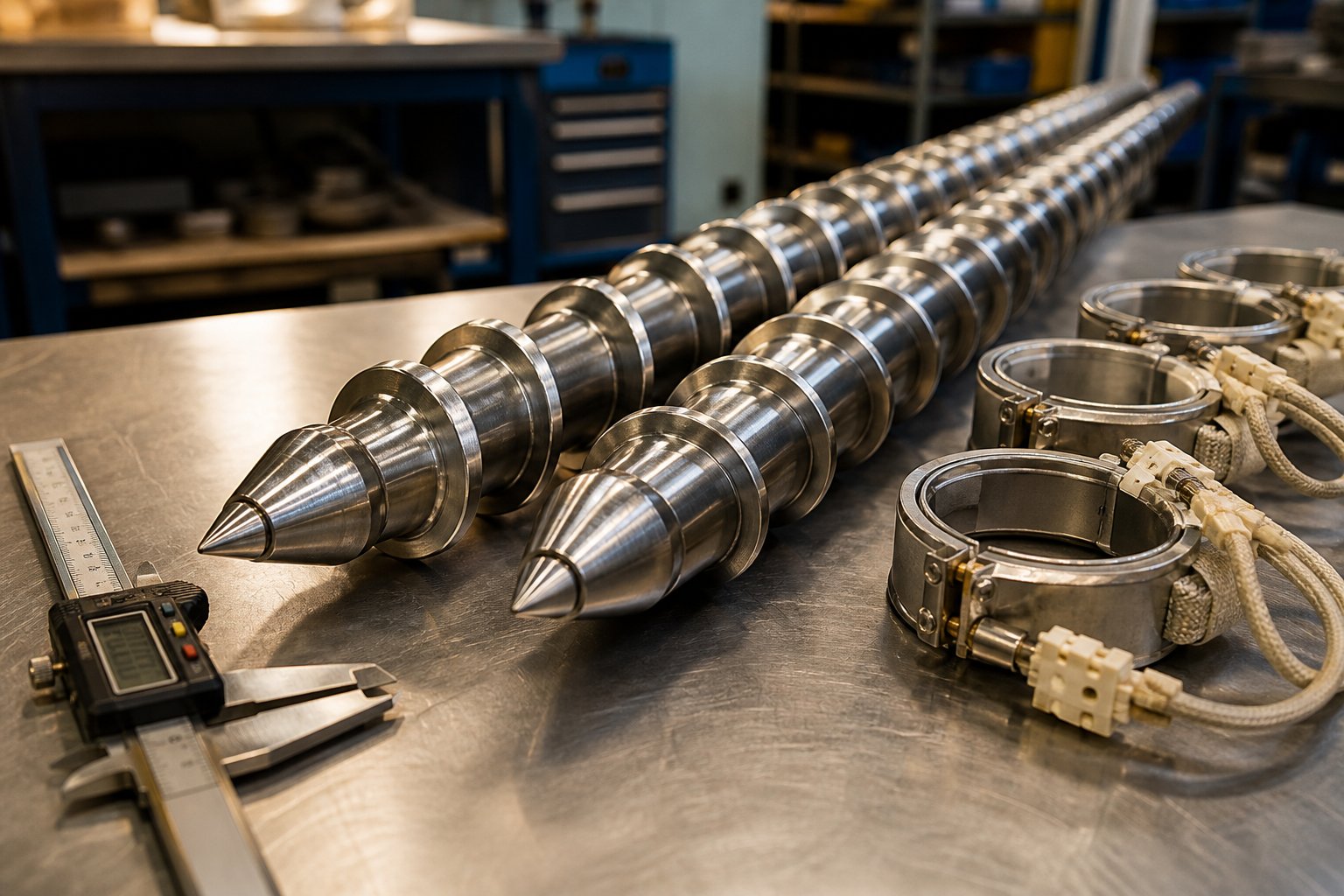
Bimetallic construction is the single most impactful upgrade available for any conical twin screw extruder processing abrasive PVC compounds. Here's how it works: a base steel body — typically forged from 38CrMoAlA or similar structural alloy — provides the mechanical strength to withstand torsional and compressive forces during operation. Bonded to the inner bore of the barrel (and often to the screw flight surfaces) is a centrifugally cast alloy lining, usually 1 mm to 2 mm thick, containing wear-resistant elements such as tungsten carbide, boron, or nickel-based alloys. This dual-layer construction delivers the best of both worlds: toughness from the steel core and abrasion resistance from the alloy lining.
Why does this matter so much for PVC? Because PVC formulations rarely run neat. Most rigid PVC pipe and profile compounds contain 5-30% calcium carbonate filler by weight — sometimes more for cost reduction. Calcium carbonate is abrasive. It grinds against screw flights and barrel walls with every rotation, progressively widening the clearance between screw and barrel. As that clearance grows, melt leaks backward (a phenomenon called "backflow"), pressure stability drops, and the extruder can no longer deliver consistent output. The result shows up in your finished products: uneven wall thickness, surface roughness, dimensional drift, and reduced mechanical strength.
Standard gas-nitrided screws and barrels resist this wear adequately for lighter-duty applications, but their hardened surface layer is relatively thin — typically 0.3 to 0.7 mm. Once that layer wears through, the softer base steel underneath erodes rapidly. Industry data suggests that bimetallic screw barrels deliver 3 to 7 times higher abrasion resistance than standard nitrided alternatives, depending on the alloy grade selected. In practical terms, that translates to a service life of 8 to 12 years for bimetallic components versus 2 to 4 years for nitrided ones under comparable processing conditions — a difference that fundamentally changes the economics of screw barrel replacement.
Metallurgy is only half the equation. Screw geometry — the specific combination of flight depth, pitch variation, and compression ratio along the screw's length — directly controls how well the PVC plasticizes. Imagine two screws made from identical alloy but with different flight profiles. One has a gradual compression transition that builds pressure smoothly across the barrel length. The other has an abrupt compression step that creates a sudden pressure spike midway through the barrel. Both will produce molten PVC, but the second will generate localized shear heat at the transition point, creating a hot spot that degrades the material. That degradation shows up as brown streaks or black specks in the finished product — defects that get your pipes rejected by the customer or your profiles returned from the job site.
The compression ratio itself — the volume of the feed zone channel divided by the volume of the metering zone channel — must match the material being processed. As discussed in the materials chapter, rigid PVC typically requires ratios between 2.0:1 and 2.5:1. But within that range, the optimal value depends on your specific formulation's bulk density, particle size distribution, and additive package. A reputable conical twin screw extruder pvc factory in china will engineer the screw geometry based on your actual compound recipe, not simply install a "standard PVC screw" and hope for the best.
For manufacturers seeking custom or replacement screw barrels engineered specifically for PVC pipe, profile, sheet, or WPC applications, specialized component suppliers like NANHAIYA offer bimetallic conical twin screw barrels designed to match specific machine models and material formulations. Sourcing high-quality replacement or upgrade screw barrels from an established Chinese manufacturer with deep application expertise can extend machine life significantly and improve plasticizing performance — particularly when the original equipment screws have reached the end of their effective service life.
Drive Systems and Control Features That Reduce Operating Costs
Screw and barrel quality determines product quality. The drive system and control architecture determine how much it costs to achieve that quality — shift after shift, year after year. Energy typically accounts for 60-70% of non-material operating cost in PVC extrusion, which means the technology driving your screws has an outsized impact on profitability.
The most significant shift in recent years has been the move from fixed-speed AC motors with mechanical gearbox reduction to frequency-inverter-controlled (VFD) motors. With a fixed-speed drive, the motor runs at full speed constantly — even when your production line doesn't need maximum output. You're paying for electricity you're not using productively. A frequency inverter adjusts motor speed electronically to match the actual output demand, reducing power draw proportionally. Picture driving a car with only two options — parked or full throttle — versus having a normal accelerator pedal. The fuel savings with proportional control are obvious, and they're equally dramatic in extrusion.
How dramatic? Modern vector-control inverters can reduce specific energy consumption by 10-15% compared to basic V/f (voltage/frequency) drives by adjusting the motor's magnetic flux to maintain optimal torque at any given speed. For a machine drawing 45 kW average power over two daily shifts, that 10-15% reduction translates to roughly $4,000-$7,000 in annual electricity savings at typical industrial rates. The inverter itself adds perhaps $2,000-$4,000 to the machine's purchase price — a payback period measured in months, not years.
Beyond the motor, PLC control systems with HMI touchscreen interfaces have transformed how conical twin screw extruders operate. A PLC (Programmable Logic Controller) replaces manual temperature adjustments and analog dials with digital precision. Operators set barrel zone temperatures, screw speed, and feeding rates on a touchscreen, and the system maintains those parameters automatically — compensating for ambient temperature changes, material variations, and thermal drift throughout the production run. Recipe storage allows operators to recall proven processing parameters for different products or formulations instantly, eliminating the trial-and-error warmup period that wastes material and time at every changeover.
Real-time monitoring across all barrel zones catches problems before they become expensive. If a heater band fails in zone three, the PLC detects the temperature drop and triggers an alarm before the operator notices a quality defect in the output. If the main motor draws abnormal current — suggesting a foreign object in the barrel or a screw bearing failure — the system can automatically reduce speed or shut down to prevent catastrophic damage. These protective functions don't just save money on repairs. They prevent the kind of unplanned multi-day stoppages that cost $2,000-$10,000 per day in lost production.
When evaluating quotes from any china conical twin screw extruder pvc supplier, verify the following features — each one directly affects either energy efficiency, product quality, or maintenance cost:
- Cast aluminum heaters with individual zone control: Cast aluminum heaters transfer heat more uniformly than mica band heaters, reducing hot spots that cause localized PVC degradation. Individual zone control means each barrel section maintains its target temperature independently, enabling the precise temperature profiles that different PVC formulations demand.
- Forced air or oil cooling systems for precise temperature management: Barrel cooling is just as important as heating. During steady-state operation, shear heat from the screws can push barrel temperatures above setpoint. Forced air cooling (using blowers directed at each barrel zone) or oil circulation cooling provides the fine-grained temperature reduction needed to stay within PVC's narrow processing window. Without effective cooling, the heaters and the shear heat fight each other — wasting energy and destabilizing melt temperature.
- Automatic lubrication systems: Gearbox bearings and thrust bearings require consistent lubrication to prevent premature wear. Manual greasing schedules are often forgotten or inconsistently applied during busy production periods. Automatic lubrication systems deliver measured quantities of lubricant at programmed intervals, extending bearing life and reducing the risk of a sudden gearbox failure — one of the most expensive repair events on any extruder.
- Overload protection: Mechanical or electronic overload protection prevents damage when something goes wrong — a cold start with solidified material in the barrel, a foreign contaminant jamming the screws, or a feeding surge that exceeds the drive's torque capacity. Machines without robust overload protection risk cracked gearbox teeth, bent screws, or burned motor windings — repairs that can exceed $5,000 and take weeks to complete while the line sits idle.
Each of these features adds cost to the machine. None of them are luxuries. A conical twin screw extruder equipped with frequency-inverter drive, PLC touchscreen control, cast aluminum zone heaters, effective barrel cooling, automatic lubrication, and proper overload protection will cost more than a stripped-down alternative — perhaps 15-25% more. But over a 10-year operating life, that premium is recovered multiple times through lower energy bills, fewer unplanned stoppages, extended component life, and consistently higher product quality. The machine features you evaluate today become the operating costs — or savings — you live with for the next decade.
The specifications and components built into the machine at the factory define its potential. What happens after it arrives at your facility — installation, training, and the ongoing supply of wear components — determines whether that potential is fully realized or gradually lost.
Post-Purchase Support and Spare Parts Sourcing for Conical Twin Screw Extruders
A $40,000 extruder sitting on your factory floor isn't producing anything. It's just expensive steel. The journey from delivered crate to first saleable product involves foundation work, utility hookups, precise commissioning, and operator training — steps that no product listing describes in detail. And once the machine is running, its long-term productivity depends on something even fewer buyers plan for: a spare parts strategy built around the components that wear out fastest. Skipping either stage costs more than the machine itself over time. Here's what to expect — and how to prepare.
Installation, Commissioning, and Operator Training
When your conical twin screw extruder arrives — typically strapped to a steel frame inside a shipping container — the clock starts on a process that takes most facilities one to three weeks to complete properly. Rushing it invites problems that haunt production for months.
Foundation and floor preparation comes first. The machine needs a level concrete floor capable of supporting its weight without shifting or settling. An SJSZ-65/132 typically weighs 3,000 to 5,000 kg fully assembled. Larger models like the SJSZ-80/156 or SJSZ-92/188 can exceed 7,000 kg. The installation area should be leveled and marked according to the equipment layout diagram provided by the manufacturer, with enough clearance around the machine for maintenance access, hopper loading, and downstream equipment alignment. As installation guides from Chinese extrusion line manufacturers emphasize, each machine in the production line must be positioned accurately according to site layout dimensions, with center heights calibrated to ensure proper material flow from extruder through die, calibration table, and haul-off.
Utility connections are where first-time buyers frequently underestimate requirements. The extruder's main motor, barrel heaters, and auxiliary drives demand a three-phase electrical supply — typically 380V/50Hz for Chinese-manufactured machines, though many factories can configure 415V/50Hz or 440V/60Hz for export markets. Confirm the voltage and frequency specification before ordering, because rewiring a mismatched motor after delivery is far more expensive than specifying it correctly upfront. Cooling water is equally critical: barrel temperature zones require chilled or ambient water circulation, and the vacuum calibration system on a pipe line needs a dedicated water supply at controlled temperature and pressure. A qualified electrician should handle all circuit connections, following the labeled wiring diagrams the manufacturer provides with the machine.
Commissioning — the methodical process of bringing the machine from cold steel to controlled production — follows a specific sequence that protects both operators and equipment. The recommended approach involves several stages: verifying that all lubrication points (gearbox, reducer, screw bearings, slide rails) have been filled with the correct oil and grease; checking every motor's rotation direction by jogging the start switch at low speed before applying load; and heating the barrel in stages — first to 120-150 degrees Celsius and holding for approximately one hour, then gradually increasing to the full process temperature. This staged heating prevents thermal shock to the barrel and allows any residual moisture to evaporate safely. Attempting to heat directly to process temperature and immediately start the screws risks material degradation inside the barrel and potential hot-gas blowback from the discharge port — a genuine safety hazard.
Reputable Chinese manufacturers typically include commissioning support in one of three forms: an on-site engineer dispatched to the buyer's facility for 5 to 14 days, remote video-guided commissioning via smartphone or laptop, or a combination where remote support handles basic setup and an engineer visit covers final optimization and trial production runs. The on-site option adds cost — usually $150-$300 per day plus airfare and accommodation — but delivers significantly faster results, especially for buyers running their first extrusion line. Remote commissioning works well for experienced operators who simply need guidance on a new machine's specific control interface and temperature profile recommendations.
Operator training determines whether your machine runs at 90% of its capability or at 60%. The knowledge gap between a trained operator and an untrained one shows up directly in scrap rates, energy consumption, and component wear. Operators need hands-on competence in several areas:
- Temperature profile setup: Understanding which barrel zone controls feeding behavior, which controls compression, and how die-zone temperature affects surface finish and dimensional accuracy. This isn't a single recipe — it changes with ambient temperature, material batch variation, and product dimensions.
- Screw speed optimization: Running too fast generates excessive shear heat and accelerates screw wear. Running too slow starves the die and produces inconsistent output. Operators must learn to read motor current, melt pressure, and output rate simultaneously to find the productive sweet spot.
- Material feeding rates: Overfeeding causes barrel pressure spikes and motor overload. Underfeeding creates air pockets, uneven plasticization, and surface defects. Matching feeder speed to screw speed is a balancing act that requires both instrument monitoring and visual assessment of the melt stream.
- Troubleshooting common defects: Brown discoloration signals thermal degradation — reduce barrel temperature or screw speed. Rough surface texture indicates incomplete plasticization — increase compression zone temperature or slow throughput. Uneven wall thickness points to die alignment issues or inconsistent melt pressure. Operators who can diagnose these problems in real time prevent hours of scrap production.
Chinese suppliers deliver training through a mix of methods: on-site instruction during the commissioning engineer's visit, invitations for operators to train at the factory before shipment, or digital resources including operation manuals, troubleshooting flowcharts, and video tutorials. The most thorough approach combines factory training — where operators see multiple machines running different products — with on-site coaching during actual production startup at the buyer's facility.
Spare Parts Strategy and Ongoing Production Support
Here's a scenario every experienced extruder operator has lived through: the machine has been running beautifully for three years. Output is consistent, product quality is excellent. Then one morning, the operator notices wall thickness drifting out of tolerance. Melt pressure fluctuates. The finished pipe fails a pressure test. The diagnosis? Screw and barrel wear has widened the clearance beyond acceptable limits. The fix requires a new screw barrel set — and the lead time for manufacturing a custom bimetallic set is 30 to 60 days. The production line sits idle while the replacement is fabricated, shipped, and installed.
That scenario is entirely preventable — with planning.
The screw and barrel assembly is the highest-wear component on any conical twin screw extruder. It's also the most critical to product quality. Every other spare part on the machine — heater bands, thermocouples, drive belts — can typically be sourced locally or from generic suppliers within days. A custom conical twin screw barrel matched to your specific SJSZ model, material formulation, and compression ratio requirements? That takes weeks to manufacture, regardless of the supplier. This timeline reality makes the screw barrel the single most important component to plan for proactively.
Recommended practices that protect your production uptime:
Order a backup screw barrel set at the time of machine purchase. This sounds expensive — and it does add $3,000 to $12,000 to your initial capital outlay depending on the model and metallurgy. But that cost is trivial compared to the production losses from an unplanned 30-to-60-day shutdown waiting for replacement parts. Many Chinese manufacturers offer discounted pricing on a second screw set ordered alongside the machine, since they can produce both sets in a single manufacturing batch.
Establish a relationship with a reliable screw barrel supplier early. Your machine manufacturer is one source — but they're not the only one. Specialized component manufacturers who focus exclusively on screw barrel production often deliver superior metallurgical quality and faster turnaround times compared to full-machine factories that treat screw barrels as a secondary product line. For conical twin screw extruder PVC applications — whether pipe, profile, sheet, or WPC — suppliers like NANHAIYA specialize in custom bimetallic conical twin screw barrels engineered for specific machine models and material formulations. Having a dedicated screw barrel partner who understands your application means faster lead times when replacement is needed, because your specifications are already on file and the engineering work is already done.
Understand lead times and plan replacements before failure. Don't wait until output quality deteriorates to order replacement screws. Track screw and barrel clearance measurements during scheduled maintenance intervals — a simple feeler gauge check every six months reveals the wear trajectory. When clearance reaches 75-80% of the replacement threshold, place the order. This proactive approach ensures the new set arrives before the old one fails, allowing a scheduled changeover during planned downtime rather than an emergency shutdown during peak production.
Beyond the screw barrel, every conical twin screw extruder pvc wholesaler in china should be able to supply — or at minimum, specify — the following essential spare parts that every facility should stock:
- Screw and barrel sets: The primary wear component. Bimetallic construction recommended for any operation processing filled PVC compounds. Keep one complete spare set on-site or confirm guaranteed lead times with your supplier.
- Heater bands: Cast aluminum or ceramic heater bands fail periodically — a burned-out element in one barrel zone disrupts the entire temperature profile. Stock two to three replacement units per zone to enable immediate swap-outs.
- Thermocouples: These temperature sensors degrade over time, providing increasingly inaccurate readings that cause operators to unknowingly run at incorrect temperatures. Replace annually or whenever readings diverge from verification measurements.
- Drive belts: If your machine uses belt-driven auxiliary systems (feeders, cooling fans), keep replacement belts on hand. A broken belt is a five-minute fix with the right part in stock — and a multi-day production stop without it.
- Gearbox oil: Regular oil changes — typically every 3,000 to 5,000 operating hours — protect the gearbox, which is one of the most expensive components to repair or replace. Use the grade and viscosity specified by the manufacturer.
Warranty terms from Chinese manufacturers vary more widely than most buyers expect. The most common structure covers the complete machine for 12 months from commissioning date, with the screw barrel, heaters, and other wear components typically excluded or covered for a shorter period. Some manufacturers extend the warranty to 18 or 24 months for the main gearbox and electrical system — a meaningful benefit given that gearbox repairs can exceed $5,000.
When negotiating warranty terms, focus on clarity around three specific points. First, define exactly what constitutes a manufacturing defect versus normal wear — as manufacturing agreement specialists note, the distinction between design-related issues and workmanship defects should be explicitly documented to avoid disputes later. Second, establish the response time commitment: a warranty that promises replacement parts "within a reasonable timeframe" is meaningless compared to one that guarantees shipment within 72 hours of a validated claim. Third, confirm who bears the cost of replacement part shipping — a $200 thermocouple that costs $500 to express-ship internationally turns a minor warranty claim into an argument nobody wins.
The most effective after-sales relationship isn't built on warranty clauses alone. It's built on selecting a manufacturer — and component suppliers — who view the sale as the beginning of a relationship rather than the end of a transaction. A conical twin screw extruder pvc supplier in china who proactively checks in after commissioning, responds to technical questions within 24 hours, and maintains a spare parts inventory ready for immediate dispatch is worth more than the lowest bidder who disappears after the wire transfer clears. That ongoing support infrastructure — from the machine manufacturer down to specialized component partners like NANHAIYA for screw barrel replacements — is what keeps a production line running at peak performance not just in year one, but in year five and year ten.
The true cost advantage of sourcing a conical twin screw extruder from China is only realized when post-purchase support, spare parts planning, and component sourcing are treated with the same rigor as the initial equipment selection.
Frequently Asked Questions About China Conical Twin Screw Extruders
1. What does SJSZ stand for on Chinese conical twin screw extruders?
SJSZ is a standardized Chinese abbreviation derived from the pinyin initials for 'plastic conical twin screw' (塑料锥形双螺杆). The numbers following SJSZ indicate the screw diameters — for example, SJSZ-65/132 means the screws measure 65 mm at the small discharge end and 132 mm at the large feed end. This naming convention is used universally across Chinese plastics machinery manufacturers, and understanding it allows buyers to immediately gauge a machine's approximate output capacity, motor power range, and suitable applications when comparing quotes from different suppliers.
2. How much does a conical twin screw extruder from China cost?
Pricing varies significantly based on model size, screw barrel metallurgy, motor brand, and control system sophistication. A mid-range SJSZ-65/132 typically falls between $28,000 and $55,000 for the extruder unit alone, while larger SJSZ-92/188 models can reach $70,000 to $130,000. Complete extrusion lines — including die head, calibration table, haul-off, and cutter — cost roughly 2.5 to 4 times the extruder-only price. Buyers should also budget for shipping ($2,000-$8,000), import duties, installation, and ongoing costs like energy and screw barrel replacement, which collectively represent 50-70% of total cost of ownership over the machine's lifespan.
3. What is the difference between a conical and parallel twin screw extruder?
Conical twin screw extruders use two tapered, counter-rotating screws that converge from a wide feed end to a narrow discharge end, achieving high compression in a compact footprint with low shear heat — ideal for heat-sensitive PVC dry-blend powder. Parallel twin screw extruders use equal-diameter screws along their full length, typically co-rotating, with longer L/D ratios suited for intensive mixing and compounding tasks. Conical designs are the industry standard for rigid PVC pipes, profiles, and sheets, while parallel designs excel at compounding engineering plastics, color masterbatch production, and reactive extrusion where aggressive dispersive mixing is required.
4. How long do screw barrels last on a conical twin screw extruder processing PVC?
Service life depends heavily on metallurgy and the abrasiveness of your PVC formulation. Standard gas-nitrided screw barrels typically last 2 to 4 years when processing calcium carbonate-filled PVC compounds. Bimetallic screw barrels — featuring centrifugally cast alloy linings with tungsten carbide, boron, or nickel-based alloys — deliver 3 to 7 times higher abrasion resistance and can last 8 to 12 years under comparable conditions. Specialized component suppliers like NANHAIYA (nhyscrews.com) manufacture custom bimetallic conical twin screw barrels engineered for specific machine models and PVC applications, helping extend wear life and maintain consistent plasticizing performance.
5. How do I verify the quality of a Chinese conical twin screw extruder manufacturer?
Start by checking factory age, export history to your region, and whether ISO 9001 and CE certificates can be validated through the issuing bodies. Request international client references and ask those references specifically about after-sales responsiveness. Verify whether the manufacturer machines screw barrels and key components in-house or outsources them — in-house production indicates deeper quality control. Attendance at trade exhibitions like Chinaplas or the K Show signals long-term market commitment. Finally, request a factory visit or live video tour to assess production capability firsthand, and arrange a third-party pre-shipment inspection before wiring the balance payment.
Written by
Nanhaiya Technical Team
Zhoushan Nanhaiya Plastic Machinery Co., Ltd.
The Nanhaiya technical team supports screw and barrel manufacturing projects through application review, technical communication, custom manufacturing coordination, and production and quality control.
Discuss Your Application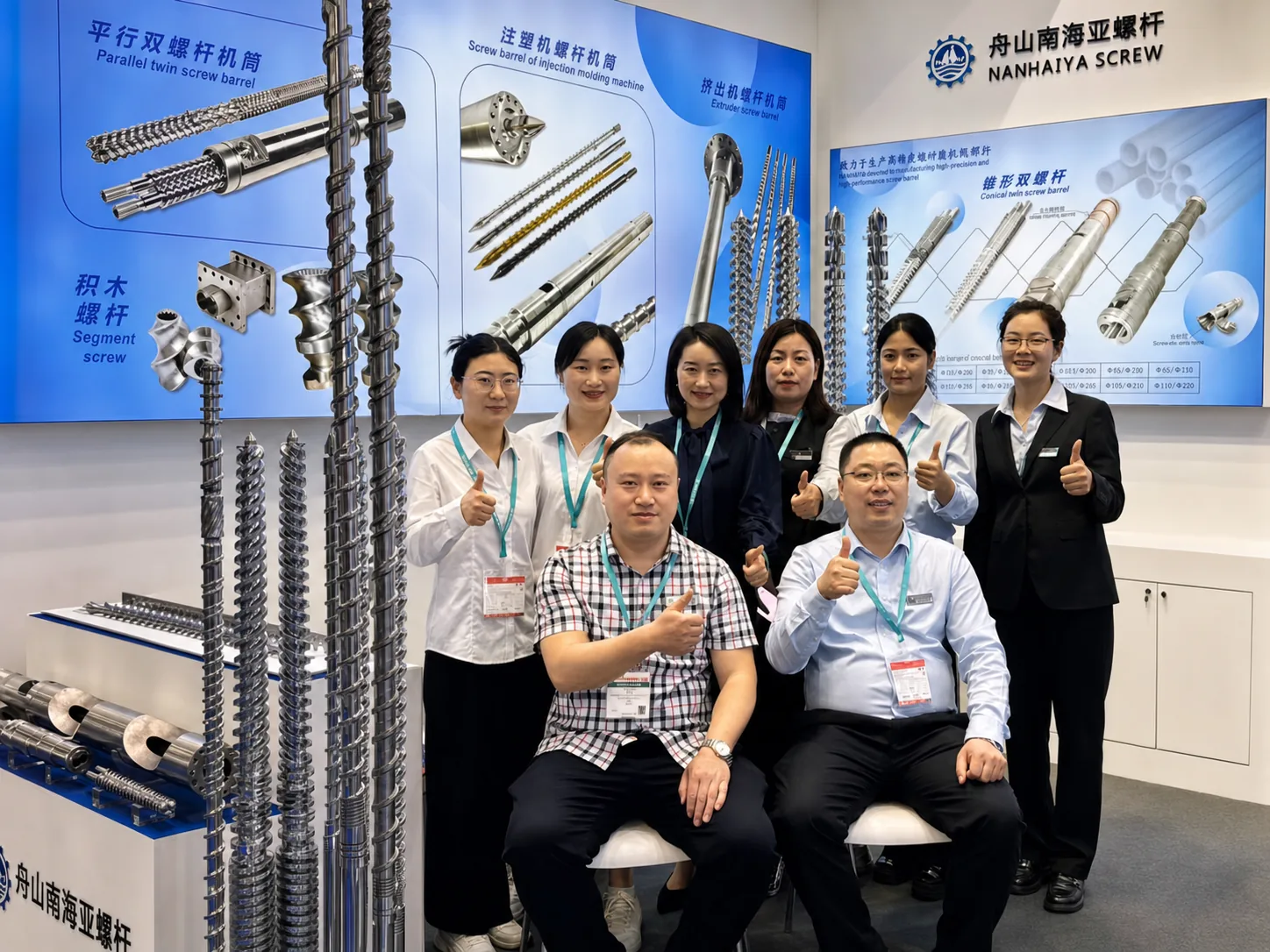
Related Articles
More insights on screw barrel technology and plastics processing.
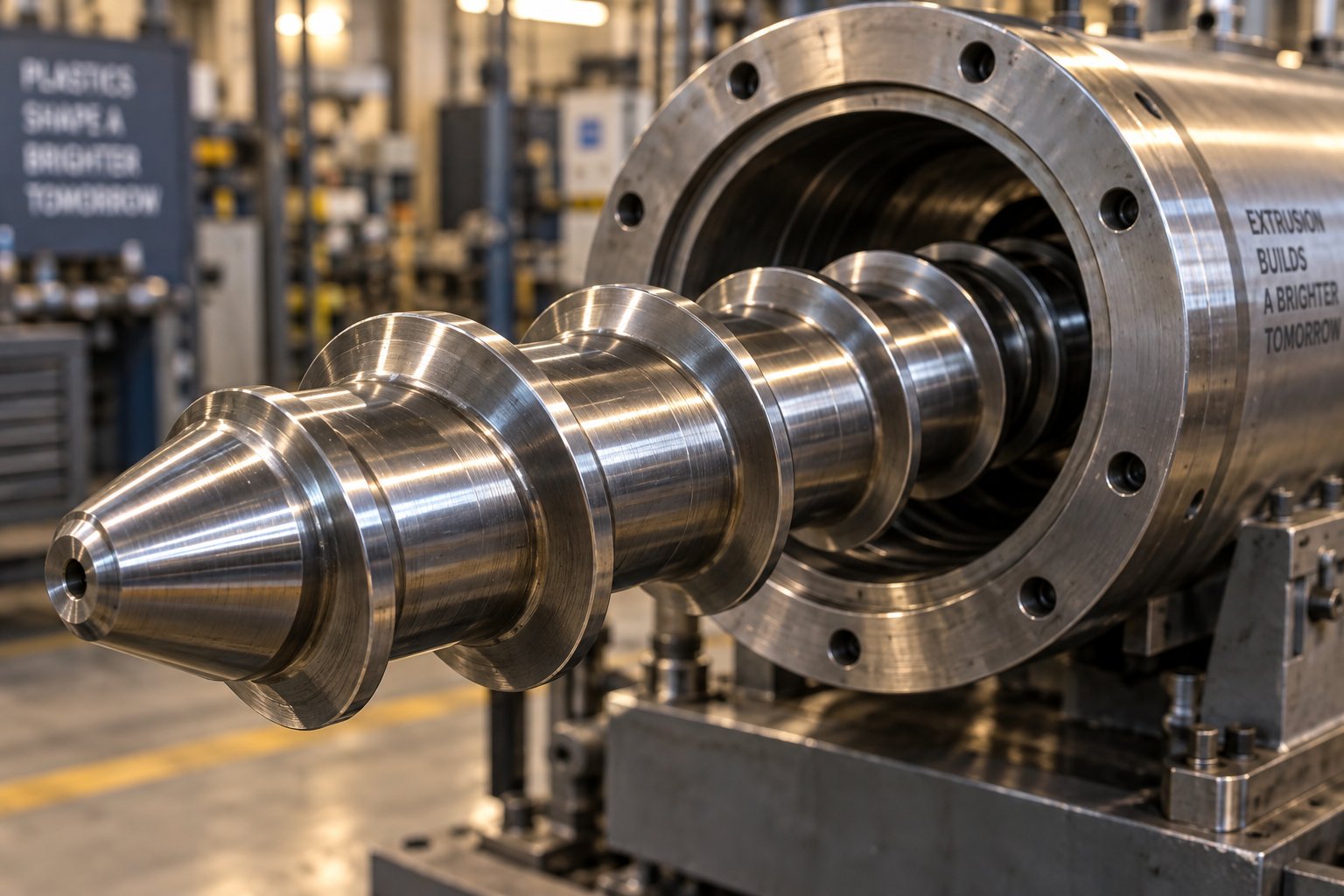
What Nobody Tells You About Screw Barrel For Plastic Machine Design
Oct 10, 2026
Learn how screw barrel for plastic machine design affects melt quality, throughput, and wear life. Covers geometry, resin matching, troubleshooting, and sourcing.
Read Article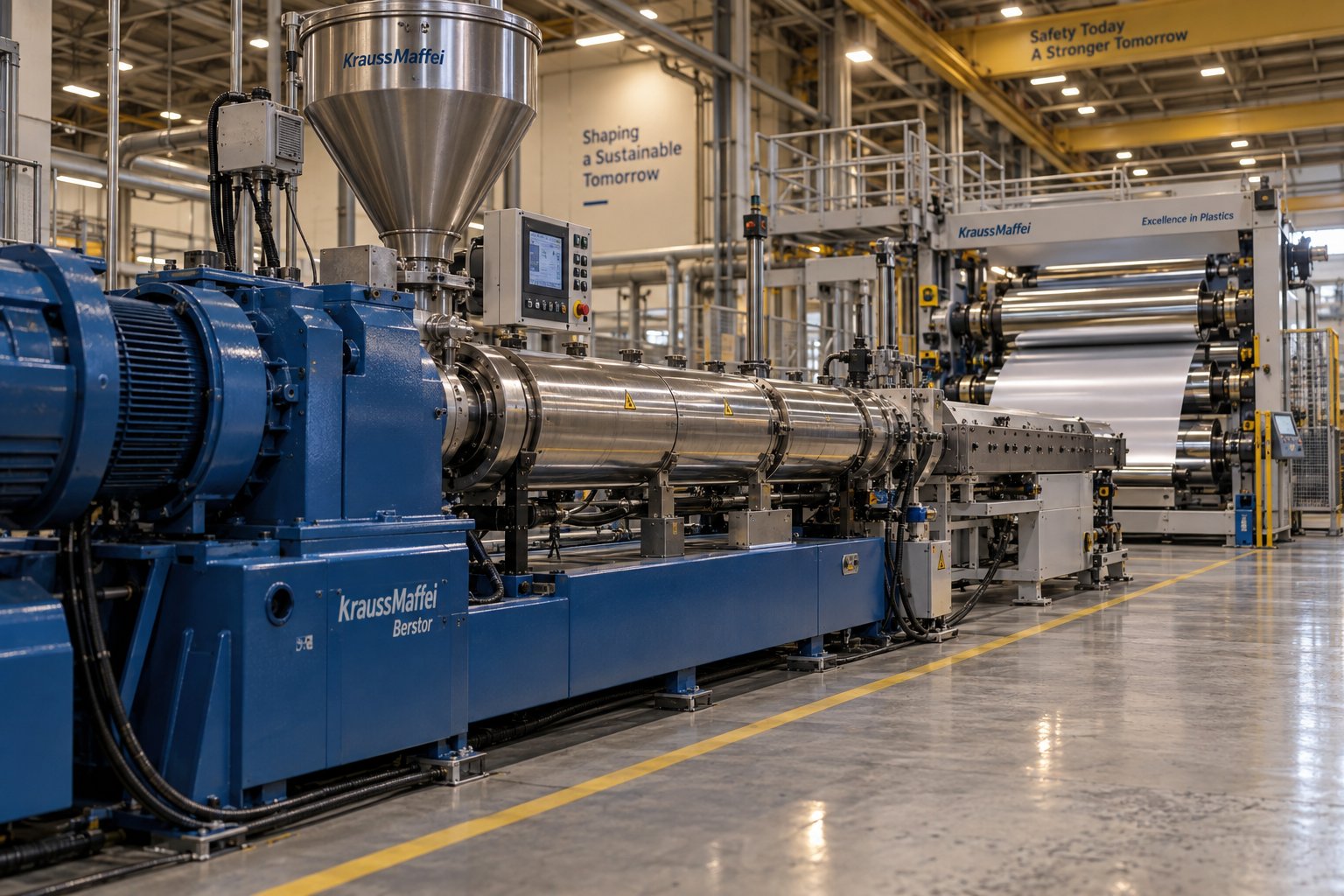
Single Screw Extruder for Sheet: Stop Guessing, Start Specifying
Oct 9, 2026
Learn how to specify a single screw extruder for sheet production. Covers screw geometry, resin-specific processing, troubleshooting, and maintenance best practices.
Read Article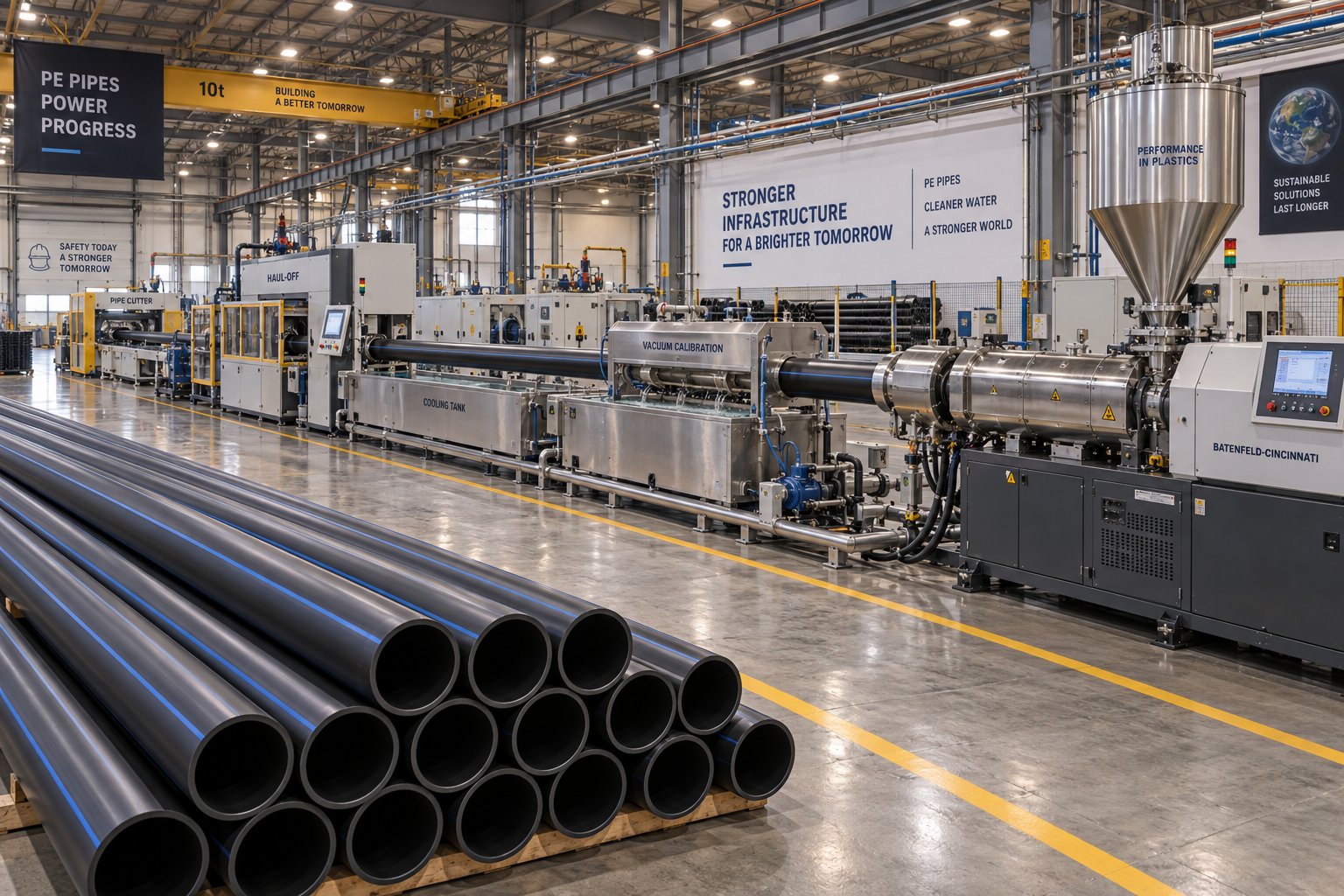
PE Pipe Extruder Machine: What Datasheets Won't Tell You
Oct 9, 2026
Learn how a PE pipe extruder machine works, key specs explained, material grade selection, maintenance tips, and buyer guidance beyond the datasheet.
Read ArticleLooking for something else?
Search by material, symptom or product and jump straight to the relevant page.
These are navigation suggestions based on keyword matching — not a quotation, not a delivery commitment, and not a substitute for engineering review. Final specification is confirmed by our engineers against your drawings and processed material.
Need help with screw barrel selection?
Share your machine model, processed material and application. Our team can help with pricing and technical support.