

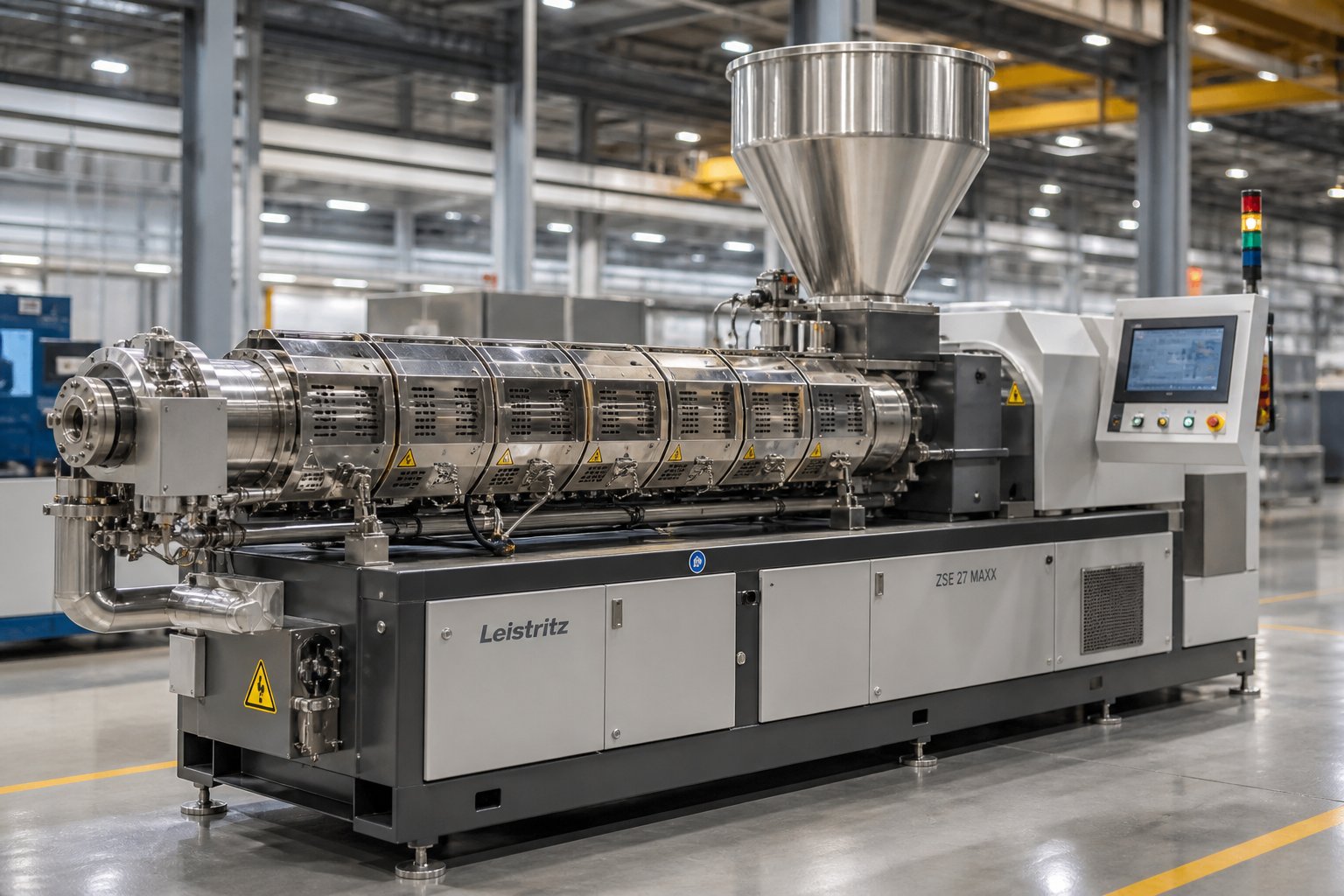
Why Twin Screw Extruders Power Diverse Industries
When you think of a twin screw extruder, you probably picture plastic pellets tumbling into a hopper. That image captures roughly ten percent of what these machines actually do. The real story is far more interesting — and far more profitable for the manufacturers who look beyond the obvious.
A twin screw extruder is a machine with two intermeshing screws rotating inside a barrel to convey, melt, mix, and shape materials under controlled conditions of temperature, pressure, and shear. That definition sounds straightforward, yet it conceals enormous versatility. The same fundamental platform that compounds glass-fiber-reinforced nylon in an automotive plant also produces sustained-release pharmaceutical tablets, texturizes plant-based protein for the food industry, and strips residual solvents from specialty chemical intermediates.
In other words, the true value of a twin-screw extruder isn't defined by its hardware specs alone. It's defined by the application you point it at.
Why Applications Define Twin Screw Extruder Value
Most guides on this topic hand you a bullet-point list of industries and move on. That approach skips the most important question: why does a twin screw extrusion process outperform alternatives for each specific use case? Understanding the reasoning behind each application is what separates informed equipment selection from expensive trial and error. A compounding line for mineral-filled polypropylene demands aggressive dispersive mixing. A pharmaceutical hot melt extrusion line requires gentle, precisely controlled residence time. Same machine category, entirely different configurations and operating philosophies.
This article digs into that level of detail — exploring not just where twin screw extruders are used, but why they dominate each application and how screw configuration, barrel design, and process parameters adapt to meet wildly different processing goals.
A Three-Tier Framework for Understanding Extruder Applications
To make sense of this breadth, imagine every application of a twin screw extruder organized across three dimensions:
- By Industry: Plastics and polymers, pharmaceuticals, food processing, chemical and specialty materials, energy storage, and recycling.
- By Process Type: Compounding, reactive extrusion, devolatilization, direct extrusion (profiles, pipes, sheets), and hot melt extrusion for drug delivery.
- By Material Type: Engineering plastics (nylon, polycarbonate), bioplastics (PLA, PHA), thermoplastic elastomers, highly filled systems (mineral, glass fiber, carbon black), and heat-sensitive formulations (PVC dry blends, active pharmaceutical ingredients).
Each combination of industry, process, and material creates a unique set of demands on the twin screw platform — demands that shape everything from screw element selection to barrel zone temperatures and L/D ratio. The sections ahead unpack each of these layers, starting with how co-rotating and counter-rotating configurations map to different application requirements.
Co-Rotating vs Counter-Rotating Twin Screw Extruders by Application
Choosing between a co-rotating and counter-rotating twin screw extruder isn't really about which machine is "better." It's about which configuration matches your application. The rotation direction of those two intermeshing screws changes the flow field, shear intensity, and conveying behavior so dramatically that each design excels in fundamentally different processing scenarios.
Co-Rotating Twin Screw Extruders and Their Best-Fit Applications
In a co-rotating twin screw extruder, both screws turn in the same direction with a fully intermeshing, self-wiping geometry. This arrangement forces material through an intense shear field at the intermeshing zone, where it is continuously handed off from one screw flight to the next. The result? Very few dead zones, a narrow residence time distribution, and exceptional mixing performance.
That self-wiping action is particularly valuable. It prevents material from stagnating or adhering to screw surfaces, which keeps thermally sensitive formulations from degrading. According to extrusion specialists at Technovel, the combination of high shear fields between the screws and barrel — plus kneading blocks that introduce elongational flow — gives co-rotating designs the ability to break up filler agglomerates, control polymer alloy morphology, and promote mass transfer during chemical reactions.
You'll find co-rotating configurations dominating applications like polymer compounding with inorganic and nano-scale fillers, reactive extrusion involving grafting or polymerization, polymer alloy and blend production, and pharmaceutical hot melt extrusion where precise mixing and consistent residence time are non-negotiable.
Counter-Rotating Configurations for Pressure-Sensitive Processing
Flip one screw's rotation direction, and the processing dynamics shift considerably. In a counter-rotating twin screw extruder, material is drawn into the intermeshing zone and compressed forward with strong positive conveying forces. Shear stress is notably lower than in co-rotating designs, and mixing relies primarily on compressive and elongational deformation rather than aggressive shearing.
Why does this matter? Imagine processing rigid PVC — a material with a low thermal decomposition temperature and poor melt flow. Subject it to the high shear of a co-rotating extruder, and you risk degradation before the material even reaches the die. A counter-rotating configuration, by contrast, operates at high fill levels and lower screw speeds, keeping extrusion temperatures low while a calendering effect at the intermeshing region gently disperses additives. This is precisely why counter-rotating extruders are the standard choice for PVC pipe, sheet, and profile extrusion lines.
Choosing Between Parallel and Conical Designs
The distinction between co-rotating and counter-rotating twin screw extruder types is only half the picture. Counter-rotating machines come in two geometric sub-variants — parallel and conical — each suited to different production demands.
A parallel twin screw extruder maintains a consistent screw diameter along its entire length, delivering uniform shear distribution and stable conveying. These machines handle continuous production of profiles, pipes, and extruded products that require precise dimensional consistency over extended runs.
A conical twin screw extruder, on the other hand, uses tapered screws — larger at the feed end, smaller at the discharge. This taper creates a natural compression zone that enhances melting and improves feeding capacity for bulky or low-density materials. The compact design also enables high torque transmission in a smaller footprint. For heat-sensitive PVC dry blends, the gentle compression profile of a conical design prevents localized overheating, making it an ideal match for medium-capacity extrusion lines producing window profiles, door frames, and building panels.
| Configuration Type | Mixing Intensity | Shear Level | Throughput Capability | Self-Wiping | Typical Applications |
|---|---|---|---|---|---|
| Co-Rotating (Parallel) | Very High | High | High | Yes | Polymer compounding, reactive extrusion, masterbatch, pharmaceutical HME, nanocomposites |
| Counter-Rotating (Parallel) | Moderate | Low to Moderate | Moderate to High | Limited | PVC pipe and profile extrusion, sheet production, cable coating |
| Counter-Rotating (Conical) | Moderate | Low | Low to Moderate | Limited | Heat-sensitive PVC dry blends, window profiles, building panels, medium-capacity lines |
Notice the pattern in the table above: as you move from co-rotating to conical counter-rotating, mixing intensity and shear decrease while gentleness and pressure stability increase. That trade-off is exactly what makes each configuration essential for its target applications rather than universally superior.
Of course, selecting the right configuration is only the starting point. The real performance gains come from what happens inside the barrel — specifically, how screw elements are arranged to compound, disperse, and homogenize materials at a granular level. And nowhere is that screw design expertise more critical than in the most widespread application of all: plastics compounding.
Plastics Compounding and Masterbatch Production
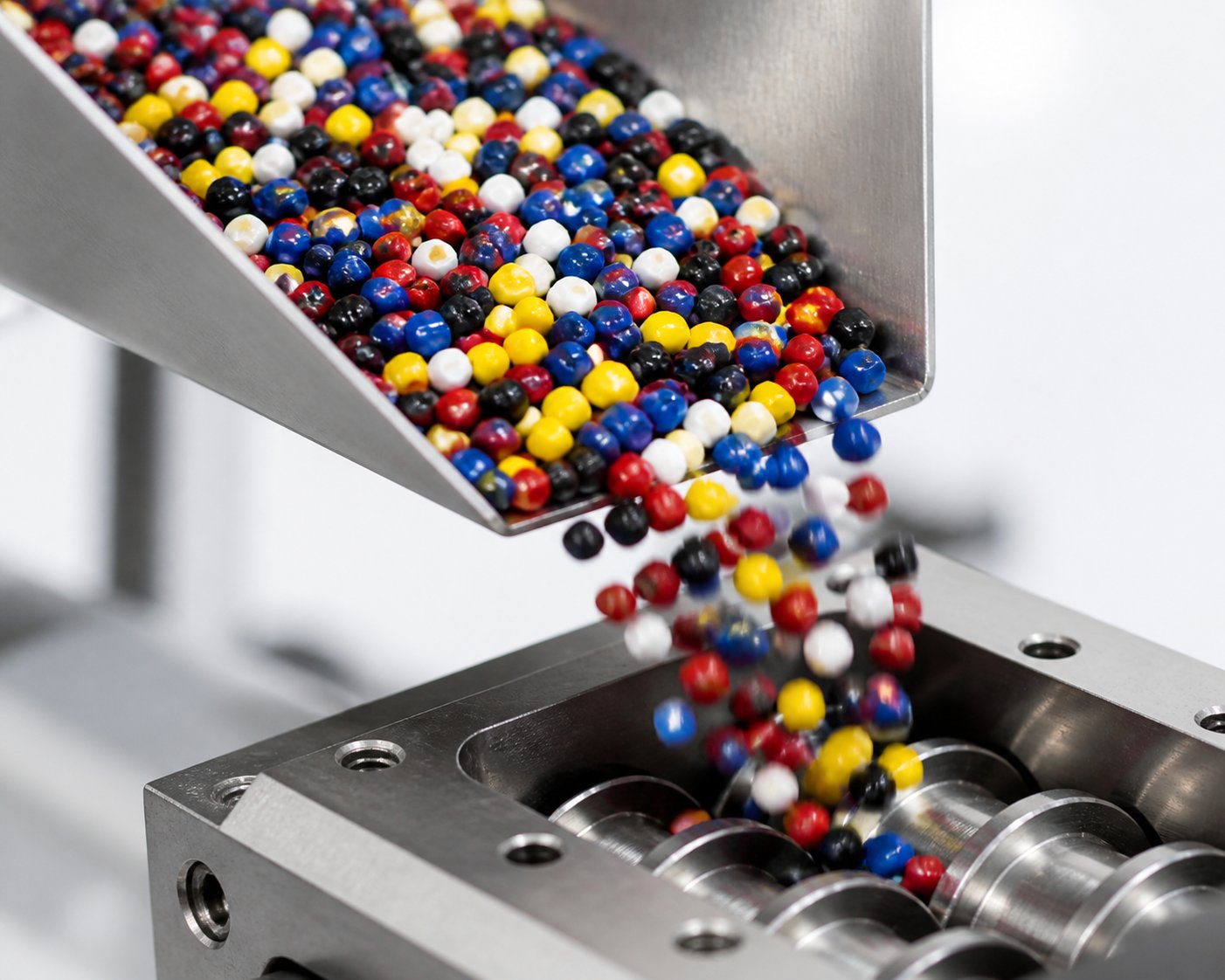
Plastics compounding is the single most widespread reason manufacturers invest in a compounding twin screw extruder. The goal sounds simple — blend a base polymer with additives, fillers, or reinforcements to create a material with precisely tailored properties. In practice, achieving that blend at production speed without sacrificing polymer integrity is anything but simple. It's also the reason twin screw machines have displaced single screw alternatives in virtually every high-performance compounding operation.
So why does a twin screw compounding extruder outperform a single screw design for this job? Four fundamental advantages set it apart:
- Superior distributive and dispersive mixing: Two intermeshing screws create multiple mass transfer regions — overflight gaps, apex zones, and the intermesh zone itself — that a single screw simply cannot replicate. This gives you both the intense shear needed to break up filler agglomerates (dispersive mixing) and the gentle, high-division-rate blending needed to spread them evenly throughout the melt (distributive mixing).
- Modular screw design flexibility: Individual screw elements slide onto a splined shaft, so engineers can rearrange conveying segments, kneading blocks, and mixing elements to match each formulation.
- Precise multi-zone temperature control: Each barrel segment has independent heating and cooling, letting operators set a gradual thermal profile that melts the polymer efficiently without overheating downstream zones where fillers are introduced.
- Side-feeder capability: Downstream side stuffers allow fillers and reinforcements to be introduced after the polymer is already molten, protecting sensitive additives from excessive residence time and heat exposure.
Engineering Plastics Compounding and Filled Systems
Imagine you need to produce glass-fiber-reinforced nylon for under-hood automotive components. The polymer matrix must melt completely before fibers are introduced, yet those fibers need enough mixing energy to wet out and disperse uniformly — without excessive breakage that destroys their reinforcing value. Research published in Polymers (2022) demonstrated exactly this challenge: screw configurations with kneading blocks placed after the fiber feeding zone caused significantly shorter resulting fiber lengths compared to configurations using only conveying elements. The study showed that fiber length decreased rapidly within the first few millimeters after addition and that higher fiber content intensified breakage further.
The takeaway for any extruder for polymer compounding with fiber reinforcement is clear — screw design in the mixing zone directly determines the balance between fiber dispersion and fiber preservation. Wider kneading discs generate strong extensional flow fields that improve wetting but increase breakage. Narrower kneading discs facilitate distributive mixing with far less fiber damage.
Mineral-filled polypropylene presents a different compounding puzzle. Calcium carbonate or talc particles tend to form agglomerates that resist simple blending. A compounding extruder configured with aggressive kneading blocks can apply the dispersive shear needed to break those clusters apart, while downstream conveying elements allow the compound to relax and homogenize before reaching the die. Flame-retardant concentrates — often loaded with 60% or more mineral filler by weight — push this balancing act even further, requiring careful screw element sequencing to prevent excessive melt temperature rise that could trigger filler decomposition.
Masterbatch and Color Concentrate Production
Color masterbatch manufacturing is one of the most demanding tests of compounding quality. When a carbon black masterbatch will be used in thin film or fiber applications, even a single undispersed agglomerate can create a visible defect or a weak point that causes breakage during stretching. As Leistritz extrusion engineers explain, dispersive mixing in a twin screw extruder relies on the strong forces applied by rotating screws against the polymer matrix — specifically, the planar shear and extensional mixing effects that occur as material accelerates from the screw channel into the narrow overflight gap between the screw tip and barrel wall.
Highly dispersive applications like carbon black masterbatch typically run at comparatively lower throughput rates. Why? At constant screw speed, reducing the feed rate means the material spends more time in the mixing zones where shear and extensional flow fields are dominant, intensifying the "mixing experience" that breaks down agglomerates. This relationship between feed rate, screw speed, and mixing quality is what makes twin screw platforms so adaptable — you're not locked into a single shear profile the way you are with a fixed-geometry single screw.
How Screw Elements Drive Compounding Quality
At the heart of every successful compounding operation is the screw profile — the specific sequence of elements assembled on the shaft. Each element type performs a distinct function, and the order in which they appear determines whether a formulation exits the die with uniform filler distribution or with hot spots, agglomerates, and degraded polymer chains.
A typical screw zone arrangement for a compounding application follows this sequence:
- Feeding zone: Deep-flighted conveying elements with large pitch accept incoming pellets or powder and transport them forward without applying significant shear.
- Melting/plasticizing zone: Conveying elements with progressively tighter pitch begin compressing the material. Barrel temperatures in this zone are set above the polymer's melting point to initiate phase change through a combination of conducted heat and frictional energy.
- Mixing/kneading zone: Kneading blocks — arranged in forward, neutral, or reverse stagger angles — deliver the core mixing work. NC State Extension research confirms that forward kneading elements are less aggressive, neutral elements increase residence time by halting forward conveyance, and reverse kneading blocks push material backward to create maximum restriction and shear.
- Venting zone: An open barrel segment with atmospheric or vacuum venting allows trapped air, moisture, or volatile byproducts to escape. A reverse element or restrictive block upstream creates a melt seal that prevents vent flooding.
- Metering/pumping zone: Tight-pitch conveying elements build the pressure needed to push the homogenized melt through the die or into a pelletizing system at a consistent rate.
The common processing challenge — achieving uniform filler distribution without degrading the polymer matrix — comes down to how these zones interact. Place too many aggressive kneading blocks in sequence, and melt temperature spikes above the polymer's thermal stability window. Use too few, and filler agglomerates survive into the final pellet. The solution lies in distributing mixing work across multiple shorter kneading zones separated by conveying sections that allow the melt to cool and relax. This "distributed mixing" approach keeps peak shear exposure brief while still delivering the cumulative energy needed for full dispersion.
Compounding, of course, represents only one category of what twin screw platforms can accomplish within their process sections. Some of the highest-value applications don't involve blending at all — they use the extruder as a continuous chemical reactor or a volatile-stripping machine, pushing the technology into territory that reshapes how entire product categories are manufactured.
Reactive Extrusion and Devolatilization Processes
A compounding extruder blends what already exists. A reactive screw extruder, by contrast, creates something entirely new — performing polymerization, grafting, crosslinking, or functionalization reactions while simultaneously conveying material from feed throat to die. Think of it this way: the barrel becomes a continuous chemical reactor, and the screws serve as both the agitator and the transport system.
Reactive Extrusion as a Continuous Chemical Process
In a conventional batch reactor, polymers sit in large vessels for hours while heat and mechanical stirrers drive chemical reactions to completion. Reactive extrusion collapses that entire workflow into a single, continuous pass through a twin screw barrel. Cowell Extrusion describes several reaction types commonly performed this way — creating new polymers from monomers, attaching functional groups like maleic anhydride onto polymer backbones, extending or branching polymer chains to modify rheology, and even controlled depolymerization for recycling purposes.
What makes the twin screw extrusion process uniquely suited for these reactions? Three capabilities stand out:
- Independent temperature zone control: Each barrel segment can be heated or cooled independently, so engineers can create a precise thermal profile that matches the reaction kinetics — preheating reagents in the early zones, sustaining peak reaction temperatures in the middle, and cooling the product before discharge.
- Mid-process reagent injection: Liquid injection ports and side feeders positioned at specific barrel locations allow catalysts, monomers, or reactive additives to be introduced exactly where they are needed in the reaction sequence. This staged approach prevents premature reactions and gives operators fine control over stoichiometry.
- Solvent-free operation: Unlike solution-phase reactors, twin screw extruders deliver high shear stress that promotes intimate contact between reactive species without requiring solvents. This eliminates downstream solvent recovery steps, reduces waste, and supports greener manufacturing workflows.
Common industrial examples include grafting maleic anhydride onto polypropylene (PP-g-MA) for compatibilizer production, chain extension of PET and PLA to restore melt strength in recycled streams, and direct synthesis of thermoplastic polyurethane (TPU) through continuous polymerization inside the barrel.
Devolatilization for Solvent and Moisture Removal
Where reactive extrusion adds chemistry to the screw extrusion process, devolatilization removes it. The goal here is stripping residual solvents, unreacted monomers, moisture, or volatile byproducts from a polymer melt — typically through vacuum venting ports positioned along the barrel.
Why do twin screw extruders excel at this? The answer lies in surface renewal. As devolatilization expert Rob Jerman explains in Plastics Technology, the process is fundamentally a mass-transfer operation driven by superheating the volatile component and then exposing the melt to rapid decompression. In a twin screw extruder, intermeshing screws continuously turn over the melt pool, exposing fresh material surfaces to the low-pressure zone above the vent opening. Every screw rotation generates new surface area for volatiles to escape — far more efficiently than a single screw design, where the melt surface remains relatively stagnant.
A typical devolatilization zone sits between two melt seals created by restrictive screw elements — reverse kneading blocks or blister rings that force the channel completely full. The upstream seal prevents vacuum from pulling backward toward the feed throat; the downstream seal stops it from disrupting the die. Between these seals, partially filled screw flights expose the polymer melt to vacuum through an open barrel vent port.
A practical rule of thumb: each vent stage can reduce volatile concentration by roughly an order of magnitude. A triple-vented machine, for instance, can bring a 50%-solids polymer solution down to below 0.1% residual volatiles. This makes multi-vent configurations essential for applications where regulatory compliance — in food contact, medical devices, or pharmaceutical packaging — demands extremely low residual levels.
Why L/D Ratio Matters for These Applications
Both reactive extrusion and devolatilization are time-dependent processes. Chemical reactions need sufficient residence time to reach completion; volatile removal requires enough sequential vent stages to hit target residual levels. The barrel's length-to-diameter ratio (L/D) directly controls how much processing length is available for these tasks.
L/D ratio selection directly determines whether sufficient reaction completion or volatile removal can be achieved. An undersized L/D leaves reactions incomplete or volatiles trapped in the product — problems that cannot be solved by adjusting screw speed or temperature alone.
Reactive extrusion applications typically require longer barrels, with L/D ratios ranging from 40:1 to 60:1. That extended length accommodates multiple injection points, dedicated reaction zones with specific temperature profiles, and downstream venting to remove reaction byproducts. Simple devolatilization tasks — stripping moisture from hygroscopic polymers, for example — may work with shorter configurations in the range of 32:1 to 40:1, provided the number of vent stages is adequate.
Choosing the right L/D also involves trade-offs. Longer barrels increase total residence time and energy input, which can cause thermal degradation in heat-sensitive polymers. As Jerman notes, pushing devolatilization performance too aggressively can trigger depolymerization in chain-type polymers like acrylics and styrenics, where the rate of unzipping begins to exceed the rate of volatile removal. The engineering challenge is finding the L/D that provides just enough processing length — without subjecting the material to unnecessary thermal history.
These process-specific applications — turning a screw extruder into a reactor or a volatile stripper — illustrate how far the technology reaches beyond simple melt blending. Yet some of the most compelling growth is happening in an industry where few people would expect to find an extruder at all: pharmaceutical manufacturing.
Pharmaceutical Hot Melt Extrusion Applications
A pill that patients swallow every day might owe its effectiveness to the same twin screw platform that compounds glass-fiber-reinforced nylon. Sounds surprising? It shouldn't be. Pharmaceutical hot melt extrusion (HME) has quietly become one of the most high-value applications of twin screw extruder technology, solving a problem that costs the drug industry billions of dollars a year — poor bioavailability of water-insoluble active pharmaceutical ingredients (APIs).
The challenge is straightforward. An estimated 40% of marketed drugs and nearly 90% of molecules in development pipelines are classified as poorly water-soluble. If a drug can't dissolve in gastrointestinal fluids, it can't be absorbed into the bloodstream — and a drug that isn't absorbed is a drug that doesn't work, regardless of how potent its molecular design might be.
Twin screw extruders solve this by intimately mixing APIs with polymer carriers under controlled heat and shear to form amorphous solid dispersions (ASDs). In an ASD, the crystalline structure of the drug is disrupted and the API molecules are distributed — ideally at the molecular level — within a polymer matrix. This amorphous state dramatically increases the drug's apparent solubility and dissolution rate, which translates directly into higher bioavailability in patients.
How Hot Melt Extrusion Improves Drug Bioavailability
Imagine a crystalline API as a tightly packed brick wall. Water molecules struggle to penetrate and dissolve that ordered lattice. Converting the drug to an amorphous form removes the lattice energy barrier entirely — like scattering the bricks across a field where water can reach every surface.
The critical proof? A study published in AAPS PharmSciTech demonstrated this principle with a BCS Class II compound processed via HME with PVP VA64 polymer. The resulting amorphous solid dispersion achieved bioavailability in dogs that was four times higher than a conventional crystalline tablet formulation. Dissolution testing showed 70-80% drug release from the ASD prototypes — roughly double what the crystalline formulation could deliver. These results illustrate why the pharmaceutical industry increasingly turns to twin screw extrusion for bioavailability enhancement rather than relying solely on particle size reduction or solvent-based approaches.
Several commercially available drug products already leverage this technology. Kaletra (lopinavir/ritonavir) tablets for HIV therapy represent one of the most well-known examples where hot melt extrusion replaced an older soft-gel capsule formulation, eliminating refrigeration requirements and improving patient compliance.
Twin Screw Extruder Advantages in Pharmaceutical Processing
Why choose a twin screw extruder over spray drying, co-precipitation, or other techniques for creating amorphous dispersions? The advantages are both practical and regulatory:
- Solvent-free processing: HME eliminates the need for organic solvents entirely. No solvents means no residual solvent testing, no explosion-proof facilities, and no downstream drying steps. The same Boehringer Ingelheim research team noted that individual excipients can be directly fed into the extruder barrel where efficient mixing occurs via screw elements — pre-blending of formulation components is not required.
- Continuous operation: Unlike batch processes that produce discrete lots, a twin screw extruder runs continuously. This aligns with the FDA's push toward continuous pharmaceutical manufacturing, where product quality is monitored in real time using process analytical technology (PAT) tools such as near-infrared spectroscopy and Raman probes.
- Precise control over mixing intensity and residence time: Modular screw configurations let formulators dial in exactly the right combination of shear, temperature, and dwell time for each API-polymer system. Too much shear degrades heat-sensitive molecules; too little leaves crystalline drug particles undissolved in the matrix.
- Scalability from milligrams to metric tons: A formulation developed on a 9-mm laboratory extruder can be scaled to clinical and commercial production on 16-mm, 18-mm, or larger machines using well-established volumetric and specific energy scale-up principles.
The range of dosage forms accessible through HME extends well beyond simple tablets. Typical pharmaceutical applications include:
- Amorphous solid dispersions for enhancing bioavailability of poorly soluble drugs
- Sustained-release matrices that control drug release over 12 to 24 hours
- Taste-masking of bitter APIs by embedding them in polymer carriers that prevent oral cavity contact
- Co-crystals formed in situ during extrusion to improve both solubility and chemical stability
- Implantable drug delivery systems such as PLA-based rods that release medication over weeks or months at a surgical site
Laboratory and Benchtop Extruders for Pharma R&D
Here's a practical reality that shapes every pharmaceutical extrusion project: API is expensive. Early-stage compounds can cost thousands of dollars per gram, and only a few hundred grams may exist when formulation development begins. Running kilograms of precious material through a production-scale extruder just to screen polymer combinations is simply not feasible.
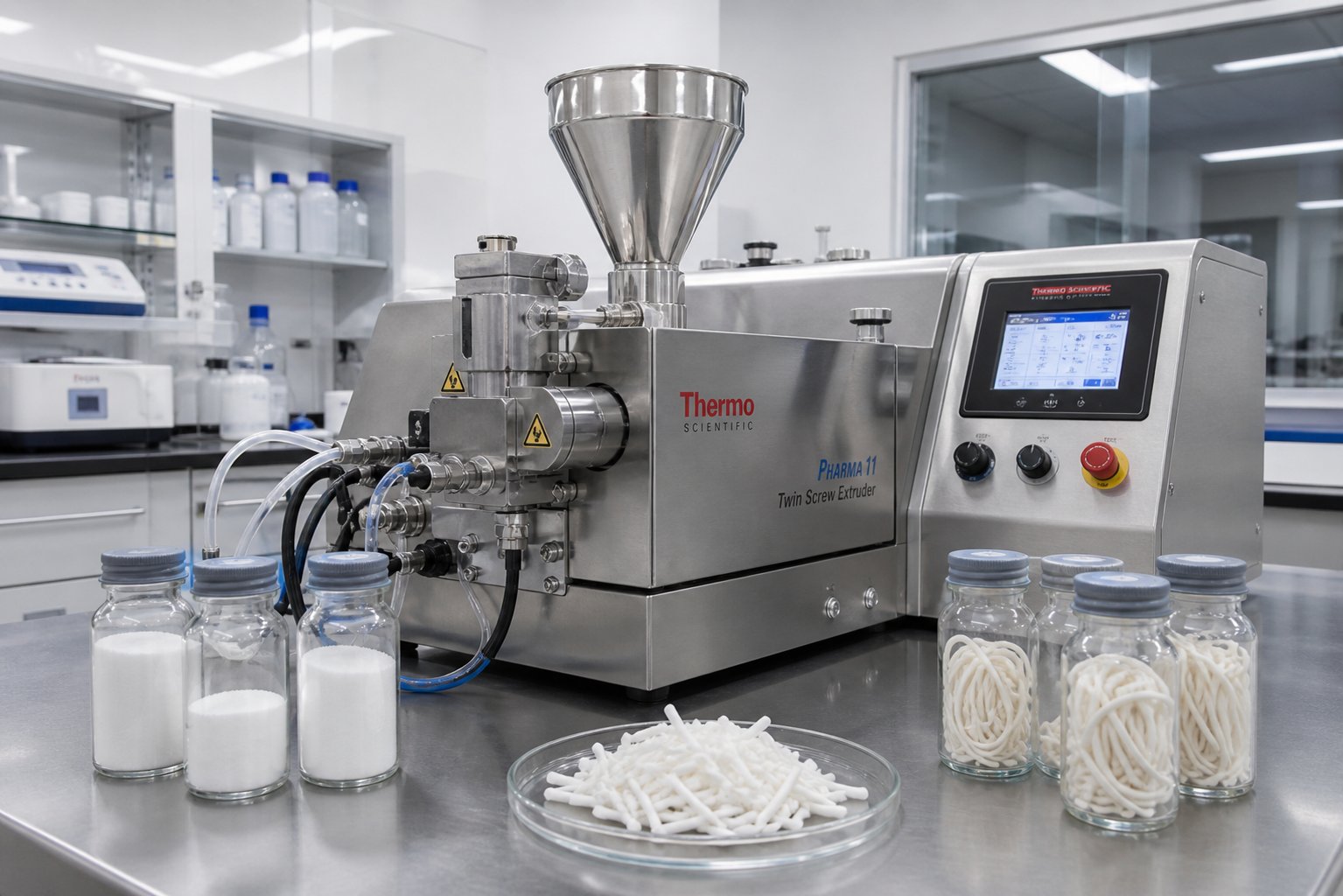
This is where the laboratory twin screw extruder becomes indispensable. Compact machines with screw diameters as small as 9 mm allow researchers to extrude batch sizes of just 5 to 20 grams — enough to characterize solid-state properties, run dissolution tests, and evaluate physical stability without exhausting limited API supplies. The Boehringer Ingelheim team's development workflow illustrates this perfectly: they used a 9-mm co-rotating twin screw mini-extruder for initial feasibility studies, screening multiple polymer systems with only milligrams of compound before committing to larger equipment. The entire program — from mini-scale screening to clinical batch manufacture — consumed approximately 500 grams of API and was completed within seven months.
A lab scale twin screw extruder in the 12-16 mm range bridges the gap between screening and production. These mid-size machines feature design attributes — modular screw profiles with conveying elements and kneading blocks, multiple independent heating zones, and gravimetric feeding — that mirror their larger production counterparts. This geometric similarity is critical because it enables meaningful scale-up predictions. A 16-mm laboratory scale extruder equipped with four heating zones and kneading elements at 30 and 60 degree stagger angles can produce hundreds of grams of ASD for accelerated stability testing, dissolution profiling, and even early-phase clinical supply.
For even smaller quantities and faster turnaround, a benchtop twin screw extruder offers rapid changeover between formulations. Researchers can screen five or six API-polymer combinations in a single day, collecting just enough extrudate from each run to perform polarized light microscopy, X-ray diffraction, and differential scanning calorimetry. This material-sparing approach — combining solubility parameter calculations, hot stage microscopy, and mini-scale extrusion — has become the standard early-development workflow for pharmaceutical HME programs.
The scalability pathway typically follows a clear progression: laboratory extruder (9 mm, 5-20 g batches) for formulation screening, mid-scale extruder (16-18 mm, 100-500 g batches) for process development and clinical supply, and production-scale extruder (27-40+ mm) for commercial manufacturing. Each step up preserves the critical quality attributes established at the bench by matching scale-independent parameters — specific energy input, residence time distribution, and melt temperature — rather than simply copying screw speeds and feed rates.
Pharmaceutical HME demonstrates how a twin screw extruder's precision, modularity, and continuous processing capability translate into entirely different value propositions when the material changes from plastic pellets to active drug molecules. That same adaptability is driving adoption in another rapidly expanding sector — one that addresses the global waste crisis rather than drug solubility: plastics recycling and upcycling.
Twin Screw Extruders in Plastics Recycling and Upcycling
Post-consumer plastic waste is messy. It arrives contaminated with paper labels, adhesive residues, moisture, metal fragments, mixed polymer types, and volatile organic compounds that produce unpleasant odors. Processing this unpredictable stream into pellets that meet injection molding or film extrusion specifications demands far more from an extruder than melting clean virgin resin ever will. It's exactly the kind of challenge where twin screw technology thrives.
The co-rotating twin screw extruder has become what Waste Management World calls "effectively the industry's consensus platform" for demanding recycling applications. Coperion's Peter von Hoffmann identifies the threshold clearly: above approximately one tonne per hour throughput, the twin screw's ability to simultaneously achieve excellent homogenization, effective degassing, and minimal product degradation — without generating gels — sets it apart from single screw alternatives. When China closed its borders to imported plastic waste, suddenly much larger waste streams needed domestic processing, and the twin screw's advantages at scale came sharply into focus.
Why Twin Screw Extruders Excel at Processing Post-Consumer Waste
What makes these machines so well-suited for the chaos of recycled feedstocks? Four specific capabilities give them a decisive edge over simpler extrusion systems:
Tolerance to contamination variability. Recycled plastic — particularly post-consumer polyolefin film — arrives with fluctuating moisture content, varying melt flow indices, and unpredictable contamination levels from batch to batch. A twin screw extruder's modular screw profile can be reconfigured to handle these shifts without replacing the entire screw. As ICMA San Giorgio's Giorgio Colombo notes, processors who need to run different polymer families on the same line can invest in a second pre-configured screw set, preserving performance while maintaining versatility. On a medium-sized machine, a screw changeover takes just one to two hours.
High-moisture feedstock handling. Shredded post-consumer film carries trapped moisture and residual wash water that would cause foaming, hydrolytic degradation, or vent flooding in machines without adequate degassing capability. Twin screw extruders integrate multiple venting ports — both atmospheric and vacuum — along the barrel, allowing moisture to escape at staged intervals before it damages the polymer melt.
Superior devolatilization for odor and volatile removal. This is a make-or-break capability for recycled plastics targeting sensitive end markets. EREMA's VOLEX technology, for example, delivers high-performance degassing including VOC reductions at full throughput. Post-consumer packaging often carries residual inks, food residues, and degradation byproducts that produce strong odors. The intermeshing screw geometry constantly renews melt surfaces exposed to vacuum zones, stripping volatiles far more efficiently than a single screw design where the melt surface remains relatively stagnant.
Flexibility to blend and re-compound. Recycled material rarely meets end-use specifications on its own. Twin screw extruders allow processors to introduce virgin polymer, stabilizers, compatibilizers, colorants, or reinforcing fillers through downstream side feeders — effectively re-compounding the recycled stream into a material with restored mechanical properties and consistent melt behavior.
Pelletizing and Regranulation of Recycled Plastics
Recycling operations don't end at the extruder die. The melt must be filtered, shaped, cooled, and cut into uniform pellets that downstream converters can feed reliably into their own processing equipment. A twin screw extruder integrates naturally into this complete pelletizing workflow, and a well-designed screw extruder granulator line coordinates every step from feed throat to finished pellet.
The key twin screw recycling capabilities that make this integration work include:
- Melt filtration integration: Screen changers positioned between the extruder and die remove solid contaminants — paper fibers, aluminum specks, degraded polymer particles — without interrupting continuous operation. Stable melt pressure from the twin screw metering zone is essential here; pressure swings cause more screen-change downtime, more restart scrap, and wider pellet size variation.
- Degassing of volatiles: Multi-stage vacuum venting strips moisture, residual monomers, and odor-causing compounds to levels that meet food-contact or consumer-goods specifications. Starlinger's PCUplus pellet conditioning unit can further strip residual odors at the end of the recycling process, enabling material use in packaging or cosmetics.
- Re-compounding with stabilizers: Recycled polymers have already experienced one or more thermal histories. Adding processing stabilizers, UV stabilizers, and antioxidants during the extrusion step restores long-term performance and prevents further degradation in the converter's process.
- Direct pelletizing: Strand pelletizing, underwater pelletizing, or water-ring pelletizing systems attached directly to the extruder die produce finished pellets ready for packaging and shipment. The choice depends on polymer type, throughput, and required pellet geometry.
ICMA San Giorgio's ONE-STEP UP-CYCLING concept illustrates an even more streamlined approach — feeding lightweight flakes directly into the twin screw extruder, bypassing upstream agglomeration entirely. This eliminates an additional thermal cycle, reduces energy consumption, and simplifies plant layout. The trade-off? When high-performance compounding is required — adding fillers or blending to specific property targets — a second downstream extruder in a cascade configuration may still be necessary.
Screw and Barrel Durability for Recycling Operations
Here's the reality that every recycling plant manager learns quickly: post-consumer waste destroys standard extruder screw and barrel components far faster than virgin resin processing ever would. The culprits are everywhere — abrasive mineral contaminants embedded in agricultural film, metal particles from label foils and closures, glass fragments from imperfect sorting, and corrosive degradation byproducts released during melting.
As Plastics Technology details, abrasive wear is the most common damage mechanism in plastics machinery, and it becomes severe when processing resins with fillers, additives, or contaminants in the regrind. Hard particles in the melt stream act like sandpaper against screw flight lands and barrel inner surfaces, gradually increasing the clearance between them. As that clearance grows, melting efficiency drops, melt homogeneity suffers, and operators start compensating with higher screw speeds and temperatures — adjustments that accelerate wear further.
The twin screw barrel and its screw elements bear the brunt of this punishment. Effective countermeasures include:
- Bimetallic barrels: Centrifugally cast barrel linings with high tungsten carbide content provide exceptional resistance to abrasive wear. These bimetallic constructions place a hard, wear-resistant alloy on the inner bore surface while the outer barrel body maintains structural toughness.
- Hardened screw elements: Flight lands coated with wear-resistant alloys — matched for compatibility with the barrel lining material — prevent galling and extend service intervals. Incompatible metal pairings, where softer screw materials contact harder barrel linings, can actually accelerate adhesive wear through micro-welding and fracturing at contact points.
- Corrosion-resistant alloys: For recycling streams that include PVC contamination or halogenated flame retardants, corrosion attacks barrel and screw surfaces chemically, weakening them before mechanical wear even becomes the primary failure mode. Specialized nickel-based alloys resist both corrosive and abrasive attack simultaneously.
Sourcing quality extruder screw and barrel components engineered specifically for abrasive recycled plastic processing is not optional — it's a direct determinant of extruder uptime and pellet quality consistency. Suppliers like NANHAIYA support recycling plants and processing lines by providing replacement twin screw and barrel assemblies designed to withstand the harsh conditions of contaminated feedstocks. Having a reliable source for these wear parts means scheduled maintenance instead of emergency shutdowns, and that difference translates directly into production hours recovered and operating costs controlled.
A practical approach to managing twin screw barrel wear in recycling operations follows a predictable pattern: establish baseline measurements of screw flight diameter and barrel bore at commissioning, track operating parameter drift (rising melt temperatures, increasing screw speed requirements, declining output at constant settings), and schedule component replacement before reaching what processing experts call the "point of diminishing returns" — where machine adjustments can no longer compensate for lost clearance and melting efficiency.
The recycling sector's rapid growth is pushing twin screw technology into increasingly challenging feedstock territories. Yet plastics recycling is just one of several frontier applications reshaping how industries think about continuous extrusion processing. Battery manufacturing, biodegradable polymer development, and food-grade protein texturization are each leveraging the same core twin screw advantages — modularity, precise mixing control, and continuous operation — to solve problems that have nothing to do with traditional plastics at all.

Emerging Applications in Energy Storage, Bioplastics, and Food
Recycling pushes twin screw extruders to handle the worst feedstocks imaginable. These next three applications push them into entirely new material universes — where the challenge isn't contamination, but precision at a molecular level. Battery electrode slurries demand nanoscale dispersion of conductive additives. Biodegradable polymers degrade if you look at them too aggressively with heat and shear. Plant proteins transform their molecular architecture during extrusion, and the difference between a convincing meat analog and an inedible puck comes down to screw configuration and moisture control.
The twin screw extruders market is expanding into these sectors because the core advantages — modular configuration, continuous operation, and unmatched mixing control — translate directly to material systems far beyond traditional plastics. Co-rotating designs dominate all three frontiers, largely because their self-wiping geometry prevents buildup of sticky, reactive, or thermally sensitive materials that would foul a counter-rotating machine within hours.
Battery Electrode Slurry Mixing for Energy Storage
Every lithium-ion battery cell starts with a slurry — a carefully proportioned mixture of active material particles, conductive additives like carbon black, polymer binders, and solvent. The quality of that slurry dictates how uniformly the electrode coating deposits onto metal foils, and ultimately, how the finished cell performs in terms of capacity, cycle life, and fast-charging capability.
Traditionally, electrode slurries are prepared in planetary mixers operating in batch mode. Each batch takes hours, produces fixed volumes, and introduces quality variation from one batch to the next. Twin screw extruders offer a fundamentally different approach: continuous processing with real-time parameter adjustment.
A research study from the Karlsruhe Institute of Technology investigated exactly how screw configuration and process parameters affect anode slurry dispersion in a co-rotating twin screw extruder. The team processed water-based graphite anode slurries (43% solid content with graphite, carbon black, CMC, and SBR binder) through an 11-mm twin screw extruder with an L/D ratio of 40:1. Their findings reveal why this technology matters for battery manufacturing:
- Screw design controls dispersion quality. Three kneading configurations — standard (30/60 degree offset), neutral (60/90 degree offset), and backflow (60 degree forward/reverse) — produced measurably different carbon black particle size distributions. The backflow configuration generated the highest shear stress and longest residence time, resulting in the finest dispersion of conductive additive.
- Process parameters offer precise tunability. Lower specific feed loads (lower flow rate relative to screw speed) consistently improved carbon black dispersion. The researchers established a dimensionless correlation between the specific feed load and a carbon black dispersion index, providing a practical tool for scaling production rates while maintaining target slurry quality.
- Continuous operation reduces quality fluctuation. Unlike batch mixing where conditions vary throughout a vessel, the extrusion process delivers steady-state shear and residence time once parameters stabilize — typically within minutes of a process change.
The practical implication is significant. As battery manufacturers scale from pilot lines to gigafactory volumes, twin screw extruders provide the throughput flexibility and process consistency that batch mixers cannot match. The same machine that processes 0.4 kg/h during formulation development can run at production-scale flow rates simply by increasing screw speed to maintain constant dispersion quality — a scale-up pathway that planetary mixers inherently lack.
Biodegradable and Bio-Based Polymer Compounding
Imagine compounding a material that starts degrading at temperatures just slightly above its melting point. That's the reality with many biodegradable polymers — PLA softens around 150-170 degrees Celsius but begins losing molecular weight through hydrolysis at sustained temperatures above 200 degrees Celsius. PHA is even more thermally sensitive. Starch-based blends can carbonize if barrel temperatures climb too high or residence time stretches too long.
These constraints make biodegradable polymer compounding a precision exercise. A co-rotating twin screw extruder handles it by offering what a biodegradable plastic extrusion guide describes as gentle melt processing with precise temperature control and effective venting — three capabilities that protect delicate biopolymer structures while still achieving thorough mixing.
Typical bioplastic compounding applications on twin screw platforms include:
- PLA/PBAT blends for compostable packaging films and agricultural mulch, where intimate mixing of two immiscible biopolymers requires compatibilizers dispersed at the molecular interface
- PHA compounding with plasticizers and nucleating agents to overcome the polymer's narrow processing window and slow crystallization rate
- Starch-based formulations blended with biodegradable polyesters and natural fillers like wood flour or cellulose fibers for disposable tableware and shopping bags
- PLA filled with natural fibers — hemp, flax, or bamboo — for durable bio-based composites targeting automotive interior panels and consumer electronics housings
The screw configuration for bioplastics looks noticeably different from a conventional polyester extruder or engineering plastics compounding setup. Kneading zones are shorter and less aggressive, barrel temperatures are set conservatively across every zone, and venting is critical — moisture in PLA causes hydrolytic chain scission during processing, so devolatilization ports remove water before it can damage molecular weight. The self-wiping geometry of co-rotating screws is especially important here, preventing starch-rich formulations from stagnating and charring on screw surfaces.
Food Processing and Textured Protein Extrusion
Walk down the plant-based protein aisle in any grocery store, and you're looking at twin screw extrusion in action. Textured vegetable protein (TVP) — the chewy, fibrous ingredient that gives plant-based burgers, nuggets, and sausages their meat-like bite — is manufactured almost exclusively on co-rotating twin screw extruders.
Why twin screws? Because texturization is not simply melting and shaping. It's a controlled transformation of globular protein structures into elongated, cross-linked fibrous networks — a process that requires precise management of shear, temperature, moisture, and residence time simultaneously.
A University of Saskatchewan study demonstrated this with faba bean protein processed on a co-rotating lab-scale twin screw extruder (L/D 25:1). The researchers varied die temperature (110-140 degrees Celsius), feed moisture content (30-40%), and screw speed (200-400 rpm), and found that each parameter independently affected the TVP's functional properties:
- Higher moisture or temperature reduced specific mechanical energy and torque by 40-45%, indicating lower melt viscosity and gentler processing
- Lower feed moisture produced TVPs with the highest rehydration ratios — up to 309% — creating the sponge-like structures that absorb water and mimic meat texture during cooking
- Screw speed influenced cohesiveness and resilience, with lower speeds (200 rpm) producing TVPs that better held together during chewing
The best-performing TVP (125 degrees Celsius, 30% moisture, 300 rpm) was used as a 25% beef replacement in hybrid burger patties. The result? Higher cooking yield, better moisture retention, and less diameter shrinkage compared to all-beef controls — while maintaining equivalent texture profile characteristics.
TVP production is just one food-industry application. Twin screw extruders also handle snack production (puffed cereals, expanded corn curls), flavor and nutrient encapsulation (protecting sensitive compounds within starch or protein shells), and pet food manufacturing — all leveraging the same core capability of transforming raw ingredients through precisely controlled thermomechanical processing.
| Emerging Application | Material Type | Key Twin Screw Advantage | Industry Growth Driver |
|---|---|---|---|
| Battery electrode slurry mixing | Graphite, carbon black, polymer binders in aqueous or NMP solvent | Continuous dispersion with dimensionless scale-up correlation; kneading configuration controls particle breakage | Global EV battery gigafactory expansion |
| Biodegradable polymer compounding | PLA, PHA, PBAT, starch blends with natural fillers | Gentle, low-shear mixing with precise temperature zoning and self-wiping to prevent charring | Single-use plastics bans and compostable packaging mandates |
| Textured vegetable protein (TVP) | Pea, faba bean, soy, and lentil protein isolates/concentrates | Controlled thermomechanical transformation of globular proteins into fibrous meat-analog structures | Plant-based protein market growth and consumer demand for sustainable food |
| Flavor and nutrient encapsulation | Starch, protein, and maltodextrin matrices with bioactive cores | Rapid, solvent-free encapsulation with uniform shell thickness via modular screw design | Functional food and nutraceutical product development |
The pattern across all four rows is the same: an industry discovers that its mixing, transformation, or dispersion challenge maps perfectly onto capabilities that co-rotating twin screw extruders have refined over decades in plastics compounding. Modular screws adapt to new materials. Independent barrel zone control protects sensitive formulations. Continuous operation eliminates batch-to-batch variability. The machine doesn't change — only the application does.
What does change, however, is the screw configuration inside the barrel. Each of these emerging applications demands a unique arrangement of conveying elements, kneading blocks, and mixing zones — and understanding how to design that arrangement is what separates a functioning extrusion line from one that merely runs.
How Screw Configuration Design Determines Application Success
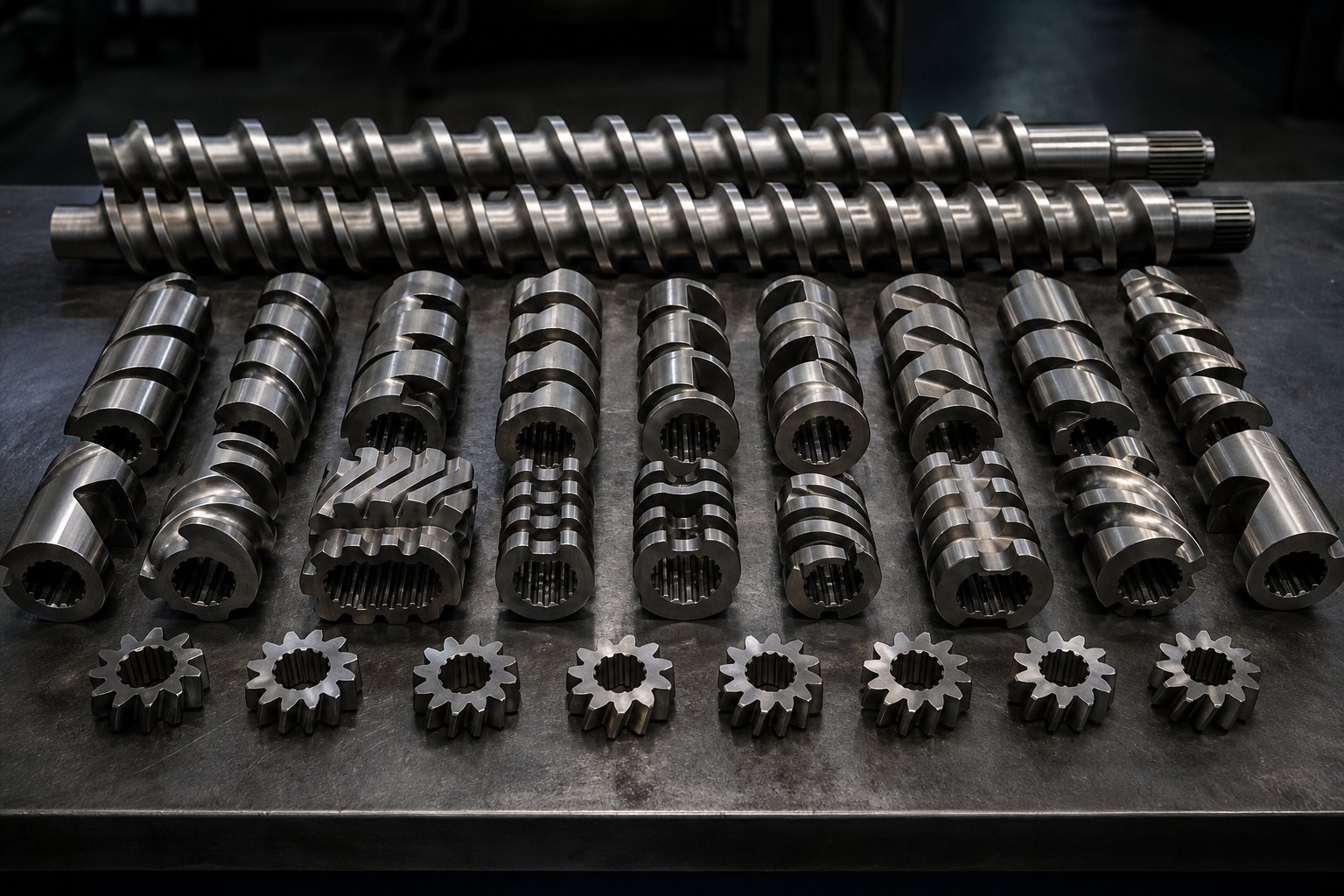
Battery slurries, biodegradable films, textured proteins — each application sounds radically different, yet every one of them lives or dies based on the same variable: how the extruder screw elements are arranged on the shaft. A twin screw extruder's modular design allows engineers to slide individual elements onto a splined shaft in any sequence they choose. Swap a kneading block for a conveying segment, shift a reverse element two positions downstream, and the machine behaves like an entirely different processor. That configurability is why a single extruder platform can serve dozens of industries. It's also why getting the configuration wrong leads to degraded polymer, undispersed fillers, or volatile-laden product that fails quality specifications.
Sounds complex? It is — but the logic behind screw profile design follows clear principles once you understand what each element type actually does.
Key Screw Element Types and Their Functions
Every plastic extrusion screw profile is assembled from four fundamental element categories. Each one performs a distinct job in the processing sequence, and the way they interact determines product quality far more than barrel temperature settings or screw speed alone.
Conveying elements (forward and reverse pitch). Forward-pitch conveying elements are the workhorses of material transport. Their deep helical flights grab incoming pellets or powder and push it downstream with relatively low shear input. As NC State Extension research explains, deeper channel screws provide better conveyance with higher screw volume — channel depth decreases in the order conveying > compression > metering zone. Larger pitch increases throughput but reduces pressure capability, while shorter pitch elements raise fill levels and build pressure toward the die.
Reverse-pitch conveying elements — designated with an "L" for left-hand rotation — do exactly the opposite. They push material backward, creating a dam that restricts forward flow, increases local residence time, and builds a melt seal. You'll find reverse elements positioned immediately upstream of vacuum vent ports, where they prevent the low-pressure zone from pulling un-melted material backward into the vent opening.
Kneading blocks (narrow and wide disc). These are the heart of any mixing-intensive screw profile. A kneading block consists of multiple elliptical discs stacked at specific angular offsets — typically 30, 45, 60, or 90 degrees. Industry engineering data shows how stagger angle drives processing behavior: 30-degree offsets produce moderate mixing with forward conveying, 45-degree offsets deliver high-intensity balanced mixing, 60-degree offsets generate very high shear with reduced conveying, and 90-degree neutral offsets create maximum shear with virtually no forward transport.
The disc width matters just as much. Narrow kneading discs (sometimes called half-disc elements) promote distributive mixing — splitting and recombining the melt stream to spread additives uniformly without excessive energy input. Wide kneading discs emphasize dispersive mixing — applying intense shear stress to physically break apart filler agglomerates, carbon black clusters, or pigment particles. A compounding profile for carbon black masterbatch, for instance, relies heavily on wide-disc kneading blocks to fracture agglomerates down to primary particle sizes.
Mixing elements (gear-type and tooth-type). When you need thorough blending without the temperature rise that aggressive kneading blocks produce, toothed mixing elements offer an elegant solution. These gear-like elements — designated as "Z" elements in some nomenclature systems — generate repeated splitting and recombination of the melt flow. As NC State Extension's screw element function data confirms, toothed mixing elements deliver distributive mixing capability with essentially zero dispersive shear effect. That makes them ideal for blending heat-sensitive formulations, incorporating liquid additives, or homogenizing polymer blends where you want spatial uniformity without breaking down dispersed phase particles.
Restrictive elements for pressure seals. These include reverse kneading blocks, reverse conveying elements, and blister rings — all designed to create fully filled, high-pressure zones that seal one processing section from another. The most critical application? Separating the vacuum vent zone from upstream and downstream barrel sections. Without an effective melt seal, vacuum pulls backward through partially filled screw flights, causing vent flooding, foaming, and loss of devolatilization efficiency.
Application-Specific Screw Configuration Examples
Theory only matters if you can translate it into actual screw layouts. Here are three text-based configurations that illustrate how element selection changes with the target application. Each one arranges the same basic building blocks — conveying, kneading, mixing, and restrictive elements — in sequences that prioritize entirely different processing objectives.
Compounding configuration (glass-fiber-reinforced nylon):
Large-pitch conveying elements in the feed zone → decreasing-pitch conveying elements for compression → wide-disc forward kneading blocks (45/60 degree) for aggressive polymer melting → short conveying section to relax the melt → side feeder port for downstream glass fiber addition → narrow-disc forward kneading blocks (30 degree) for gentle fiber wetting without excessive breakage → conveying elements through the atmospheric vent → tight-pitch metering elements for pressure buildup to the die.
The key design decision here is placing only mild kneading after the fiber feed point. Aggressive wide-disc blocks positioned after fiber introduction would shatter glass fibers from their initial 4-6 mm length down to sub-millimeter fragments — destroying the mechanical reinforcement they were added to provide.
Devolatilization configuration (residual solvent stripping):
Standard conveying feed zone → forward kneading blocks for melting and homogenization → reverse kneading block to create upstream melt seal → deep-flight conveying elements under first vacuum vent port (partially filled for maximum surface renewal) → second reverse element to create downstream melt seal → deep-flight conveying under second vacuum vent → tight-pitch metering section to the die.
Each vacuum stage sits between two restrictive seals, isolating the low-pressure zone. The deep-flight conveying elements in the vent zone are intentionally oversized relative to throughput so the screw channels remain only partially filled — exposing thin films of polymer melt to vacuum for efficient volatile escape.
Reactive extrusion configuration (maleic anhydride grafting onto polypropylene):
Conveying feed zone for PP pellets → forward kneading blocks for complete melting → liquid injection port for maleic anhydride and peroxide initiator → first mixing zone with toothed elements for distributive blending of reagents into the melt → forward kneading blocks for intensive mixing to promote grafting reaction → conveying section for dwell time → second set of kneading blocks to ensure reaction completion → reverse element creating melt seal → vacuum vent to strip unreacted monomer and byproducts → metering section to the die.
Notice the multiple mixing zones with an injection point positioned before the first one. This staged approach ensures the reactive species are uniformly distributed throughout the polymer melt before intensive mixing accelerates the grafting chemistry. The vacuum vent downstream removes unreacted maleic anhydride — critical for both product quality and regulatory compliance.
Barrel Zone Components That Enable Different Processes
The twin screws get most of the engineering attention, but the barrel segments they rotate inside are just as application-specific. A twin screw barrel isn't a single piece of steel — it's a series of modular segments bolted together, each serving a distinct function:
- Closed barrel segments surround the screws completely and are used in conveying and kneading zones where material must stay contained. These segments carry independent heating and cooling channels that maintain precise temperature profiles across the barrel length.
- Open barrel segments with side-feed ports feature machined openings where side stuffers introduce fillers, fibers, or additives into the melt stream. The position of these ports along the barrel determines when in the processing sequence the additive enters — early for materials that benefit from extended mixing, late for shear-sensitive or abrasive components.
- Open barrel segments with liquid injection ports allow pumps to meter reactive liquids, plasticizers, or processing aids directly into the melt at controlled flow rates and specific barrel locations.
- Vented barrel segments have openings connected to atmospheric vents or vacuum systems for devolatilization. Their position must align precisely with the partially filled screw zone created by upstream restrictive elements — misalignment causes vent flooding or insufficient volatile removal.
Every plastic extruder screw profile must be designed in concert with these barrel components. A kneading block positioned under a side-feed port will prevent filler from entering the melt properly. A vacuum vent placed over a fully filled screw zone will flood immediately. The screw configuration and barrel layout are two halves of the same engineering puzzle.
For engineers approaching a new application — whether it involves traditional plastics compounding, pharmaceutical HME, or battery electrode processing — the design process follows a logical sequence:
- Define the processing objectives. Identify every unit operation the extruder must accomplish: feeding, melting, mixing (distributive, dispersive, or both), chemical reaction, devolatilization, side feeding, and pressure generation. List them in the order they must occur.
- Select the element type for each objective. Match conveying elements to transport zones, kneading blocks to mixing zones (wide-disc for dispersive, narrow-disc for distributive), toothed elements to low-shear blending zones, and restrictive elements to melt seal positions before vents.
- Determine barrel segment configuration. Assign closed, side-feed, injection, or vented barrel segments to match each screw zone's function. Confirm that vent ports align with partially filled screw sections downstream of restrictive elements.
- Establish initial temperature profiles. Set barrel zone temperatures based on the material's melting point, thermal stability window, and reaction kinetics (if applicable). Plan for independent zone control so that feeding, melting, mixing, and metering sections each operate at optimal temperatures.
- Evaluate residence time and L/D requirements. Verify that the total barrel length provides sufficient processing time for reactions, devolatilization stages, or mixing intensity targets. Add barrel segments if reactive or devolatilization applications demand longer residence times.
- Run initial trials and iterate. Monitor melt temperature, torque, die pressure stability, and product quality. Adjust element positions — shifting kneading blocks downstream, swapping narrow discs for wide discs, or adding reverse elements to tighten melt seals — based on observed performance. Screw profile design, as NC State Extension emphasizes, is a blend of art and science because every material exhibits unique flow properties influenced by temperature, shear rate, and extruder geometry.
This iterative approach applies whether you're configuring twin screws for a straightforward color masterbatch line or for a complex reactive extrusion process with multiple injection points and staged venting. The modularity that makes twin screw extruders so versatile also means that each configuration decision — every element swap, every barrel port placement — directly shapes the final product.
Of course, designing the perfect screw profile is only one piece of a larger puzzle. Matching your processing goals to the right extruder type, integrating downstream equipment, and sourcing components that maintain performance over thousands of operating hours all factor into whether an extrusion project succeeds at production scale.
Selecting the Right Twin Screw Extruder for Your Application
A flawless screw profile means nothing if it's running inside the wrong extruder — or if the downstream line can't keep up with what the barrel produces. Turning application knowledge into a working production system requires matching your processing goals to the right machine type, understanding where twin screw technology genuinely outperforms single screw alternatives, and building a complete extrusion line where every component works in concert.
Mapping Your Processing Goals to Extruder Configuration
Start with a blunt question: what does your process actually demand from the extruder? If the answer is "melt clean pellets and push them through a die at steady pressure," you probably don't need a twin screw extruder machine. If the answer involves any combination of powder feeding, intensive mixing, filler dispersion, chemical reaction, devolatilization, or blending variable-quality recycled feedstock, the twin screw platform earns its higher capital cost many times over.
The decision framework is practical. Material form drives the first filter — pellets versus powders versus flakes versus liquids. Mixing intensity drives the second. And downstream product format — pipe, profile, sheet, or pellet — drives the third. When two or more of these factors point toward active in-barrel processing rather than simple melt conveyance, a twin screw configuration is almost always the right call.
Single Screw vs Twin Screw Extruder Application Comparison
The table below maps common processing applications against both extruder types. You'll notice that single screw machines hold a genuine advantage in straightforward melt-and-form operations, while twin screw designs dominate every scenario that requires the extruder to do real work on the material — mixing, reacting, degassing, or accommodating inconsistent feed.
| Application | Single Screw Suitability | Twin Screw Suitability | Recommended Configuration | Key Reason for Preference |
|---|---|---|---|---|
| PE/PP pipe from compounded pellets | High | Moderate | Single screw with grooved feed | Stable melt delivery and pressure at lower cost and complexity |
| PVC pipe and profile from dry blend | Low | High | Counter-rotating conical or parallel twin screw | Controlled plasticizing of heat-sensitive PVC powder at low shear |
| Glass-fiber-reinforced nylon compounding | Low | Very High | Co-rotating twin screw with side feeder | Downstream fiber addition, modular kneading for dispersion without breakage |
| Color masterbatch production | Low | Very High | Co-rotating twin screw (high L/D) | Intense dispersive mixing breaks pigment agglomerates to primary particles |
| Reactive extrusion (grafting, chain extension) | Very Low | Very High | Co-rotating twin screw with injection ports, L/D 40-60:1 | Multiple injection points, staged reaction zones, and vacuum venting |
| Pharmaceutical hot melt extrusion | Very Low | Very High | Co-rotating twin screw (lab to production scale) | Precise residence time, solvent-free processing, PAT integration |
| Post-consumer plastics recycling | Moderate (clean flakes) | High (contaminated streams) | Co-rotating twin screw with multi-stage venting | Tolerance to feed variability, superior degassing, re-compounding flexibility |
| Textured vegetable protein | Low | Very High | Co-rotating twin screw with cooling die | Controlled thermomechanical transformation of protein structures |
| Film and sheet from pre-compounded resin | High | Low to Moderate | Single screw with barrier flight | Steady output and pressure stability for uniform gauge control |
A pattern emerges quickly: every application involving powder intake, multi-component formulations, in-barrel chemistry, or volatile removal lands firmly in twin screw territory. A double screw extruder isn't simply a more expensive alternative — it's a fundamentally different processing architecture suited to fundamentally different tasks.
Building a Complete Extrusion Line for Your Application
Selecting the right double screw extruder machine is only the beginning. A production-ready extrusion line extends well beyond the barrel — upstream through feeding systems and downstream through forming, cooling, and finishing equipment. Each stage introduces its own challenges, and neglecting any one of them bottlenecks the entire operation.
Upstream: material feeding. Inconsistent bulk density causes surging. Powders bridge in hoppers. Recycled flakes tangle and clump. Gravimetric feeders solve rate accuracy, but the feeder-to-extruder interface must prevent bridging and starve-feeding issues. For filled systems, loss-in-weight feeders for the base polymer and separate volumetric or gravimetric feeders for each additive stream ensure correct formulation ratios at every moment.
In-barrel processing. This is where the screw configuration, barrel zone temperatures, and venting architecture discussed throughout this article do their work. The twin-screw extruder machine delivers melting, mixing, reacting, or degassing — whatever the application demands — and presents a homogenized, pressurized melt to the die.
Downstream: forming and finishing. The melt exits the die and enters application-specific equipment:
- Pelletizing lines: Strand pelletizers, underwater pelletizers, or water-ring systems cut the extrudate into uniform pellets for compounding, masterbatch, and recycling operations.
- Pipe lines: Pipe dies, vacuum calibration tanks, spray cooling baths, haul-offs, and cutters produce finished pipe to dimensional tolerance.
- Profile lines: Profile dies, vacuum calibration tables, cooling stations, haul-offs, and saws deliver window frames, cable conduits, and decorative trim.
- Sheet lines: Flat dies, polishing roll stacks, cooling conveyors, and winders produce sheet or film for thermoforming or packaging applications.
Every downstream component must be sized to match the extruder's output rate and the product's cooling requirements. An oversized extruder paired with an undersized cooling tank simply produces defective product faster.
Equally critical — and often overlooked until the first unplanned shutdown — is the long-term serviceability of wear components. The extruder screw and barrel are consumable parts, particularly in abrasive recycling and highly filled compounding applications. When flight lands wear beyond tolerance or barrel bores enlarge past specification, melt quality deteriorates regardless of how well the rest of the line is configured. Sourcing reliable replacement screw barrel components from a dedicated supplier is essential for sustaining production quality over years of operation. NANHAIYA serves this role for extrusion manufacturers, recycling plants, and technical teams across pipe, profile, sheet, pelletizing, and general plastic processing lines — providing screw barrel support engineered for the specific wear conditions each application imposes.
When evaluating a twin screw extruder for sale, look beyond the headline twin screw extruder price. Factor in the total cost of ownership: energy consumption per kilogram of output, scheduled maintenance intervals, screw and barrel replacement frequency, and the availability of technical support from the twin-screw extruder manufacturer. A machine that costs fifteen percent less upfront but requires screw element replacement twice as often — or lacks responsive parts supply — ends up far more expensive over a five-year production horizon.
The most successful extrusion operations treat equipment selection as a systems problem. They match the extruder type to the process demand, design the screw profile for the specific material and application, size downstream equipment to the extruder's throughput, and establish a maintenance pipeline that keeps wear components within specification before product quality drifts. Among twin screw extruder manufacturers, the ones worth partnering with are those who understand this full-system perspective — and who can support you not just at the point of sale, but through every production hour that follows.
Frequently Asked Questions About Twin Screw Extruder Applications
1. What are the main applications of a twin screw extruder?
Twin screw extruders serve a wide range of industries and processes. In plastics, they handle compounding of engineering resins, masterbatch production, and recycling of post-consumer waste. In pharmaceuticals, they produce amorphous solid dispersions through hot melt extrusion to improve drug bioavailability. Food manufacturers use them for textured vegetable protein and snack production, while the energy sector employs them for continuous battery electrode slurry mixing. Additional process-specific uses include reactive extrusion for polymer grafting and functionalization, devolatilization for solvent and moisture removal, and direct extrusion of PVC pipes and profiles. The machine's modular screw and barrel design allows engineers to reconfigure the same platform for each of these applications by swapping screw elements and adjusting barrel zone components.
2. What is the difference between co-rotating and counter-rotating twin screw extruders in terms of application?
Co-rotating twin screw extruders feature screws turning in the same direction with self-wiping geometry, generating high shear and intense mixing. This makes them the preferred choice for polymer compounding, reactive extrusion, pharmaceutical hot melt extrusion, and emerging applications like battery slurry dispersion and bioplastics processing. Counter-rotating extruders, where screws rotate in opposite directions, produce lower shear and stronger positive conveying forces. They excel in pressure-sensitive applications such as PVC pipe and profile extrusion, where excessive shear would degrade the heat-sensitive material. Counter-rotating machines come in parallel and conical variants — conical designs use tapered screws that provide high feeding capacity and gentle compression, making them ideal for processing PVC dry blends at medium capacity.
3. Why are twin screw extruders preferred over single screw extruders for compounding?
Twin screw extruders outperform single screw designs in compounding because they deliver both dispersive and distributive mixing simultaneously through multiple mass-transfer regions created by two intermeshing screws. Their modular screw design lets engineers customize element sequences — kneading blocks, conveying segments, and mixing elements — for each specific formulation. Side-feeder capability enables downstream addition of shear-sensitive fillers like glass fibers after the polymer is already molten, preserving fiber length. Independent barrel zone temperature control prevents localized overheating in highly filled systems. Single screw extruders lack these capabilities, making them suitable mainly for melting pre-compounded pellets and pushing them through a die at steady pressure, but inadequate for formulations requiring intensive in-barrel mixing or multi-component blending.
4. How are twin screw extruders used in pharmaceutical manufacturing?
In pharmaceutical manufacturing, twin screw extruders perform hot melt extrusion (HME) — a solvent-free, continuous process that intimately mixes active pharmaceutical ingredients with polymer carriers under controlled heat and shear. The primary goal is creating amorphous solid dispersions that dramatically improve bioavailability of poorly water-soluble drugs. Clinical studies have shown bioavailability improvements of up to four times compared to conventional crystalline formulations. Beyond bioavailability enhancement, pharma applications include sustained-release matrices, taste-masking of bitter APIs, co-crystal formation, and implantable drug delivery systems. Laboratory and benchtop twin screw extruders with screw diameters as small as 9 mm allow researchers to screen formulations using only 5-20 grams of costly API before scaling to production equipment.
5. What role do screw and barrel components play in twin screw extruder performance and maintenance?
Screw elements and barrel segments are the core wear components that directly determine product quality, throughput, and extruder uptime. Modular screw elements — conveying segments, kneading blocks, mixing elements, and restrictive elements — are assembled on a splined shaft in application-specific sequences that control mixing intensity, residence time, and pressure generation. Barrel segments include closed sections for conveying, open sections for side feeding or liquid injection, and vented sections for devolatilization. In abrasive applications like plastics recycling and highly filled compounding, these components wear significantly faster. Bimetallic barrel linings and hardened screw flight lands extend service life, but scheduled replacement remains essential. Suppliers such as NANHAIYA provide engineered replacement screw and barrel assemblies for pipe, profile, sheet, pelletizing, and recycling lines, helping processors maintain performance before quality drift becomes costly.
Written by
Nanhaiya Technical Team
Zhoushan Nanhaiya Plastic Machinery Co., Ltd.
The Nanhaiya technical team supports screw and barrel manufacturing projects through application review, technical communication, custom manufacturing coordination, and production and quality control.
Discuss Your Application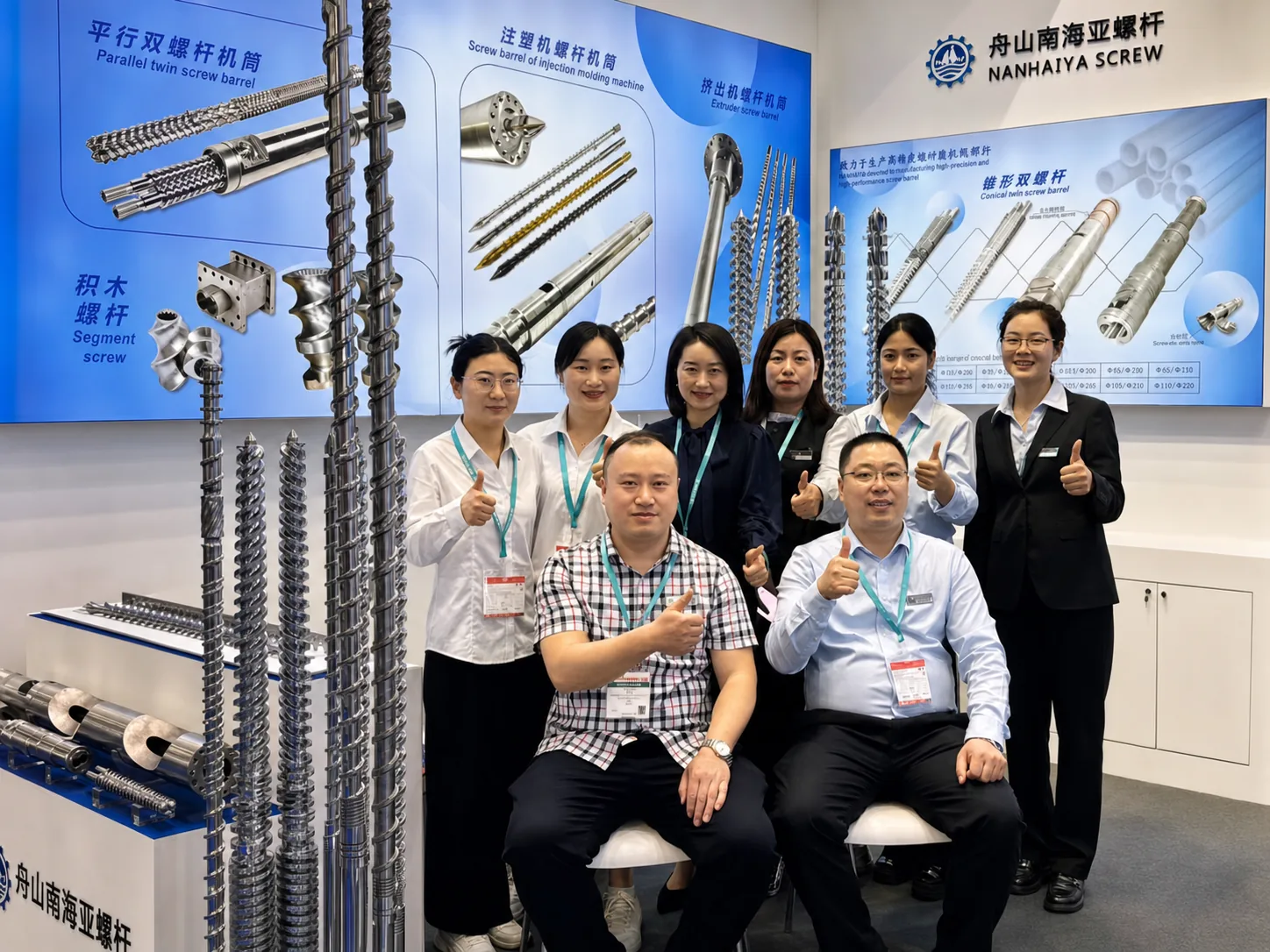
Related Articles
More insights on screw barrel technology and plastics processing.
Extruder Machine Decoded: From Raw Pellet To Finished Product
Oct 6, 2026
Learn how an extruder machine works, compare single-screw vs. twin-screw types, and get expert guidance on specs, troubleshooting, and selection.
Read Article
PE Pipe Making Machine Decoded: From Raw Resin to Flawless Pipe
Oct 4, 2026
Learn how a PE pipe making machine works, from resin to finished pipe. Covers components, material grades, automation, troubleshooting, and buyer selection tips.
Read Article
PVC Profile Making Machine Decoded: From Raw Resin To Profit
Oct 3, 2026
Learn how a PVC profile making machine works — extrusion process steps, key technical parameters, die design, calibration methods, maintenance, and total cost of ownership.
Read ArticleLooking for something else?
Search by material, symptom or product and jump straight to the relevant page.
These are navigation suggestions based on keyword matching — not a quotation, not a delivery commitment, and not a substitute for engineering review. Final specification is confirmed by our engineers against your drawings and processed material.
Need help with screw barrel selection?
Share your machine model, processed material and application. Our team can help with pricing and technical support.