

What Makes Counter Rotating Twin Screw Extruders Different
When you're processing a heat-sensitive polymer like rigid PVC and your melt keeps degrading, the problem often isn't your formulation - it's your extruder's conveying mechanism. That distinction is exactly where the counter-rotating twin screw extruder separates itself from every other design on the market.
Defining the Counter Rotating Twin Screw Extruder
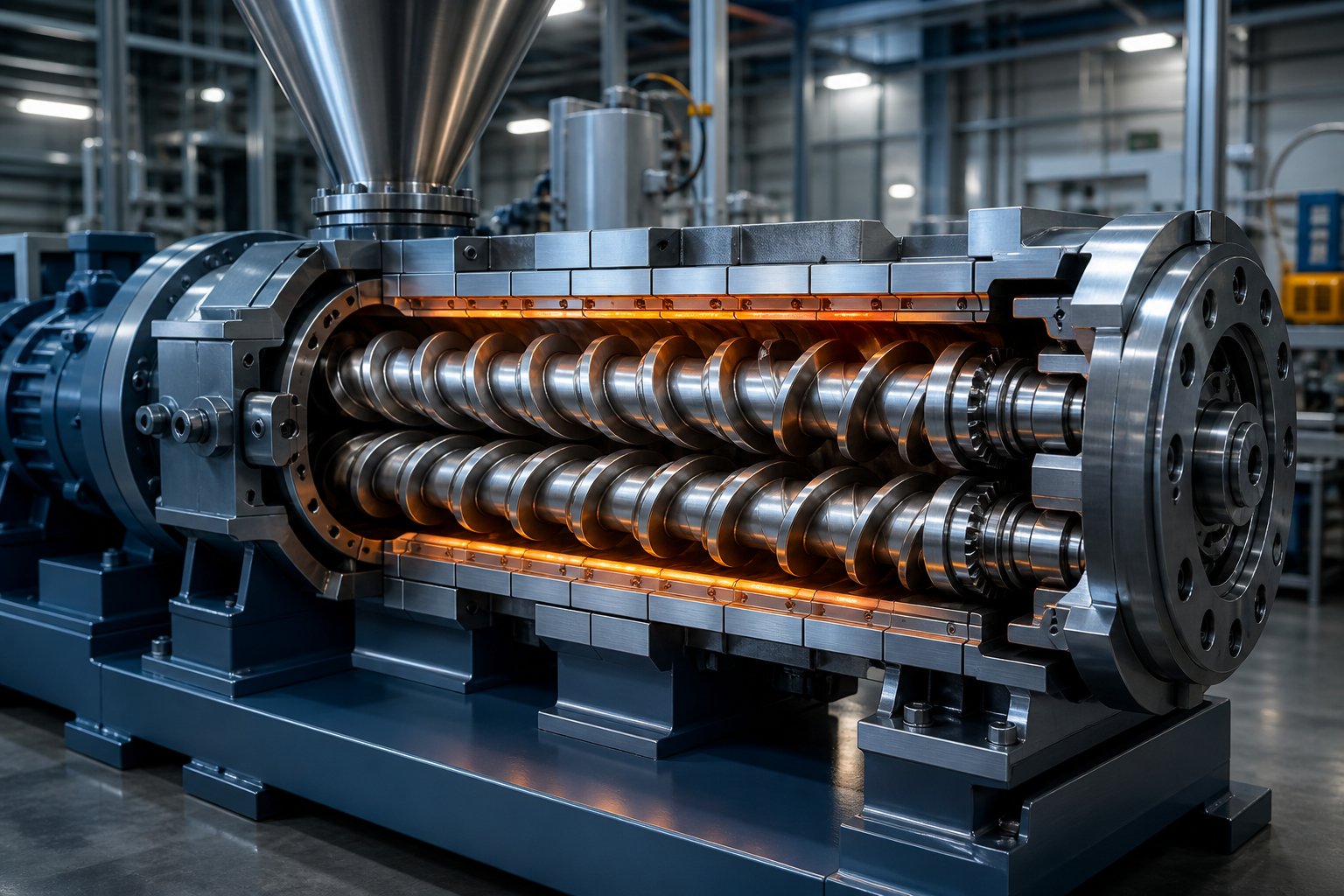
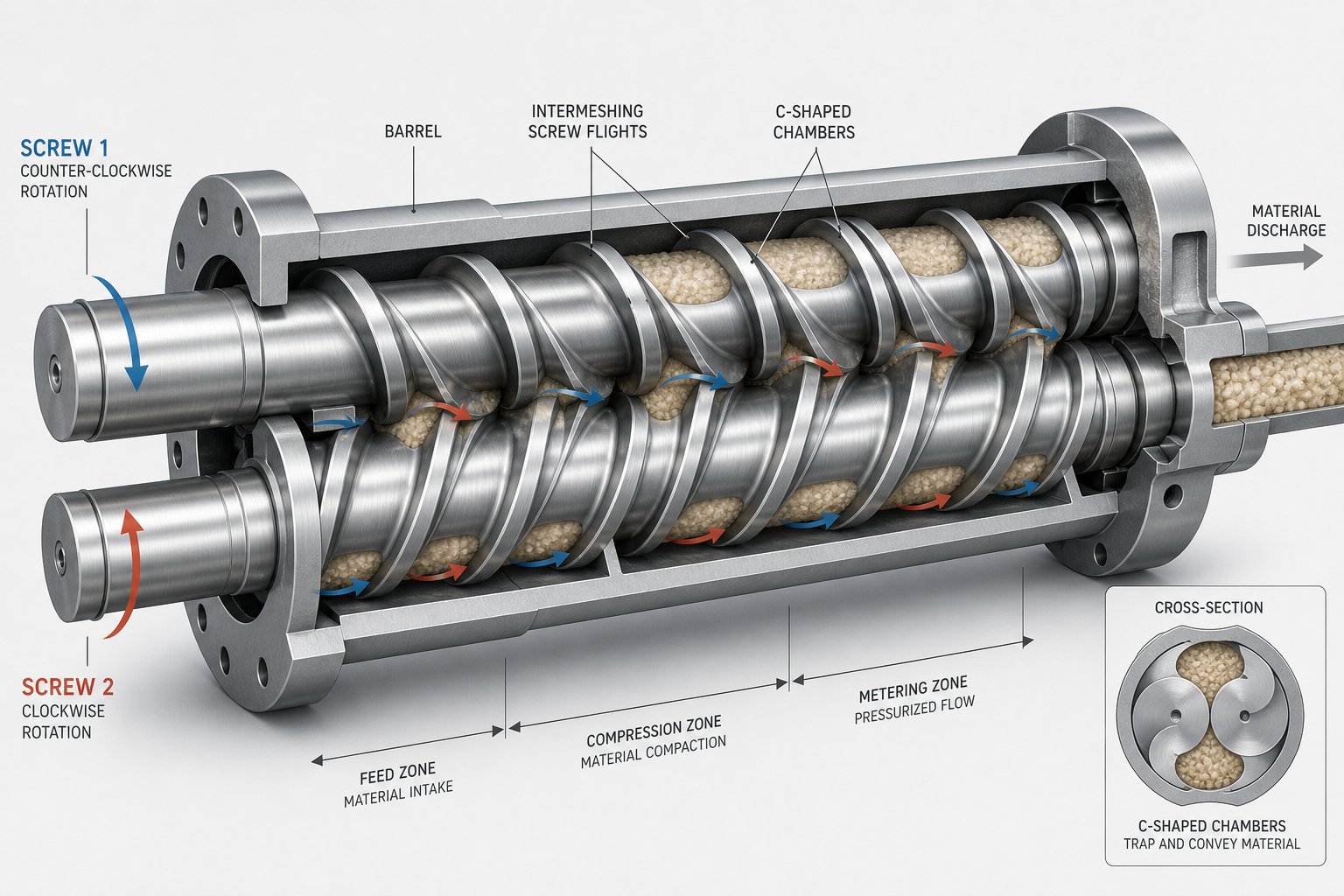
A counter-rotating twin screw extruder is a type of double screw extruder featuring two parallel or conical screws that rotate in opposite directions within a heated barrel. The intermeshing flights of these twin screws form enclosed, C-shaped chambers that physically trap and push material forward through positive displacement rather than relying on frictional drag. This geometry is fundamentally different from a co-rotating twin-screw extruder, where both screws spin the same way and convey material through high-shear drag flow, and from a single screw extruder, which depends entirely on friction between the polymer and the barrel wall to move material downstream.
A counter-rotating twin screw extruder uses two screws turning in opposite directions with intermeshing flights that create enclosed chambers, conveying material by positive displacement. This mechanism produces lower shear, higher pressure generation, and narrower residence time distribution than co-rotating or single screw alternatives.
The result of this opposing rotation is a machine that generates lower shear stress at the intermeshing zone - because the screw surfaces move in the same direction where they meet - while simultaneously building pressure through a natural calendering effect. Co-rotating designs, by contrast, create counter-rotating motion at the nip point, producing intense shear fields better suited to dispersive mixing tasks like compounding and reactive extrusion.
Why Understanding These Advantages Matters for Process Engineers
Too many resources simply list benefits without explaining the physics behind them. This article takes a different approach. Each advantage of the counter-rotating twin screw extruder is organized across four categories - mechanical, thermal, process, and economic - and explained through its underlying mechanism. You'll understand not just what this design does differently, but why those differences solve specific processing challenges: material degradation in thermally unstable compounds, inconsistent output from viscosity-dependent conveying, poor pressure buildup at the die, and difficulty feeding powders or low-bulk-density blends without starve-feeding systems.
The foundation of nearly every advantage traces back to a single mechanism - positive displacement conveying through those enclosed C-shaped chambers. Understanding how that mechanism works changes how you evaluate every downstream processing outcome.
The Positive Displacement Conveying Mechanism Explained
Imagine squeezing toothpaste from a tube. The paste doesn't move because of friction against the tube wall - it moves because a physical force pushes it forward through a sealed space. That's essentially how material travels through a counter-rotating twin screw extruder, and this single principle - positive displacement - underpins virtually every processing advantage the design offers.
How C-Shaped Chambers Create Positive Displacement
When two twin screws rotate in opposite directions and their flights intermesh, each screw flight seals against the opposing screw root. This creates a series of discrete, enclosed C-shaped chambers along the barrel length. Material trapped inside each chamber has nowhere to go except forward, carried axially as the screws turn. The chambers act like individual pockets in a gear pump - physically transporting a fixed volume of material per revolution regardless of whether that material is a dry powder, a viscous melt, or something in between.
Contrast this with how a co-rotating twin screw extrusion process works. In co-rotating designs, both screws spin the same direction and the primary conveying mechanism is drag flow - the rotating screw surface drags polymer along the barrel wall through friction. Material advances because it sticks to the barrel more than to the screw. This means throughput is heavily influenced by the friction coefficient between the polymer and the barrel surface, the melt viscosity, and the screw speed. Change any of those variables, and your output rate shifts.
Positive displacement in twin screw extrusion eliminates that dependency. Because the C-shaped chambers are mechanically sealed by the intermeshing flights, material movement is largely independent of viscosity and friction coefficient. A slippery powder blend that would slip and stall in a drag-flow system gets physically locked in and pushed forward with the same volumetric consistency as a high-friction pellet feed.
Why Positive Displacement Changes Processing Outcomes
This distinction between positive displacement and drag flow isn't just academic - it cascades into every measurable processing outcome. When each chamber carries a fixed volume, the extruder behaves like a volumetric pump. Feed rate in equals output rate out, with minimal sensitivity to downstream backpressure or upstream material variations. The practical results are significant:
- Predictable, stable throughput - Output per revolution remains constant, simplifying production planning and reducing the need for gravimetric feeding systems.
- Narrow residence time distribution - Every particle spends approximately the same time inside the barrel because material cannot bypass or recirculate between chambers. This uniformity is essential for heat-sensitive compounds where even brief overexposure causes degradation.
- Direct powder feeding capability - Low-bulk-density powders and dry blends are captured and conveyed without slippage, eliminating the need for starve-feeding mechanisms or pre-densification steps common in drag-flow screw extrusion systems.
- Superior pressure buildup at the die - The sealed chambers progressively compress material as it approaches the discharge end, generating high die pressures without supplementary gear pumps or melt pumps.
- Reduced sensitivity to formulation changes - Switching between materials with different friction characteristics or viscosities has minimal impact on conveying stability, shortening changeover times and reducing off-spec production.
Each of these outcomes traces directly back to the geometry of those sealed, intermeshing chambers. Strip away the positive displacement mechanism, and you lose the foundation for the low-shear thermal control, the consistent pressure profiles, and the powder-handling flexibility that define counter-rotating performance. The mechanical forces generated at the point where those chambers compress material forward, however, deserve their own closer look.
Mechanical and Pressure Generation Advantages of Twin Screw Extruders
Those sealed C-shaped chambers don't just move material forward - they squeeze it. And the physics of that squeezing action is where counter-rotating designs produce mechanical outcomes that co-rotating and single screw machines simply cannot replicate at equivalent operating speeds. Think of it this way: every advantage discussed in this section is a direct consequence of two intermeshing screws turning toward each other, compressing everything caught between them.
Superior Pressure Buildup Through Compression Dynamics
When you picture two rollers spinning toward each other with material fed into the narrowing gap between them, you're picturing a calender. That's essentially what happens at the nip region of a counter-rotating extruder twin screw pair - and it's the source of remarkably high pressures.
As the opposing flights rotate inward, molten polymer is dragged toward the minimum gap between the screw core of one shaft and the flight tip of the other. The converging geometry forces the material into a progressively tighter space, generating a steep pressure rise just upstream of the nip. Research conducted on a 55 mm closely intermeshing counter-rotating extruder measured pressure differences of 4.7 to 7.1 MPa between the low-pressure and high-pressure sides of the intermeshing zone during rigid PVC processing - forces significant enough to deflect the screws toward the barrel wall.
That same study quantified the separating forces generated by this calendering effect: over one metric ton of force acting on the screw core in the metering zone alone when processing window-profile-grade PVC. These pressures are inherent to the geometry. They develop passively, without requiring high screw speeds or supplementary pumping equipment. In practical terms, this means many counter-rotating lines eliminate the need for gear pumps or separate melt pumps downstream of the extruder - the twin screw and barrel assembly generates sufficient die pressure on its own.
Co-rotating designs, by contrast, produce their highest shear and pressure in kneading blocks rather than along the full conveying length. Their drag-flow mechanism generates moderate forwarding pressures that often require additional melt pumping to achieve tight dimensional tolerances in profile or pipe extrusion. The counter-rotating design's built-in calendering effect is a structural advantage, not an operational one - it's always present whenever the screws turn.
Controlled Material Transport and Residence Time
Imagine two batches of polymer powder entering an extruder at the same moment. In a drag-flow machine, some particles get caught in recirculation zones, tumbling backward before eventually moving forward, while others take a more direct path. The result? A broad residence time distribution - some material spends significantly longer inside the barrel than the rest.
Counter-rotating twin screw extruders largely eliminate this problem. Because material is locked into discrete enclosed chambers by the intermeshing flights, every particle follows essentially the same path at the same speed. There's no bypassing, no recirculation between adjacent chambers, and minimal leakage flow through the tight clearances. The result is a narrow residence time distribution where the difference between the shortest and longest particle dwell times is remarkably small.
Why does this matter? For heat-sensitive materials, residence time uniformity is everything. If one fraction of your PVC compound spends 30 seconds longer in a 190 degree C barrel than another fraction, the over-exposed material degrades while the under-exposed portion remains insufficiently plasticized. You end up with inconsistent fusion, visible defects, and compromised mechanical properties in the final product. A narrow residence time distribution ensures that thermal history is uniform across every gram of output - the foundation of consistent product quality batch after batch.
This predictability also simplifies process optimization. When you know that every particle experiences nearly identical conditions, adjusting barrel temperatures or screw speed produces uniform, repeatable changes in output properties. You're tuning one variable at a time instead of fighting a distribution of outcomes.
Self-Wiping and Intermeshing Geometry Benefits
Tight intermeshing clearances in counter-rotating twin screw extruders deliver another mechanical benefit that's easy to overlook until you're dealing with a material changeover or cleaning a degraded compound out of the barrel. The flight of one screw sweeps close to the root of the opposing screw, continuously wiping material from surfaces that would otherwise become stagnation zones.
Dead spots - areas where material sits motionless while fresh compound flows past - are the enemy of heat-sensitive processing. Stagnant polymer overheats, degrades, and eventually breaks free as discolored specks or gel particles in the product stream. The intermeshing geometry of counter-rotating designs minimizes these zones, keeping material in constant forward motion. While co-rotating extruders are generally considered to have superior self-cleaning due to the velocity difference at the intermeshing point, closely intermeshing counter-rotating designs still offer meaningfully better wiping action than single screw machines, where dead spots form readily in flight root corners and at barrel transitions.
The practical payoff shows up in two places: faster material changeovers between production runs and reduced risk of thermal degradation during extended processing. Both translate directly into higher uptime and lower scrap rates.
Here's a consolidated view of every major mechanical advantage and the mechanism driving it:
- High die pressure without auxiliary pumps - Calendering effect at the nip region generates progressive compression along the full conveying length.
- Narrow residence time distribution - Enclosed C-shaped chambers prevent particle bypassing and recirculation, ensuring uniform thermal exposure.
- Predictable volumetric output - Positive displacement makes throughput proportional to screw speed, independent of melt viscosity or barrel friction.
- Reduced dead spots and stagnation - Tight intermeshing clearances continuously wipe screw surfaces, keeping material in motion and minimizing degradation risk.
- Faster material changeovers - Minimal stagnation zones mean less residual material to purge between production runs.
- Lower screw speed operation - High-pressure generation through geometry rather than speed keeps separating forces manageable while maintaining throughput.
- Consistent wall thickness in extruded products - Stable die pressure eliminates the surging and pulsation common in drag-flow systems, producing uniform cross-sections.
Each of these mechanical characteristics reinforces the others. High pressure at low speed means less frictional heat. Less frictional heat means the barrel's thermal management zones - not the screw's mechanical energy input - dominate melt temperature control. And that shift in thermal control authority opens up a set of processing advantages that are especially critical for materials where even a few degrees of overheating can destroy the product.
Low-Shear and Thermal Processing Advantages for Heat-Sensitive Materials
A few degrees can be the difference between a sellable product and a barrel full of degraded, corrosive waste. That's not an exaggeration - it's the daily reality for anyone running rigid PVC, wood-plastic composites, or heavily filled compounds through an extruder. The mechanical advantages discussed above would matter far less if they didn't translate into one critical capability: keeping melt temperatures precisely where they need to be without sacrificing throughput.
Why Low-Speed Low-Shear Processing Prevents Material Degradation
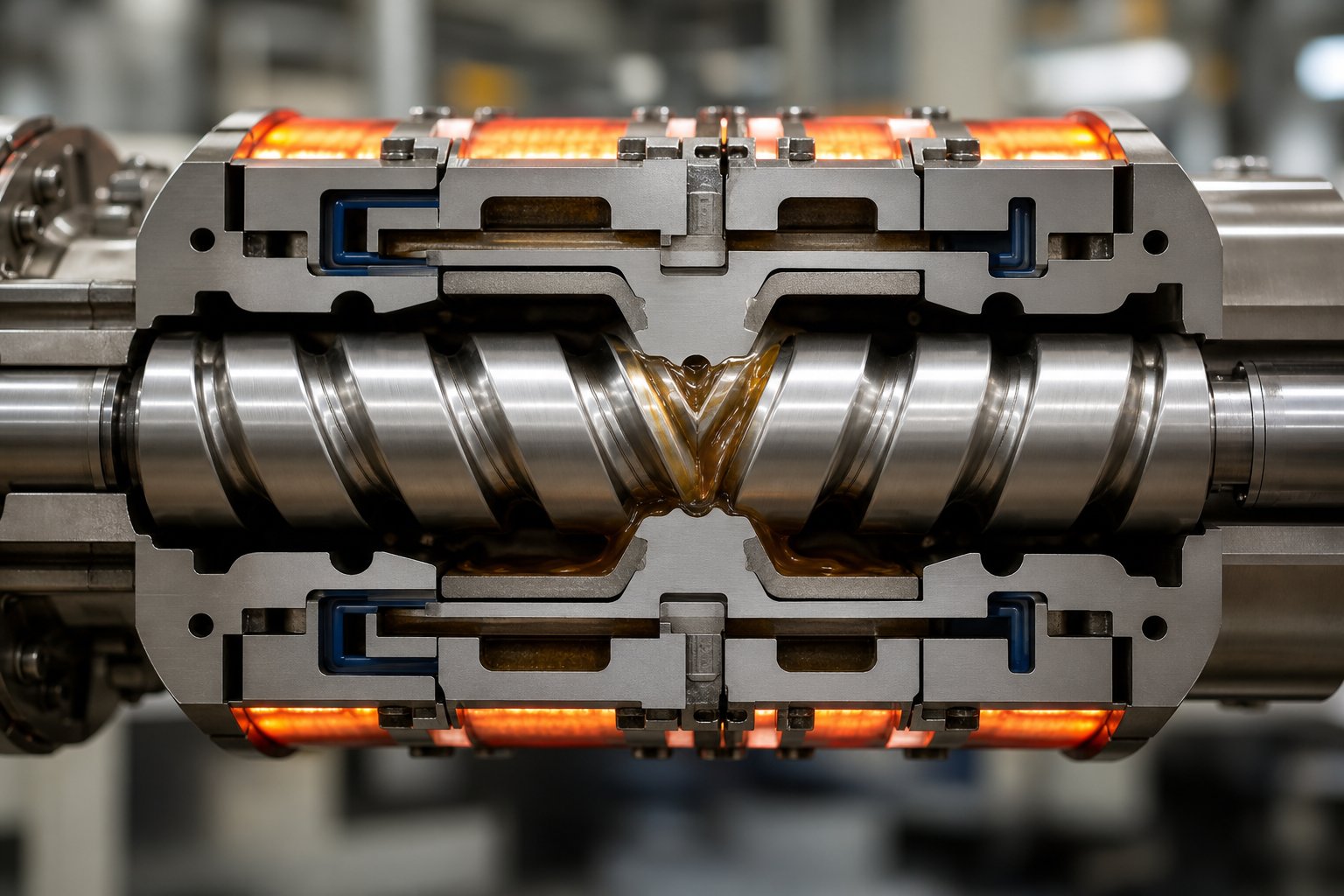
Here's the physics that drives everything in this section. When a polymer melt flows through the narrow gap between a screw flight and a barrel wall, internal friction between molecular layers converts mechanical energy into heat. This viscous dissipation - commonly called shear heating - scales directly with shear rate. Double the screw speed, and you roughly double the shear rate and the heat generated within the melt itself. For most thermoplastics, a bit of extra warmth is manageable. For rigid PVC, it's catastrophic.
PVC has one of the narrowest safe processing windows of any commercial polymer. Typical melt temperatures for rigid PVC fall between 185 and 195 degrees C, and exceeding 200 degrees C triggers rapid thermal decomposition. The polymer chain begins releasing hydrochloric acid (HCl) gas - a byproduct that corrodes barrel and screw surfaces, contaminates the product, and creates serious safety hazards on the production floor. Every minute a particle of PVC spends above that threshold accelerates the degradation reaction.
This is precisely why the counter-rotating design's ability to operate at lower screw speeds matters so much. Because positive displacement - not friction-driven drag flow - moves material forward, throughput doesn't collapse when you reduce RPM. A plastic twin screw extruder running in counter-rotation can maintain its target output rate at screw speeds that would starve a co-rotating machine. Lower speeds mean lower shear rates, and lower shear rates mean dramatically less viscous heat generation inside the melt. The barrel's external heating and cooling systems remain in control rather than fighting a losing battle against mechanically generated heat.
For PVC processing, reducing shear-induced heating is not an optimization preference - it is a safety requirement. Excessive shear triggers thermal decomposition that releases corrosive hydrochloric acid gas, damages equipment, and compromises product integrity.
The same principle applies to wood-plastic composites, where wood flour begins charring at temperatures that a high-speed compounding twin screw extruder would easily reach. It applies to thermally sensitive biopolymers, to compounds loaded with heat-reactive additives, and to any formulation where the gap between "properly fused" and "degraded" is measured in single-digit degrees.
Precise Thermal Control and Its Impact on Product Quality
Imagine trying to hold a room at exactly 72 degrees F while someone keeps lighting small fires inside it. That's what barrel temperature control looks like in a high-shear extrusion process - the external cooling system is constantly fighting against internally generated heat. You can set your barrel zones to any temperature you want, but if shear heating adds 15 to 30 degrees C on top of that, the actual melt temperature is only loosely connected to your setpoints.
Counter-rotating twin screw extruder plastic processing flips this dynamic. With shear heating minimized, barrel zone heaters and cooling channels become the dominant influence on melt temperature. When an operator adjusts a zone setpoint by five degrees, the melt temperature actually shifts by approximately five degrees. That one-to-one relationship between command and response gives process engineers genuine thermal authority over the plasticization process.
The practical impact shows up in fusion quality. PVC processing requires the resin particles to fuse into a homogeneous melt - but only to the right degree. Under-fusion produces a weak, porous structure with poor mechanical properties. Over-fusion degrades the polymer and triggers the HCl release described above. In a high-shear environment, you'll often find both conditions existing simultaneously within the same cross-section: over-fused material near the barrel wall where shear is highest, and under-fused material near the screw root where shear is lowest. The twin screw plastic extruder running in counter-rotation avoids this gradient because shear contributes far less thermal energy overall, and the narrow residence time distribution ensures every particle receives the same thermal exposure from the barrel zones.
The result is more uniform plasticization across the full melt cross-section - fewer gel particles, fewer weak spots, and tighter dimensional control at the die.
Processing Directly from Powder Without Pre-Plasticization
One of the most economically significant advantages flows directly from the combination of low shear and positive displacement conveying. Counter-rotating extruders can accept PVC dry-blend powder - a mixture of PVC resin, stabilizers, lubricants, and fillers blended in a high-speed mixer - and process it directly into finished pipe, profile, or sheet without an intermediate pelletizing step.
Why does this matter? In many co-rotating or single screw systems, PVC powder must first be compounded into pellets using a separate compounding twin screw extruder before it can be reliably fed and processed on the production line. That intermediate step adds cost at every level: additional equipment, energy consumption, labor, floor space, and - critically - an extra thermal cycle that subjects the already heat-sensitive polymer to degradation risk before it even reaches the forming extruder. Every pass through a heated barrel consumes a portion of the stabilizer package, leaving less thermal protection for the actual production run.
Counter-rotating designs bypass this entirely. The positive displacement mechanism captures low-bulk-density powder blends effectively, and the low-shear environment processes them gently enough to achieve proper fusion without exceeding the safe thermal window. For PVC processors, eliminating the pre-compounding step translates into lower per-kilogram production costs, reduced thermal history on the polymer, and a simpler production workflow with fewer potential failure points.
These thermal and shear advantages are inherent to the counter-rotating principle, but they manifest differently depending on the specific machine configuration. The degree of intermeshing, the screw geometry - conical versus parallel - and the operating philosophy all influence how aggressively or gently the extruder processes material, which raises an important question: how do the various counter-rotating configurations compare, and which design fits which application best?
Intermeshing vs Non-Intermeshing and Conical vs Parallel Configurations
Not all counter-rotating twin screw extruders are built the same way. Two machines can both spin their screws in opposite directions and still deliver very different shear profiles, pressure capabilities, and mixing behaviors - because how tightly those screws interact and what shape they take matters just as much as the direction they turn. Choosing the right configuration within the counter-rotating family is often the difference between a process that runs flawlessly and one that fights you on every batch.
Intermeshing vs Non-Intermeshing Counter Rotating Designs
The first major fork in counter-rotating design is whether the screw flights physically mesh with each other or simply rotate side by side within a shared barrel. This distinction changes the fundamental flow pattern inside the machine.
In an intermeshing counter-rotating design, the distance between the two screw axes is shorter than the combined outer radii of the screws. The flight tip of one screw reaches into the channel of the other, creating those tightly sealed C-shaped chambers responsible for positive displacement. The tighter the intermesh, the more completely each chamber is sealed, and the more precisely the machine controls residence time, pressure buildup, and volumetric output. This is the configuration that dominates PVC pipe and profile production - applications where thermal consistency and die pressure are non-negotiable.
Intermeshing designs can be further divided into fully intermeshing and partially intermeshing variants. Fully intermeshing screws maximize chamber sealing and positive displacement but impose tighter speed limits because the close clearances generate localized stress concentrations at the nip region. Partially intermeshing designs maintain a small gap between the flight tip and opposing screw root, which relaxes speed constraints and allows somewhat more open material exchange between chambers - at the cost of slightly less precise residence time control.
Non-intermeshing counter-rotating designs operate with the screw axes spaced far enough apart that the flights never engage. Each screw essentially functions more independently, and material conveying relies more on friction and viscous drag - similar in some ways to a single screw system. You lose the sealed-chamber positive displacement mechanism, which means reduced pressure-generation capability and broader residence time distribution. What you gain is the ability to run at higher speeds, more open mixing behavior, and suitability for processes like devolatilization and gentle blending where intense pressure isn't the priority.
When would you choose one over the other? If your process demands tight thermal control, high die pressure, and narrow residence time distribution - think rigid PVC profiles or precision pipe extrusion - intermeshing is the clear answer. If you need a counter-rotating twin-screw extruder machine for mixing, venting, or devolatilization tasks where some residence time variability is acceptable, non-intermeshing configurations offer operational flexibility that intermeshing designs can't match.
Conical vs Parallel Screw Geometry and When Each Excels
Overlaid on the intermeshing versus non-intermeshing distinction is a second design choice: should the screws be cylindrical or tapered? Both co rotating and counter rotating twin screw extruder designs can use either geometry, but the performance trade-offs are significant enough to make the choice application-specific.
A conical twin screw extruder uses tapered screws - wide at the feed end and narrowing progressively toward the discharge. Picture two converging funnels rotating in opposite directions. This taper creates two simultaneous benefits. At the feed end, the large screw diameter provides a generous intake volume, which is ideal for capturing low-bulk-density powders like PVC dry blends or wood-flour mixtures that would otherwise bridge or starve in a smaller opening. As material moves toward the narrow discharge end, the decreasing channel volume generates natural compression without requiring aggressive screw-pitch changes.
There's also a mechanical advantage hiding in the conical geometry. Because the screw axes diverge toward the feed end, there's more physical space between shafts for larger bearings, thrust surfaces, and gear assemblies inside the gearbox. Conical designs accommodate higher torque transmission compared to a parallel twin screw extruder of similar output capacity - a meaningful benefit when processing highly filled or high-viscosity formulations that place heavy mechanical loads on the drive system.
The trade-off? Conical screws are fixed in geometry. You can't reconfigure screw elements along the barrel the way you can with a modular parallel design. The L/D ratio on a conical machine is also typically shorter - commonly 20:1 to 26:1 - which limits the processing length available for complex compounding tasks requiring multiple mixing, venting, and reaction zones.
A parallel twin screw extruder maintains a constant screw diameter from feed to discharge. This uniform geometry supports modular barrel and screw element configurations, allowing engineers to rearrange conveying elements, kneading blocks, and mixing sections to fine-tune the process. Parallel designs also offer longer L/D ratios - 32:1 up to 48:1 or beyond - providing extended processing length for applications that need more residence time, multiple injection points, or staged devolatilization. However, the smaller center-to-center distance between parallel shafts limits bearing and gear size, which constrains the maximum torque the gearbox can deliver compared to an equivalent conical twin-screw extruder machine.
In short: conical for high-torque powder processing with natural compression - parallel for modular flexibility and complex compounding sequences.
HSEI and LSLF Extruder Families
Beyond geometry and intermeshing style, the twin screw extrusion industry recognizes two broad operational families that cut across both co-rotating and counter-rotating designs. Understanding these families helps you match the right machine philosophy to your processing challenge.
LSLF (Low-Speed Late Fusion) extruders are the traditional counter-rotating workhorses for heat-sensitive processing. These machines operate at screw speeds up to roughly 50 RPM, relying on positive displacement conveying and gentle barrel-zone heating to gradually fuse powder blends without aggressive mechanical energy input. "Late fusion" describes the processing philosophy: the material remains in a partially unmelted state for much of the barrel length, fusing fully only near the discharge end. This approach minimizes the total thermal exposure and shear history of the polymer - exactly what rigid PVC, sensitive dry blends, and heavily filled compounds require.
HSEI (High-Speed Energy Input) extruders take a fundamentally different approach. Running at screw speeds up to 1,200 RPM or higher, these machines use mechanical energy from the rotating screws as the primary driver of melting and mixing. The motor puts energy into the process through shear, and the barrel temperature zones play a secondary role. HSEI designs are predominantly co-rotating and intermeshing, with segmented screw elements assembled on high-torque splined shafts that support modular process-section design. They excel at compounding, reactive extrusion, and devolatilization - tasks where intense dispersive mixing and high throughput per unit footprint are more important than thermal gentleness.
Some counter-rotating designs bridge the gap between these families, trading a portion of the LSLF low-shear advantage for higher throughput by running at elevated speeds with optimized screw geometries. These intermediate machines can process moderately heat-sensitive materials at rates that pure LSLF designs can't match, though they don't reach the mixing intensity of full HSEI co-rotating platforms.
The following table consolidates how these configurations compare across the parameters that matter most when selecting a machine:
| Parameter | Intermeshing Counter-Rotating | Non-Intermeshing Counter-Rotating | Conical (Typically Counter-Rotating) | Parallel (Co- or Counter-Rotating) |
|---|---|---|---|---|
| Shear Level | Low to moderate | Low | Low (LSLF operation) | Low to high (depends on RPM and elements) |
| Pressure Capability | High (calendering effect) | Moderate to low | High (natural compression from taper) | Moderate to high (element-dependent) |
| Mixing Intensity | Moderate distributive | Moderate (open exchange) | Moderate distributive | Moderate to excellent (modular elements) |
| Typical Applications | PVC pipe/profile, WPC, rigid extrusion | Devolatilization, gentle blending | PVC dry-blend processing, sheet, decking | Compounding, reactive extrusion, masterbatch |
| Feed Flexibility | Excellent (powder and pellet) | Moderate (pellet-preferred) | Excellent (low-bulk-density powders) | Good (often starve-fed for powders) |
| Screw Speed Range | Low to moderate (LSLF: up to ~50 RPM) | Moderate to high | Low (typically 5-40 RPM) | Low to very high (HSEI: up to 1,200+ RPM) |
| Modularity | Limited | Limited | Fixed geometry | Highly modular (segmented elements) |
Notice how the right column shifts dramatically depending on whether the parallel machine runs as an LSLF counter-rotating system or an HSEI co-rotating one. Geometry alone doesn't determine performance - operating philosophy and screw interaction style complete the picture.
With these configuration differences clarified, a natural next question emerges: how do all these counter-rotating variants stack up against co-rotating twin screw extruders and single screw machines in a direct, side-by-side comparison? The answer reveals where each technology genuinely excels - and where it doesn't.
Counter Rotating vs Co Rotating vs Single Screw Extruder Comparison
You've seen how counter-rotating configurations work internally - sealed chambers, calendering pressure, gentle thermal profiles. But how does that performance actually measure up when placed side by side with a co rotating twin screw extruder or a standard single screw machine? Most resources compare only two of these three technologies at a time. Here, you'll get all three in one structured breakdown so the trade-offs become unmistakable.
How Counter Rotating Compares to Co Rotating Twin Screw Extruders
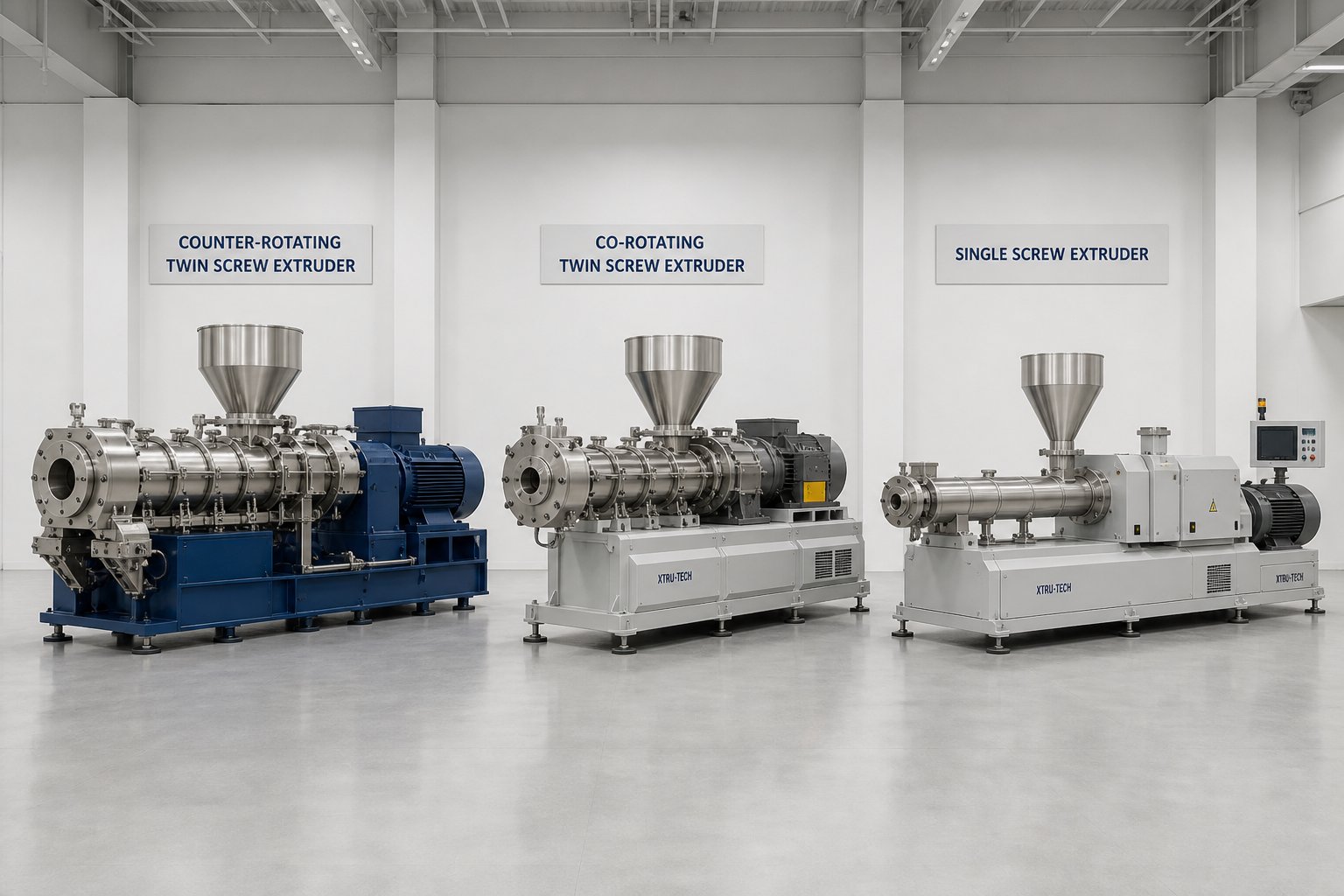
The fundamental divide starts at the conveying mechanism. Counter-rotating designs move material through positive displacement - those enclosed C-shaped chambers physically push a fixed volume forward per revolution. Co-rotating designs rely on drag flow, where the rotating screw surface drags polymer along the barrel wall through friction. This single difference cascades into every performance parameter that matters.
Shear intensity is the most obvious divergence. Because co-rotating screws create counter-directed surface motion at the intermeshing point, they generate intense shear fields - exactly what you need for breaking apart filler agglomerates, dispersing nanoparticles, or driving chemical reactions during reactive extrusion. A twin screw compounding extruder running in co-rotation can operate at speeds exceeding 1,200 RPM, delivering massive dispersive mixing energy that counter-rotating machines aren't designed to match.
Counter-rotating designs flip that priority. Lower screw speeds, gentle calendering-based compression, and minimal viscous heat generation make them the default choice for thermally sensitive processing. Pressure generation at the die is inherently superior because the opposing-rotation calendering effect builds compression along the full conveying length - not just at discrete kneading block locations.
Self-cleaning capability tilts toward co-rotating machines. The velocity difference where co-rotating flights meet creates a vigorous wiping action that continuously scrapes material from screw surfaces. Counter-rotating intermeshing designs offer moderate self-wiping - better than single screw extruders, but not at the same level as their co-rotating counterparts. For processes requiring frequent formulation changes or handling polymers prone to sticking and charring, co-rotating technology reduces purge time and degradation risk during transitions.
Mixing character also differs in kind, not just degree. Co-rotating extruders excel at dispersive mixing - the breakup of solid agglomerates into fine particles through intense shear. Counter-rotating designs favor distributive mixing - the uniform spreading of already-small particles throughout the melt without applying the shear forces that would degrade heat-sensitive matrices. A compounding extruder destined for color masterbatch or nanofiller dispersion demands dispersive capability. An extruder processing PVC dry blend with pre-dispersed stabilizer packages needs distributive gentleness.
How Both Twin Screw Designs Compare to Single Screw Extruders
Step back further and the contrast with single screw technology sharpens the picture. A single screw extruder relies entirely on drag flow - one rotating screw pushes material forward through friction against the barrel wall. There are no intermeshing zones, no sealed chambers, and no positive displacement. The result is a machine that's mechanically simpler, less expensive to purchase, and straightforward to operate, but fundamentally limited in mixing capability and feed flexibility.
Where single screw machines shine is in straightforward melting and pumping of pre-compounded pellets. Commodity pipe, simple profiles, sheet, and film production from consistent pellet feedstock represent the sweet spot - high-volume, unchanging formulations where the screw extruder simply needs to melt and meter material at a steady rate. Capital costs typically run 40 to 60 percent lower than comparable twin screw systems, and maintenance demands are minimal.
The limitations emerge when processing complexity increases. Single screw machines struggle with powder feeds due to their friction-dependent conveying. Mixing is limited to whatever distributive action the flight geometry can provide - far below what either twin screw design achieves. Residence time distribution is broad, making them poorly suited for heat-sensitive or reactive processing. And pressure generation, while adequate for many forming tasks, lacks the consistency and magnitude that counter-rotating positive displacement provides.
The table below consolidates all three technologies across the parameters that drive real equipment selection decisions:
| Parameter | Counter-Rotating Twin Screw | Co-Rotating Twin Screw | Single Screw |
|---|---|---|---|
| Shear Rate Level | Low to moderate | High to very high | Low to moderate |
| Pressure Generation | High (calendering effect) | Moderate (kneading-block dependent) | Moderate (drag-flow dependent) |
| Conveying Mechanism | Positive displacement | Drag flow | Drag flow |
| Temperature Control Precision | Excellent (barrel-dominated) | Moderate (shear heating competes) | Moderate (friction-dependent) |
| Self-Cleaning Ability | Moderate | Excellent | Poor |
| Mixing Capability | Good distributive; moderate dispersive | Excellent dispersive and distributive | Limited distributive only |
| Feed Flexibility (Powder vs Pellet) | Excellent (handles powder directly) | Good (often starve-fed for powder) | Poor for powders; best with pellets |
| Capital Cost | Moderate to high | High | Low to moderate |
| Material Suitability | Heat-sensitive polymers, filled compounds, PVC, WPC | Engineering plastics, polymer alloys, reactive systems | Pre-compounded commodity resins |
| Typical Applications | PVC pipe/profile, WPC decking, rigid extrusion | Compounding, masterbatch, reactive extrusion, nanocomposites | Commodity pipe, film, sheet, wire coating |
Notice the pattern: no single technology wins across every row. Counter-rotating designs dominate where thermal sensitivity, die pressure, and powder feeding are the critical constraints. Co-rotating machines own the high-intensity mixing and compounding space. Single screw extruders remain the most cost-effective option for straightforward, pellet-fed production runs.
The real value of this comparison emerges when you map it onto specific materials and products. A table tells you what each machine does well - but seeing those capabilities applied to actual production scenarios reveals why certain industries have standardized on counter-rotating technology while others haven't.
Real-World Applications Where Counter Rotating Extruders Excel
A comparison table is useful - but it doesn't tell you what happens when 300 kilograms of PVC dry blend per hour hits the feed throat of a conical counter-rotating twin screw extruder machine, or what goes wrong when someone tries to run a 60% wood-flour compound on equipment designed for unfilled pellets. The real proof of every advantage discussed so far shows up on the factory floor, in specific materials, specific products, and specific failure modes that disappear when the right technology is applied.
PVC Pipe and Profile Extrusion
Counter-rotating twin-screw extruders dominate rigid PVC pipe and profile production worldwide, and the reasons map directly to the advantages covered in previous sections. PVC's extreme thermal sensitivity - degradation beginning near 200 degrees C with hydrochloric acid release - demands the low-shear, low-speed processing that only positive displacement conveying can deliver without sacrificing throughput. The narrow residence time distribution ensures every gram of compound receives identical thermal exposure, eliminating the simultaneous over-fusion and under-fusion zones that plague drag-flow machines processing this polymer.
Equally important is the ability to feed PVC dry-blend powder directly. Most PVC pipe and profile producers blend resin with stabilizers, lubricants, fillers, and pigments in a high-speed mixer, then feed that powder straight into the extruder. Skipping the pelletizing step saves an entire thermal cycle - a cycle that would consume stabilizer capacity the polymer needs during its actual forming pass. The high die pressure generated by the calendering effect at the intermeshing zone ensures consistent wall thickness across pipe diameters and uniform cross-sectional geometry in complex window profiles, all without auxiliary melt pumps.
This combination - gentle thermal processing, direct powder feeding, and high-pressure die delivery - is why conical counter-rotating designs have become the standard twin screw extruder machine for rigid PVC applications across every major producing region.
Wood-Plastic Composite and WPC Decking Production
WPC introduces a challenge that pure polymer processing never faces: the filler itself can burn. Wood flour begins degrading at roughly 190 degrees C, producing discoloration, charring, and weakened mechanical properties. Simultaneously, wood-flour loadings often exceed 50% by weight - sometimes reaching 70% - creating an extremely abrasive compound that accelerates screw and barrel wear. And because wood fiber is hydrophilic, the compound carries moisture that must be vented or it flashes to steam, leaving voids and bubbles in the finished product.
Counter-rotating designs address all three threats at once. Low-shear conveying keeps melt temperatures below the wood's degradation threshold without reducing output. The positive displacement mechanism reliably feeds low-bulk-density wood-flour blends that would bridge and starve in friction-dependent systems. Venting zones integrated into the barrel pull residual moisture from the melt. For PVC-based WPC - used in wall panels, door frames, and trim profiles - the extruder must simultaneously protect both the PVC matrix and the wood filler from thermal damage, making the counter-rotating architecture essentially mandatory. PE/PP-based WPC for outdoor decking and fencing also benefits from this gentle processing, though some producers use parallel configurations depending on throughput targets.
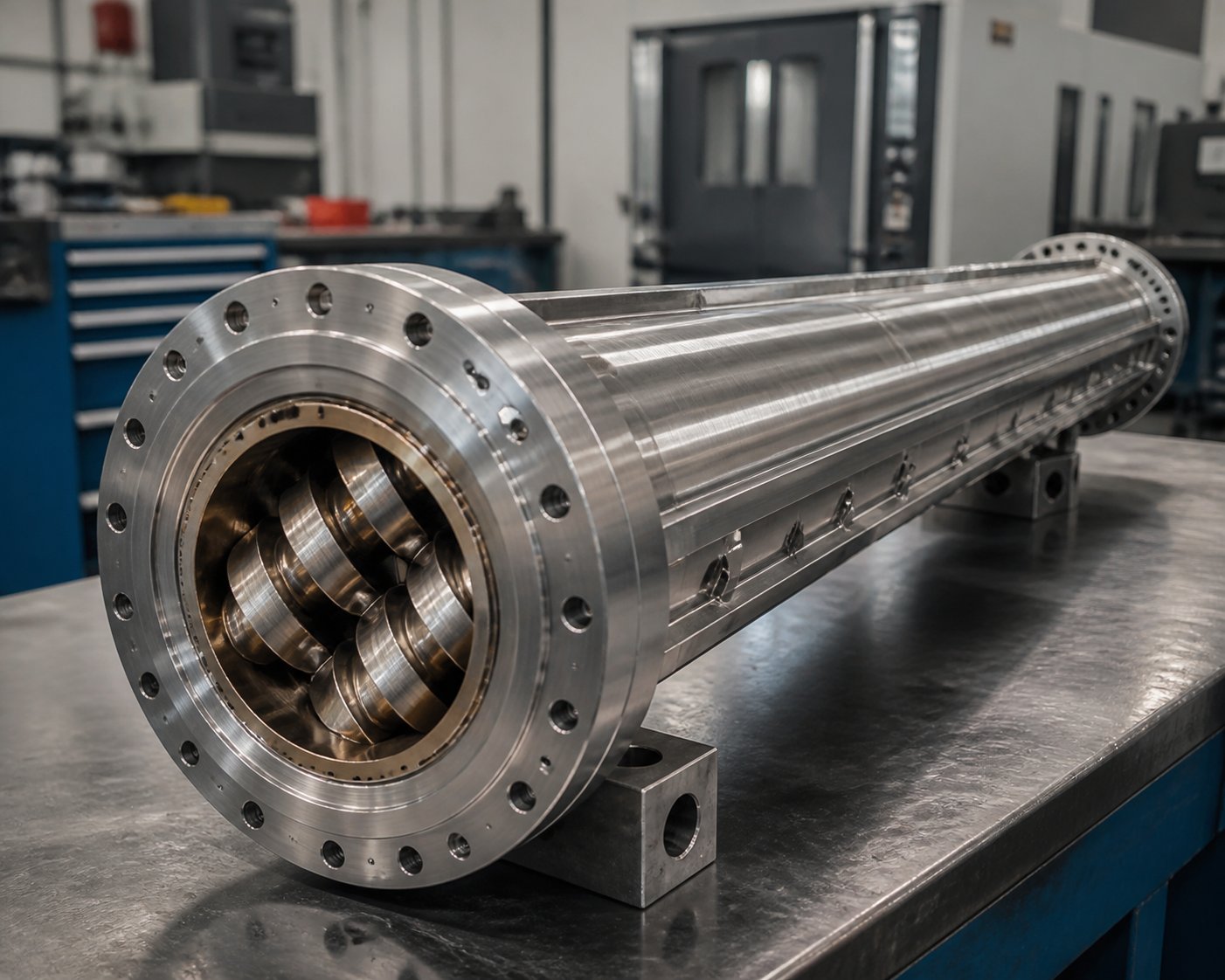
In both cases, the screw and barrel assembly bears the brunt of the abrasive wood filler. Worn flight tips and opened clearances destroy the positive displacement seal that makes gentle, low-shear processing possible in the first place - output becomes inconsistent, pressure drops, and operators compensate by raising temperatures, which accelerates degradation. For manufacturers processing PVC or WPC on conical counter-rotating lines, the quality of the replacement screw and barrel directly determines whether the machine continues performing as designed. NANHAIYA's Conical Twin Screw Barrel is engineered specifically for PVC pipe, profile, sheet, and WPC extrusion, offering custom and replacement barrels built to maintain the tight tolerances required for optimal positive displacement and uniform melt quality across extended production campaigns.
Powder Coatings, Rigid Profiles, and Specialty Applications
Beyond PVC and WPC, counter-rotating technology serves several additional markets where its core advantages align with specific material requirements. Powder coating production relies on precise thermal and residence time control to melt-mix resin, pigment, and hardener without triggering premature crosslinking - a reaction that would render the coating useless. The narrow processing window and uniform thermal exposure of counter-rotating twin-screw extruders make them well suited to this task. Some powder coating lines use a downstream screw extruder granulator to break the cooled melt into chips for subsequent grinding, and the consistency of the upstream extrusion step directly affects final particle-size uniformity.
In the pet food and treat industry, counter-rotating machines have carved out a niche in dental chew and jerky treat manufacturing. These products often combine meat pastes, starches, and mineral fillers into complex multi-texture structures that degrade under high shear. Twin screw extruder manufacturers serving this market emphasize low-shear kneading and precise temperature zoning to preserve ingredient functionality and product texture.
Rigid profile extrusion - including technical profiles for electrical conduit, cable trunking, and industrial trim - similarly benefits from the dimensional stability that consistent die pressure provides. And in specialty compounding, applications like calcium carbonate-filled masterbatch production leverage the counter-rotating design's ability to incorporate high filler loadings without the intense shear that a co-rotating screw extruder granulator stage would impose.
Here's a consolidated view of the primary application categories and the specific advantage drivers that make counter-rotating technology the preferred choice in each:
- PVC pipe and profile extrusion - Low-shear thermal protection prevents HCl release; direct powder feeding eliminates pelletizing costs; high die pressure ensures dimensional accuracy.
- Wood-plastic composite (WPC) decking and profiles - Gentle processing prevents wood-fiber charring; positive displacement handles low-bulk-density blends; venting removes moisture from hydrophilic fillers.
- Powder coating production - Narrow residence time distribution prevents premature crosslinking; uniform thermal exposure produces consistent melt quality for downstream grinding.
- Pet treats and dental chews - Low-shear kneading preserves meat-paste textures and ingredient functionality; precise temperature control maintains product integrity.
- Rigid technical profiles - Stable, pulsation-free die pressure delivers tight cross-sectional tolerances for electrical conduit, cable trunking, and industrial trim.
- High-filler-loading compounds - Positive displacement conveying maintains output stability with 50%+ mineral or organic filler content without excessive shear-induced heat.
Every application on this list exploits the same underlying physics - positive displacement, low shear, and calendering-based pressure generation. Yet the fact that counter-rotating technology excels in these specific domains naturally raises the question of where it doesn't. Understanding the genuine limitations of this design is just as important as appreciating its strengths, especially when the wrong extruder selection can cost more than the right one saves.
Honest Trade-Offs: When Counter Rotating Screw Extruders Are Not the Best Fit
Every extruder design involves compromises. The same tight intermeshing clearances that produce gentle, low-shear conveying also impose mechanical constraints that make counter-rotating technology the wrong answer for certain processing tasks. Ignoring these limitations leads to mismatched equipment, underperforming production lines, and capital investments that never deliver their projected returns. A clear-eyed look at where this technology falls short is just as valuable as understanding where it excels.
Where Co Rotating or Single Screw Designs Are the Better Choice
Imagine you're tasked with dispersing carbon nanotubes into an engineering thermoplastic at production scale. You need intense shear fields to break apart tightly bound agglomerates, high screw speeds to maximize throughput, and the flexibility to reconfigure kneading blocks and mixing elements between trials. A counter-rotating extruder would struggle at every step.
Here's why. Counter-rotating designs rely on compressive and elongational deformation at the calendering gap - effective for distributive mixing but insufficient for the aggressive dispersive mixing that nanocomposite and polymer alloy production demands. Co-rotating machines generate intense shear stress both between the screws and between screw flights and the barrel wall, creating the complex deformation history needed to rupture filler agglomerates and control phase morphology in multi-polymer blends.
Counter-rotating extruders are generally not the right tool for:
- High-speed compounding requiring intense dispersive mixing - Breaking apart tightly bound pigment clusters, nanofiller agglomerates, or incompatible polymer phases needs the shear intensity that only co-rotating kneading blocks at 600+ RPM can deliver.
- Reactive extrusion processes - Polymerization, grafting, and compatibilization reactions often require long residence times with thorough, high-energy mixing to drive conversion. Co-rotating designs offer both the mixing intensity and the modular screw-element flexibility to stage these reactions precisely.
- Applications demanding maximum throughput per unit footprint - When production volume is the primary constraint and the material tolerates high shear, co-rotating machines running at 1,200 RPM will outproduce counter-rotating equipment of similar screw diameter by a wide margin.
- Frequent screw element reconfiguration - R&D environments and contract manufacturers that change formulations daily benefit from the fully modular, segmented screw designs standard on co-rotating platforms. Counter-rotating screws - particularly conical variants - offer far less configurability.
Co-rotating designs also deliver superior self-cleaning. The opposing surface velocities at the intermesh create a vigorous wiping action that suppresses stagnation and adhesion far more effectively than counter-rotating geometry. For processors handling polymers prone to charring or degradation during extended runs, that self-wiping capability translates directly into fewer black specks, shorter purge cycles, and less downtime. Anyone evaluating a laboratory twin screw extruder or benchtop twin screw extruder for early-stage formulation screening will typically find co-rotating platforms more versatile for the wide range of materials and process conditions encountered in R&D settings.
Throughput and Speed Limitations to Consider
The very geometry that delivers low-shear gentleness also imposes a speed ceiling. In counter-rotating intermeshing designs, the screws push material upward through the nip region - and at higher RPM, the resulting separating forces deflect the screw shafts toward the barrel wall. Metal-to-metal contact follows, accelerating wear at the intermeshing zone and potentially damaging both screws and barrel liner. This is why LSLF counter-rotating machines typically operate below 50 RPM, and even high-speed counter-rotating variants top out around 600 RPM - roughly half the maximum speed of modern co-rotating screw extruders.
Lower speed means lower volumetric throughput for a given screw diameter. A 65 mm counter-rotating machine processing PVC dry blend at 35 RPM simply cannot match the kilogram-per-hour output of a 65 mm co-rotating extruder running the same barrel length at 400 RPM with a shear-tolerant compound. When throughput per installed unit is the dominant economic driver - as it often is in commodity compounding - this speed limitation becomes a decisive disadvantage.
Wear at the intermeshing zone deserves special attention. The tight clearances that seal C-shaped chambers and enable positive displacement are also the points of highest mechanical stress. Abrasive fillers - calcium carbonate, glass fiber, wood flour - grind against flight tips and screw roots, gradually opening clearances. As gaps widen, the positive displacement seal degrades: leakage flow increases, residence time distribution broadens, and pressure-generation capability drops. The machine slowly loses the very characteristics that justified its selection. Barrel and screw metallurgy - nitrided steels, bimetallic liners, tungsten carbide coatings - can extend service life significantly, but the wear mechanism is inherent to the design and requires planned maintenance intervals that factor into total cost of ownership.
Making the Right Extruder Selection Decision
Selecting between counter-rotating, co-rotating, and single screw technology isn't about finding the "best" machine - it's about matching the machine to the material and the process outcome you need. The decision framework is simpler than it might appear:
Choose counter-rotating when your process prioritizes thermal gentleness (PVC, WPC, heat-sensitive biopolymers), when you need to feed low-bulk-density powder directly without pelletizing, or when high, stable die pressure is critical for dimensional accuracy in pipe and profile extrusion. These are the scenarios where positive displacement, low shear, and calendering-based compression deliver outcomes no other architecture can match.
Choose co-rotating when your application demands high-intensity dispersive mixing, when throughput must be maximized on shear-tolerant materials, or when the process requires modular screw configurations that change frequently. Compounding, masterbatch production, reactive extrusion, and nanocomposite development all favor this platform.
Choose single screw when the task is straightforward melting and pumping of pre-compounded pellets into simple shapes - commodity film, sheet, tubing - and capital cost is a primary constraint.
The right extruder is the one whose inherent physics match your material's constraints. Choose counter-rotating for thermal sensitivity and pressure; co-rotating for mixing intensity and speed; single screw for simplicity and cost on pellet-fed commodity lines.
Most selection errors stem from applying a technology outside its physics-based sweet spot - pushing counter-rotating machines into high-speed compounding roles or expecting co-rotating designs to match the thermal gentleness of LSLF processing. The advantages of counter-rotating twin screw extruder technology are real and substantial, but they're bounded by the same geometry that creates them.
Those boundaries, however, don't diminish the economic case. When the machine is properly matched to the application, the energy efficiency and operational cost profile of counter-rotating designs often tip the total-cost-of-ownership calculation decisively - a financial dimension that deserves its own analysis.
Energy Efficiency and Operational Cost Benefits of Twin Screw Barrel Systems
Matching a counter-rotating extruder to the right application solves the engineering problem. But engineering solutions still need financial justification - and this is where the counter-rotating design delivers an economic case that often surprises even experienced process engineers. The same physics that protect heat-sensitive polymers from degradation also reduce energy consumption, minimize waste, and eliminate entire processing steps from the production workflow. When you translate those mechanical advantages into dollars per kilogram of output, the numbers tell a compelling story.
Energy Efficiency Through Lower Screw Speeds and Reduced Processing Steps
Specific energy consumption - measured in kilowatt-hours per kilogram of output (kWh/kg) - is the metric that matters most when comparing extruder operating costs. And counter-rotating designs hold an inherent advantage in this metric for two distinct reasons.
First, lower screw speeds mean lower instantaneous power draw from the drive motor. A double screw extruder machine running in counter-rotation at 30 to 50 RPM consumes a fraction of the motor energy demanded by a co-rotating system turning the same diameter screws at 400 to 800 RPM. Because positive displacement conveying maintains throughput independent of speed-driven friction, you aren't trading output for efficiency - you're getting both. Industry cost analyses place specific energy consumption for twin screw systems in the range of 0.12 to 0.22 kWh/kg for typical applications, and counter-rotating LSLF machines operating at the low end of the speed range routinely achieve figures at or below the lower boundary of that range for PVC and WPC processing.
Second - and this is the factor most cost models overlook - counter-rotating extruders eliminate an entire upstream processing step for many materials. PVC processors who feed dry-blend powder directly into the forming extruder skip the pre-compounding or pelletizing stage entirely. That skipped step represents its own energy footprint: the motor power, barrel heating, cooling water, and material handling systems of a separate compounding line that simply doesn't need to exist. When you account for total production-line energy rather than just the forming extruder alone, the savings compound significantly. The growing twin screw extruders market reflects this reality, as manufacturers increasingly seek equipment architectures that minimize total energy input across the full conversion chain from raw material to finished product.
Reducing Operational Costs and Material Waste
Energy is the largest variable cost, but it isn't the only one. Counter-rotating designs attack operating expenses from multiple directions simultaneously, and understanding each mechanism helps engineers build a complete financial justification.
- Lower scrap rates from narrow residence time distribution - When every particle receives identical thermal exposure, the output is uniform. No over-fused streaks, no under-fused weak zones, no degraded specks that trigger automatic rejection. Scrap rates on well-tuned counter-rotating PVC lines typically fall below 2%, compared to 5 to 8% on systems with broader residence time variation.
- Eliminated intermediate material handling costs - Direct powder processing removes the labor, floor space, inventory, and logistics associated with pelletizing, storing, and re-feeding compounded granules. For high-volume PVC pipe producers, this can eliminate an entire shift's worth of compounding-line operators.
- Reduced material degradation waste - Precise barrel-dominated thermal control means fewer off-spec batches caused by temperature excursions. When shear heating doesn't compete with your cooling system, the process stays within the safe window more consistently - and every kilogram that stays within specification is a kilogram you sell rather than scrap.
- Lower stabilizer consumption in PVC formulations - Each thermal cycle consumes a portion of the heat stabilizer package. Eliminating the pre-compounding pass preserves stabilizer capacity for the forming step, allowing either reduced stabilizer dosing or extended processing safety margin - both of which improve per-unit economics.
- Fewer auxiliary systems required - High die pressure from the calendering effect often eliminates the need for gear pumps or melt pumps that co-rotating and single screw lines require for dimensional consistency. Each eliminated auxiliary component removes a purchase cost, a maintenance schedule, and an energy draw from the production line.
There is, however, one cost factor that can erode every advantage on this list if neglected: the condition of the twin screw barrel and screw flights themselves.
As plastics processing experts emphasize, screw and barrel wear begins the moment rotation starts. In counter-rotating designs, wear at the intermeshing zone is particularly consequential because it directly degrades the positive displacement seal. Opened clearances increase leakage flow, which forces operators to compensate with higher screw speeds or elevated barrel temperatures - exactly the adjustments that consume more energy, generate more shear heat, and push heat-sensitive materials toward degradation. These compensating adjustments are often incremental and go unnoticed until they dramatically impact product quality or productivity. The result is a gradual, invisible erosion of the energy and waste advantages the machine was selected to provide.
For PVC and WPC processors running conical counter-rotating extruders, this wear pattern makes the replacement barrel a strategic component rather than a routine spare part. Selecting a precision-engineered replacement conical twin screw barrel from a specialist twin-screw extruder manufacturer like NANHAIYA ensures restored plasticizing performance, re-sealed positive displacement clearances, and extended production uptime. The investment in a properly manufactured barrel pays for itself through recovered energy efficiency, reduced scrap rates, and consistent output quality across tens of thousands of operating hours - a return that generic or poorly toleranced replacements simply cannot deliver.
The twin screw extruders market continues to grow precisely because processors have recognized that total cost of ownership - not just purchase price - determines long-term profitability. Counter-rotating technology, when properly maintained, delivers a cost structure that compounds its advantages over every production cycle.
The economic advantage of counter-rotating extrusion is not a single savings line - it is the cumulative effect of lower motor energy, eliminated processing steps, reduced scrap, preserved stabilizer packages, and fewer auxiliary systems, all sustained by maintaining the tight screw-to-barrel clearances that make positive displacement work.
When you step back and view the full picture - mechanical precision, thermal gentleness, application-specific performance, honest limitations, and bottom-line economics - the advantages of counter rotating twin screw extruder technology form a coherent system. Each benefit reinforces the others, and each depends on the same foundational geometry. For engineers processing heat-sensitive materials, highly filled compounds, or powder-based formulations, that geometry isn't just a design preference. It's the physics-based answer to problems that other architectures cannot solve at the same cost, the same quality level, or the same production reliability.
Frequently Asked Questions About Counter Rotating Twin Screw Extruders
1. What is the main difference between counter rotating and co rotating twin screw extruders?
The core difference lies in the conveying mechanism. Counter-rotating twin screw extruders use positive displacement, where intermeshing flights form sealed C-shaped chambers that physically push material forward regardless of viscosity or friction. Co-rotating designs rely on drag flow, where friction between the polymer and barrel wall drives material downstream. This fundamental distinction means counter-rotating machines produce lower shear, higher die pressure, and narrower residence time distribution - ideal for heat-sensitive polymers like PVC. Co-rotating machines generate intense dispersive mixing suited to compounding, reactive extrusion, and nanocomposite production.
2. Why are counter rotating twin screw extruders preferred for PVC processing?
PVC has an extremely narrow safe processing window, with degradation beginning near 200 degrees C and releasing corrosive hydrochloric acid gas. Counter-rotating extruders operate at lower screw speeds while maintaining throughput through positive displacement, which drastically reduces shear-induced heating. They also accept PVC dry-blend powder directly - eliminating a separate pelletizing step that would consume stabilizer capacity and add thermal history. The calendering effect at the intermeshing zone builds high die pressure for consistent wall thickness without auxiliary melt pumps. For conical counter-rotating lines, maintaining tight screw-to-barrel tolerances with precision components like NANHAIYA's conical twin screw barrel ensures these advantages persist over long production runs.
3. What does positive displacement mean in twin screw extrusion?
Positive displacement means material is physically trapped in enclosed chambers formed by the intermeshing screw flights and pushed forward as the screws rotate. Each chamber transports a fixed volume per revolution, functioning much like a gear pump. This makes throughput largely independent of the material's viscosity, friction coefficient, or downstream backpressure. The practical benefits include stable output rates, the ability to feed low-bulk-density powders without starve-feeding equipment, narrow residence time distribution for uniform thermal exposure, and superior pressure buildup at the die - all of which are critical for processing heat-sensitive or powder-based formulations.
4. What is the difference between conical and parallel counter rotating twin screw extruders?
Conical designs use tapered screws that are wide at the feed end and narrow at the discharge, creating natural compression and generous intake volume for low-bulk-density powders like PVC dry blends. The diverging shafts also allow larger bearings and higher torque capacity in the gearbox. However, conical screws are fixed in geometry with shorter L/D ratios (typically 20:1 to 26:1). Parallel designs maintain constant screw diameter, support modular barrel and screw element configurations, and offer longer L/D ratios (32:1 to 48:1) for complex compounding sequences requiring multiple mixing and venting zones - though with smaller bearings and lower maximum torque.
5. How does screw and barrel wear affect counter rotating extruder performance?
Wear at the intermeshing zone gradually opens the tight flight-to-root clearances that seal the C-shaped chambers responsible for positive displacement. As gaps widen, leakage flow increases, residence time distribution broadens, and die pressure drops. Operators often compensate by raising screw speeds or barrel temperatures - adjustments that increase energy consumption and push heat-sensitive materials toward degradation. This invisible erosion undermines every core advantage the machine was selected to deliver. Replacing worn components with precision-engineered barrels - such as NANHAIYA's conical twin screw barrel designed for PVC and WPC extrusion - restores sealed clearances, recovers energy efficiency, and maintains consistent output quality across extended campaigns.
Written by
Nanhaiya Technical Team
Zhoushan Nanhaiya Plastic Machinery Co., Ltd.
The Nanhaiya technical team supports screw and barrel manufacturing projects through application review, technical communication, custom manufacturing coordination, and production and quality control.
Discuss Your Application
Related Articles
More insights on screw barrel technology and plastics processing.
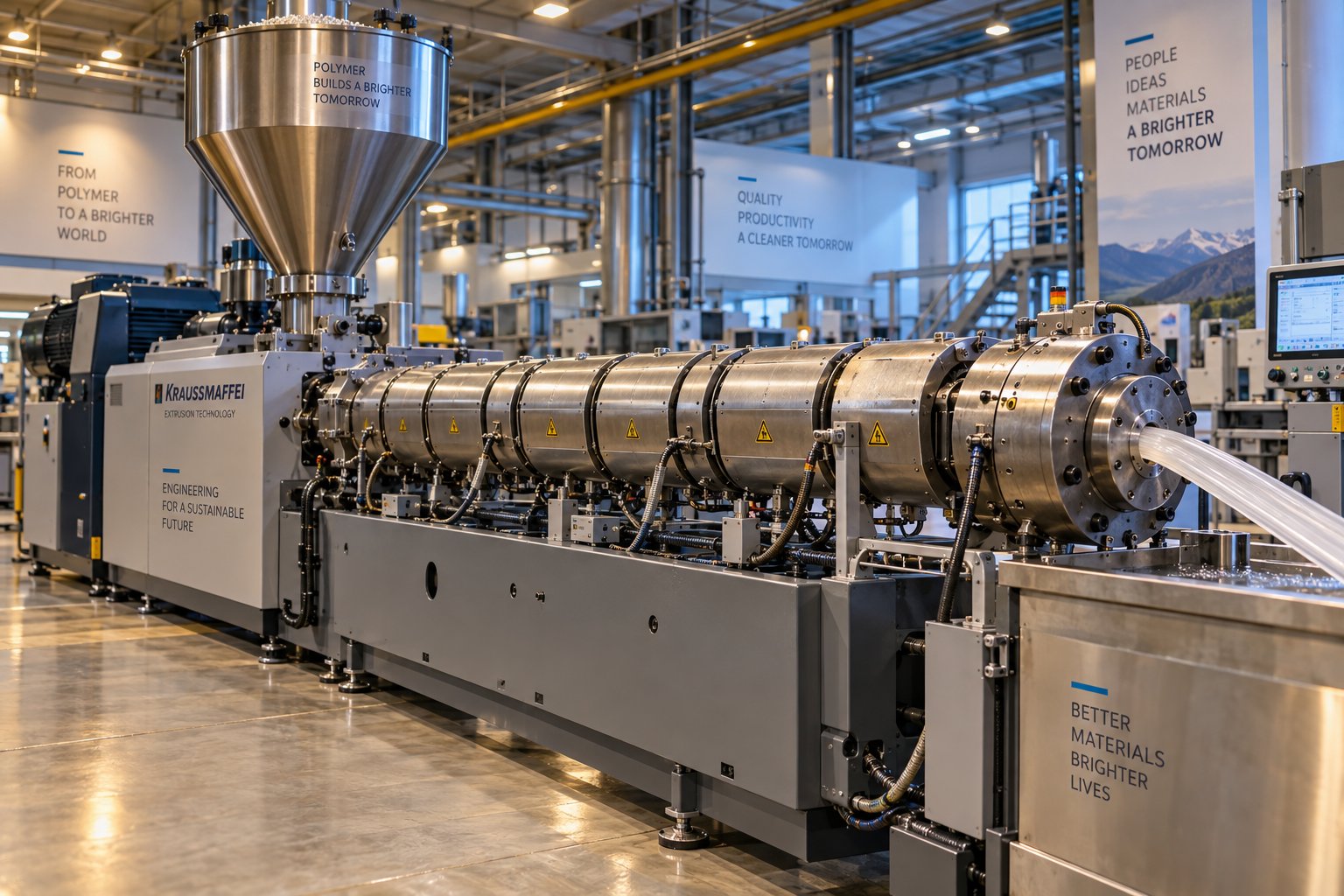
Extruder Machine Decoded: From Raw Pellet To Finished Product
Oct 6, 2026
Learn how an extruder machine works, compare single-screw vs. twin-screw types, and get expert guidance on specs, troubleshooting, and selection.
Read Article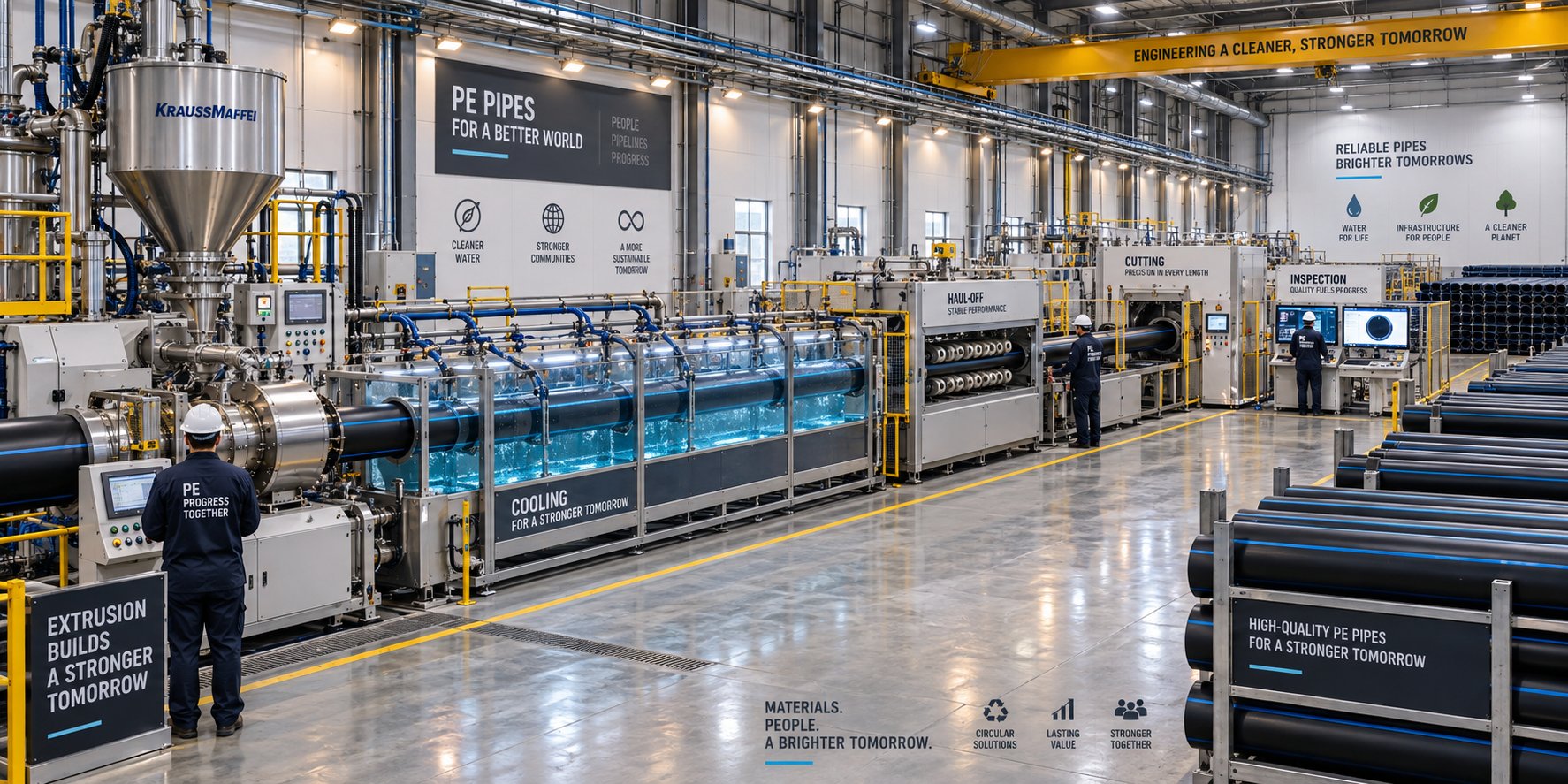
PE Pipe Making Machine Decoded: From Raw Resin to Flawless Pipe
Oct 4, 2026
Learn how a PE pipe making machine works, from resin to finished pipe. Covers components, material grades, automation, troubleshooting, and buyer selection tips.
Read Article
PVC Profile Making Machine Decoded: From Raw Resin To Profit
Oct 3, 2026
Learn how a PVC profile making machine works — extrusion process steps, key technical parameters, die design, calibration methods, maintenance, and total cost of ownership.
Read ArticleLooking for something else?
Search by material, symptom or product and jump straight to the relevant page.
These are navigation suggestions based on keyword matching — not a quotation, not a delivery commitment, and not a substitute for engineering review. Final specification is confirmed by our engineers against your drawings and processed material.
Need help with screw barrel selection?
Share your machine model, processed material and application. Our team can help with pricing and technical support.